
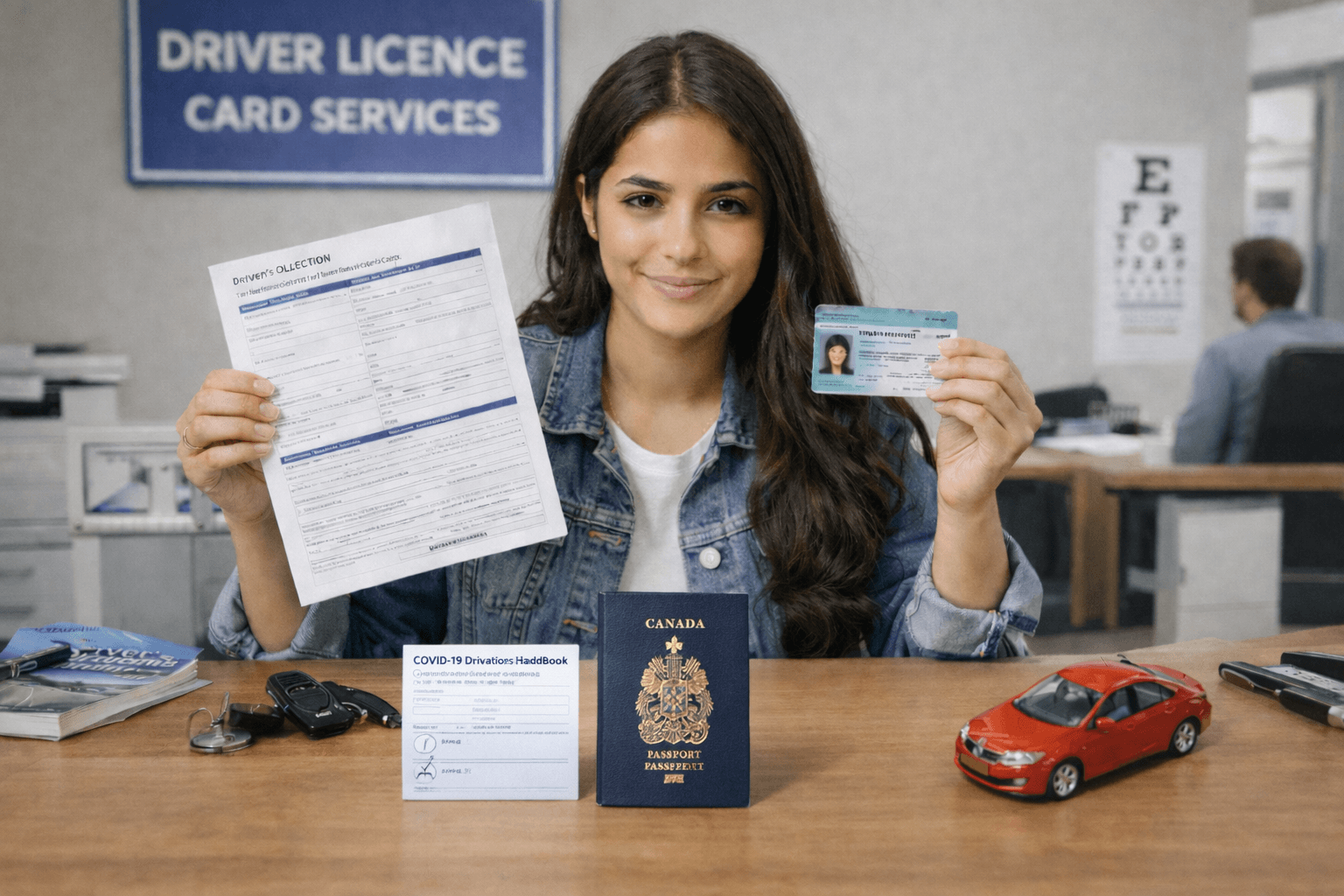
Showing up at a DriveTest centre only to discover you do not meet the requirements wastes everyone's time, especially yours. The staff will turn you away, you will have made the trip for nothing, and you will still need to come back once you have sorted out whatever was missing.
Ontario has specific eligibility requirements for the G1 test. Most are straightforward, but overlooking even one can prevent you from testing that day. Before you book your appointment or start studying, make sure you actually qualify to take the test.
This guide covers every requirement you need to meet, from age minimums to identification documents to the vision screening that happens before you touch the knowledge test.
Age Requirements
You must be at least 16 years old to take the G1 test in Ontario. There is no wiggle room on this requirement and no exceptions for mature 15-year-olds or people whose birthday is next week.
The age verification happens when you present your identification documents. If your ID shows you are under 16, you will not be permitted to test regardless of how well prepared you are.
There is no maximum age for obtaining a G1 license. Whether you are 16 or 76, the same test and requirements apply. Ontario does not discriminate based on age for new drivers as long as you meet the minimum threshold.
If you are close to your 16th birthday and eager to get started, use the waiting time productively. Study the handbook, take practice tests, and learn the material thoroughly. When your birthday arrives, you can test with confidence rather than rushing your preparation.
Residency Requirements
The G1 test is only available to Ontario residents. You must live in Ontario and be able to prove it with documentation showing your current address.
Acceptable proof of residency includes utility bills, bank statements, tax documents, or a residential lease agreement in your name. The document must show a current Ontario address and must be recent enough to reflect where you actually live now.
If you recently moved to Ontario from another province or country, make sure your address documentation is in order before booking your test. A lease agreement or utility bill showing your new Ontario address establishes residency.
Students living in Ontario for school purposes can use their Ontario address for the G1 test. Your student residence or apartment address counts as residency while you are living there.
Legal Presence in Canada
You must be legally entitled to be in Canada to obtain an Ontario driver's license. This means you need to provide documentation proving your immigration status.
Canadian citizens can prove legal presence with a Canadian birth certificate, citizenship card, or Canadian passport. These documents confirm you have the right to be in Canada permanently.
Permanent residents use their permanent resident card as proof of legal presence. Make sure your PR card is current and not expired.
Temporary residents including international students, workers with valid work permits, and visitors with certain visa types can also obtain a G1 license. You will need to show your study permit, work permit, or other immigration document that establishes your legal status. Your license validity may be tied to the expiry date of your immigration status.
Refugees and protected persons have specific documentation requirements. Contact a DriveTest centre or ServiceOntario location for guidance on which documents apply to your situation.
Identification Requirements
You must present valid identification when you apply for your G1 test. Ontario requires documents that prove three things: your legal name, your date of birth, and your signature.
Original documents are mandatory. Photocopies, scanned images on your phone, or photos of your documents will not be accepted. Bring the actual physical documents with you.
The most commonly used identification documents include:
A valid passport from any country serves as excellent primary identification. It shows your name, date of birth, photo, and signature in one document.
A Canadian citizenship card proves both identity and legal presence for citizens who do not have a passport.
A permanent resident card works similarly for those with permanent residency status.
A birth certificate proves your identity and date of birth but lacks a photo, so you will typically need a secondary document alongside it.
Provincial or territorial photo ID cards from other Canadian provinces can help establish identity if you have relocated from elsewhere in Canada.
If your current legal name differs from the name on your identification due to marriage, divorce, or legal name change, bring documentation showing the name change. Marriage certificates, divorce decrees, or legal name change certificates connect your previous name to your current one.
Vision Requirements
Before you can attempt the knowledge test, you must pass a vision screening. This happens at the DriveTest centre on the same visit, not at a separate appointment.
The vision test checks whether your eyesight meets the minimum standards for safe driving. You will look into a screening device and read letters or identify symbols. The exact format varies but the purpose is the same: confirming you can see well enough to drive.
If you wear glasses or contact lenses, bring them and wear them during the screening. Your corrected vision is what matters. Trying to pass the vision test without your corrective lenses when you actually need them sets you up for failure.
If you pass the vision test with corrective lenses, your license will carry a restriction noting that you must wear glasses or contacts while driving. This is not a penalty, just an acknowledgment of what you need to drive safely.
Failing the vision test stops your G1 application in its tracks. You cannot proceed to the knowledge test until your vision meets standards. If you fail, you will need to visit an optometrist, get your vision corrected or obtain documentation of your visual abilities, and return to try again.
If you know your vision is borderline or if it has been a while since your last eye exam, consider visiting an optometrist before your G1 appointment. Discovering a vision problem at the DriveTest centre wastes your time and possibly your test fee.
Medical Fitness Requirements
Ontario requires all drivers to meet certain medical standards. Most people satisfy these requirements without any additional steps, but some medical conditions require disclosure or documentation.
When you apply for your G1, you will answer questions about medical conditions that could affect your ability to drive safely. Conditions involving vision, hearing, cardiovascular health, neurological function, and mental health may require reporting.
Having a medical condition does not automatically disqualify you from driving. Many people with managed health conditions drive safely every day. The requirement is disclosure so that appropriate assessments can be made if needed.
If you have a condition that requires evaluation, you may need to submit a medical report from your doctor. The Ministry of Transportation reviews these reports and determines whether any restrictions or conditions should apply to your license.
Providing false information about your medical history is illegal and dangerous. If a medical condition contributed to a collision and you had failed to disclose it, you could face serious legal consequences beyond the traffic incident itself.
What the Test Fee Covers
Taking the G1 test requires payment of a licensing fee. As of 2025, the fee is $159.75 CAD. This is not just a test fee but a package that covers multiple components.
The fee includes your G1 knowledge test, your future G2 road test, and a five-year license. You pay once at the G1 stage and do not pay again when you take your G2 road test, assuming you complete it within the validity period.
Payment can be made by cash, debit card, or credit card at most DriveTest locations. Confirm accepted payment methods with your specific location if you are unsure.
If you fail the G1 knowledge test, you must pay the full fee again to retest. The fee is not refundable for failed attempts. This provides extra motivation to prepare thoroughly before your first attempt.
What Disqualifies You From Testing
Certain situations prevent you from taking the G1 test even if you meet the basic requirements.
An existing Ontario driver's license means you do not need a G1. If you already hold a valid G, G2, or any other class of Ontario license, the G1 process does not apply to you.
A suspended license in Ontario must be dealt with before you can obtain a new license class. Outstanding suspensions, unpaid fines, or court-ordered driving prohibitions block new license applications.
A prohibited driving status due to criminal conviction prevents licensing until the prohibition period ends. Driving prohibitions imposed by courts must run their course before you can legally obtain any license.
If another province or country has suspended your driving privileges, Ontario may honor that suspension. Disclose your full driving history when applying to avoid complications.
Preparing Your Documents Before Test Day
Gathering your documents the night before your test appointment avoids last-minute panic. Create a checklist and verify you have everything ready to go.
Confirm your primary identification is valid and not expired. Check the expiration date on your passport or other ID.
Verify your proof of residency shows your current address. If you moved recently, make sure you have updated documentation.
Confirm your proof of legal presence is current. Work permits and study permits have expiry dates that matter.
If you wear corrective lenses, pack your glasses or put in your contacts before leaving home.
Bring an accepted form of payment for the test fee. Confirm your card works or bring sufficient cash.
Put all documents in one folder or envelope so you are not searching through your bag at the DriveTest counter.
If You Have a License From Elsewhere
Drivers with valid licenses from other provinces or countries may qualify for license exchanges that skip some or all of Ontario's testing requirements. The rules depend on where your license is from and how long you held it.
Other Canadian provinces generally have reciprocal agreements with Ontario. If you hold a valid full license from another province, you can typically exchange it for an Ontario license without testing.
Some countries have exchange agreements with Ontario based on comparable licensing standards. Drivers from these countries may exchange their foreign license for an Ontario equivalent.
Countries without exchange agreements require drivers to go through Ontario's testing process. Your foreign driving experience may affect which tests you must complete.
Visit a ServiceOntario location with your foreign license and documentation to find out exactly what applies to your situation. The requirements vary too much to summarize in general terms.
You Are Ready to Test When...
Meeting the requirements is just the entry ticket. Passing the test requires preparation beyond having the right documents.
Make sure you have studied the Ontario Driver's Handbook and can pass practice tests consistently before booking your appointment. Meeting the eligibility requirements gets you into the testing room, but only knowledge gets you out with a license.
Ready to confirm you have everything you need and start preparing for the test itself? G1 Ready CA provides practice tests covering everything on the G1 exam. For a complete picture of what to expect on test day, check out the G1 test complete guide to understand the full process from arrival to walking out with your license.


