You're probably here because you've reached that exact point where getting your licence feels exciting and confusing at the same time. You know the G1 is the first step, but the questions pile up fast. Where do you go in London? Do you need to book? What do you bring? What do you study so you don't waste time on the wrong material?
That's normal. Most first-time drivers in London, Ontario aren't struggling because the process is impossible. They're struggling because nobody has walked them through it in plain language from the perspective of real test day.
If you're preparing for the G1 driving test in London Ontario, the good news is that the process is structured, predictable, and manageable once you know what matters. The key is to treat it as two jobs. First, handle the logistics properly so you don't get tripped up by documents, location, or test-day confusion. Second, study in a way that matches how the exam is scored.
Your First Step to Driving in London Ontario
You're in the parking lot on Wellington Road with your ID in hand, and the stress has little to do with road signs or right-of-way rules. It usually starts earlier than that. New drivers in London often worry about the process itself. Am I bringing the right documents? Does this centre do anything differently? What if I pass one part and miss another?
That uncertainty is normal. I see it all the time with first-time test takers.
The good news is that the G1 you write in London is part of Ontario's standard graduated licensing system. The licence is the same one issued across the province, so your job is to learn the Ontario rules and then prepare for how the London visit usually works in practice. That local piece matters more than many students expect. The rules are province-wide, but your experience still happens at one specific place, with one check-in desk, one testing area, and one set of day-of decisions.
A simple way to lower stress is to separate the process into three clear parts: getting ready at home, writing the test at the Wellington Road centre, and knowing what happens after your result. Students who mix those parts together often make the day feel bigger than it is. They study hard, but leave basic questions unanswered. Then small uncertainties eat up their focus.
That is why a London-specific plan helps. You want more than a list of rules from a handbook. You want to know what test day is like at the local centre, and you want a study method that shows whether you are improving or just rereading. Using the official handbook first, then checking your readiness with targeted practice on tools such as Ontario G1 test locations and centre details, gives you both pieces: the rules themselves and the on-the-ground context.
The G1 process is more manageable when you treat it like a sequence instead of one big exam. First, learn how the system works. Next, study the material in a way that matches the test. Then show up prepared, calm, and organized.
That is how the first step starts to feel less intimidating. It becomes a process you can handle.
Getting Ready for the London DriveTest Centre
The London DriveTest experience gets easier the moment you stop treating it like a mystery. Most problems happen before the test starts. Someone shows up missing ID, forgets their glasses, or assumes they needed a booking when they didn't.
Know where you're going
The DriveTest centre in London is at 4380 Wellington Rd S. For G1 applicants, one of the most useful details is that the written knowledge test is walk-in, not appointment-based, and it's available in 20 languages. After a passing result, applicants receive a temporary licence right away, as described on this London and Ontario G1 test information page.
If you want to confirm the location details in one place before you go, this Ontario DriveTest locations guide is useful for checking the London centre.
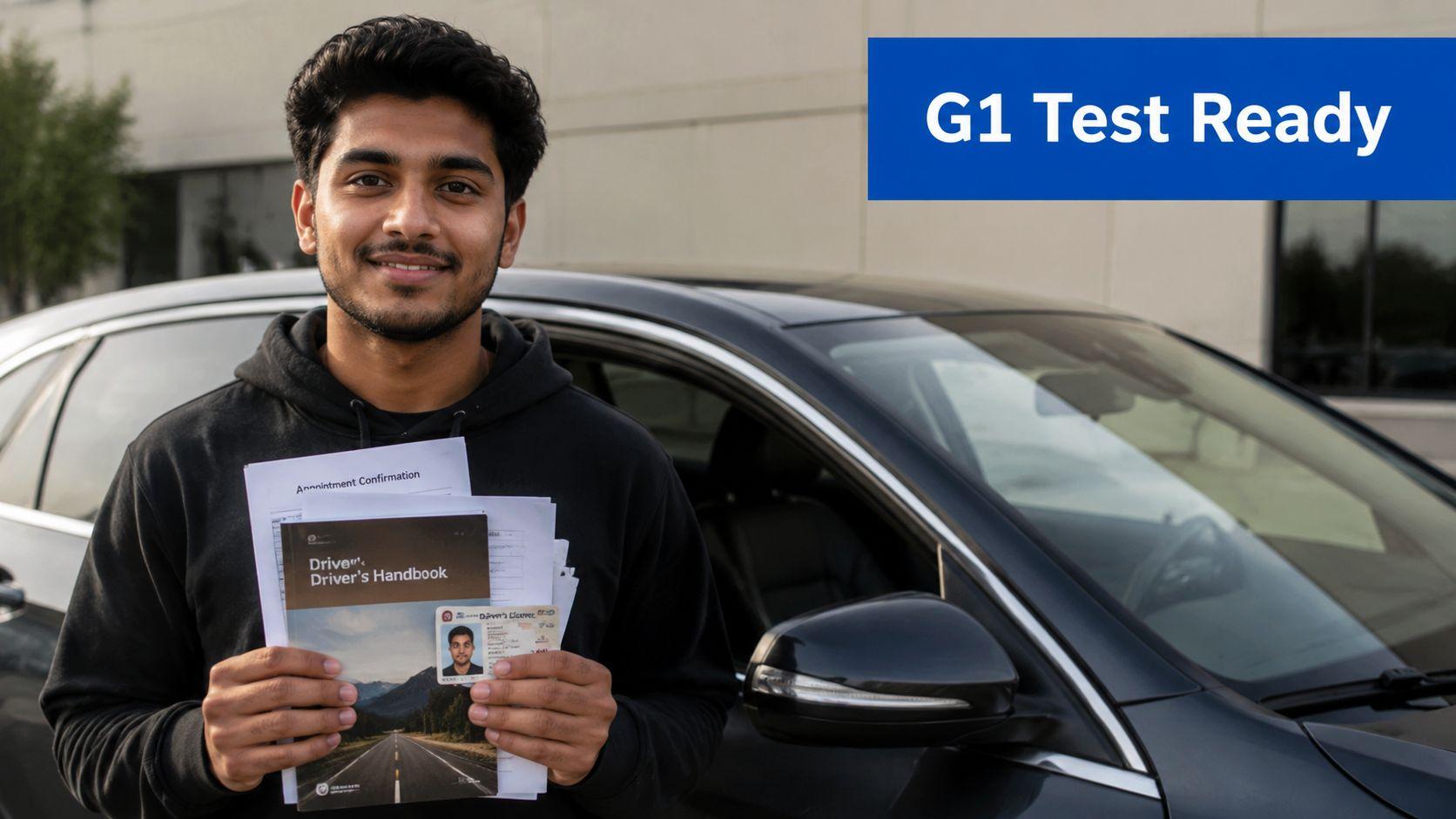
For newcomers, the language option matters. It removes one big layer of pressure. If English isn't your first language, you're not locked into one format.
What to bring before you leave home
Think of test day as an admin task first and an exam second. If your paperwork isn't right, your studying won't matter much that morning.
Bring what you need in a neat, easy-to-reach folder or envelope. Don't arrive digging through a backpack at the counter.
- Your identification: Bring the required identification documents and check them carefully in advance.
- Your corrective lenses if you use them: You'll complete a vision test before the written exam, so don't assume you can “manage without them.”
- Your payment method: Know the fee beforehand so there are no surprises.
- Your study material for review while waiting: Keep it simple. A few pages of notes are better than trying to relearn everything in the lineup.
The most preventable test-day mistakes aren't about knowledge. They happen at the counter.
If you're a teen born in Canada, your document setup may be straightforward. If you're a newcomer or you've recently moved, give yourself extra time to confirm your documents before test day. That small step saves a lot of stress.
A simple pre-leaving checklist
Use this the night before:
Item Why it matters ID packed Prevents being turned away before the process starts Glasses or contacts ready Needed if you use corrective lenses for the vision test Route to Wellington Road planned Cuts down last-minute rushing Handbook or notes ready Helps with light review while waiting
Students often ask whether they should over-prepare for the building itself. You don't need to. You just need to show up organised, early enough to settle in, and ready for a walk-in process that can involve waiting.
How to Study for and Pass the G1 Test
Strong G1 preparation isn't about doing random quizzes until you feel lucky. It works better when your study method matches the structure of the exam.
Understand the test before you study
The Ontario G1 knowledge test has 40 multiple-choice questions split into two sections of 20. One section covers road signs and the other covers rules of the road. To pass, you need at least 16 correct in each section, not just a strong total score, as outlined in this Ontario G1 scoring breakdown.
That's the detail many students miss.
If you get enough answers right overall but fall short in one section, you can still fail. So if road signs feel easy but road rules keep tripping you up, your study plan should reflect that. General confidence isn't enough. Section-by-section confidence is what matters.
Study the right source first
Start with the official Ontario driver's handbook. It remains the Ministry's core study source for the G1. That matters because students often waste time memorising shortcuts, old notes from friends, or disconnected quiz answers without understanding the rule behind them.
The handbook gives you the wording, the categories, and the logic behind the questions. Read it actively, not passively.
Try this approach:
- Read one topic at a time: Signs first or rules first. Don't mix everything together in one long session.
- Write down only what you miss: Your weak points matter more than the pages you already understand.
- Turn confusing topics into examples: Right-of-way, yielding, demerit points, and night visibility often make more sense when you picture a real road situation.
Students usually don't lose marks because the test is tricky. They lose marks because they read a familiar rule too quickly and choose the almost-right answer.
That's why repeated review beats cramming. You want recognition and understanding, not just short-term memory.
Use practice in a way that matches scoring
Practice tests help most when you use them as feedback, not as entertainment. If you're preparing for the G1 driving test in London Ontario, your goal is to track patterns. Are you stronger on signs than on rules? Do you rush yielding questions? Do demerit point questions blur together?
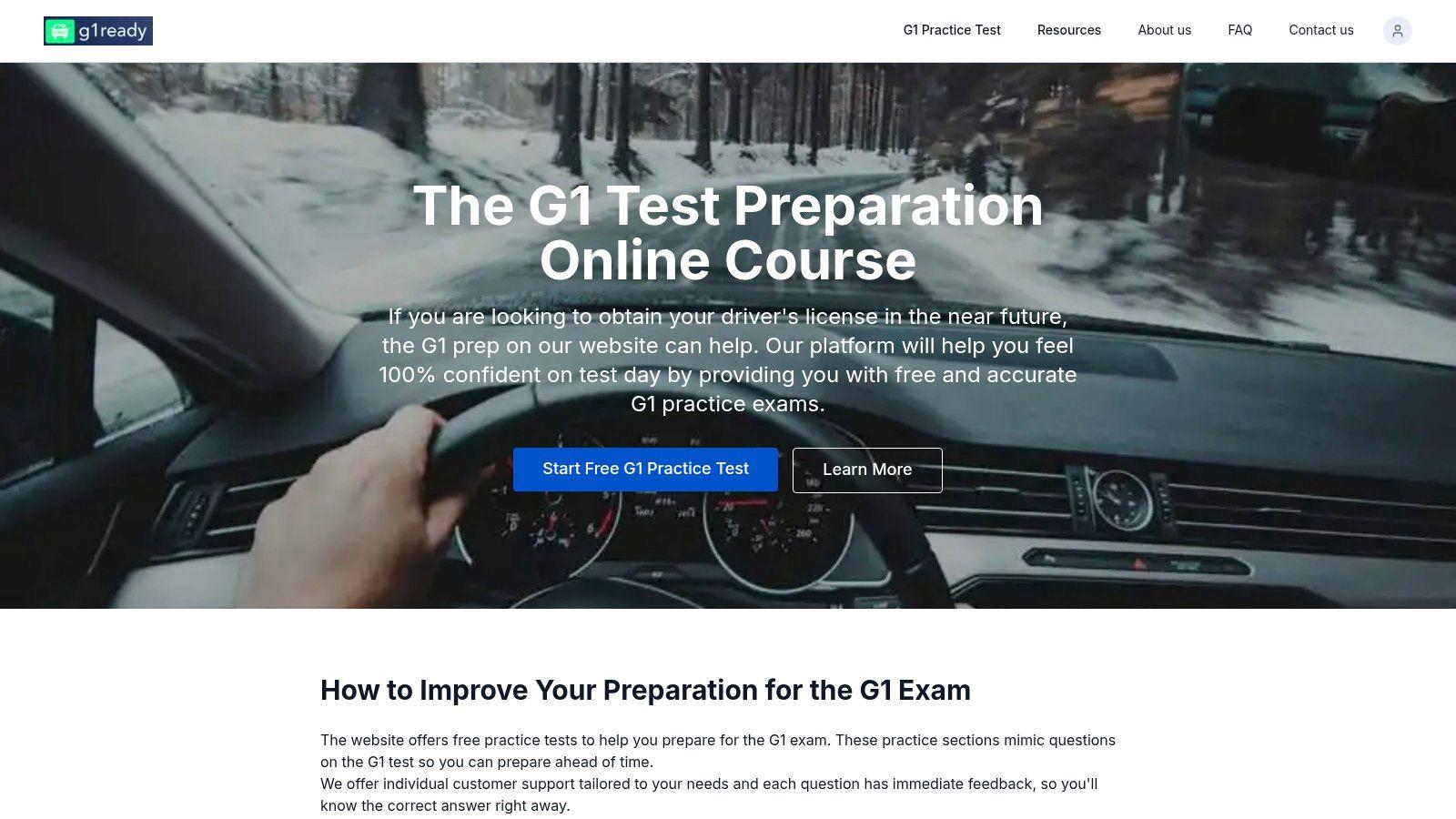
One practical option is this guide on how to study for the G1 test, paired with practice tools that separate signs from rules, offer mixed exams, and let you repeat weak topics. G1ready.ca is one example of a preparation platform that offers section-based quizzes, a diagnostic approach, and an exam simulator aligned to the Ontario format.
A smart study routine often looks like this:
- Start narrow: Do a focused signs quiz or a focused rules quiz instead of a mixed test.
- Review every mistake immediately: Don't just note the score and move on.
- Retest the same weak area: If yielding questions were rough today, repeat them tomorrow.
- Finish with a full mock exam: This checks whether your section-by-section progress holds up under test conditions.
Here's a quick way to understand it:
Study method What it helps with Official handbook reading Building accurate understanding Topic-specific practice Fixing weak areas Mixed mock tests Rehearsing the real experience Error review Preventing repeated mistakes
For many learners, a short daily session works better than one marathon cram. It keeps the information fresh and lowers pressure.
This video can also help you reinforce the format and expectations before you head in for the test.
What to Expect on Your G1 Test Day in London
The day itself is usually much less dramatic than students imagine. Once you arrive, it becomes a sequence of small steps. Knowing that sequence helps people settle down fast.
What the visit usually feels like
You arrive at the Wellington Road location, head inside, and join the flow of people waiting for service. Because the knowledge test is walk-in, the pace depends on how busy the centre is when you get there. If you've brought your documents, payment method, and glasses if needed, you've already removed the biggest sources of trouble.
After check-in, you'll handle the vision part and then move toward the written-test process. The environment is practical, not theatrical. Staff are processing people all day. You don't need to impress anyone. You need to follow directions and stay composed.
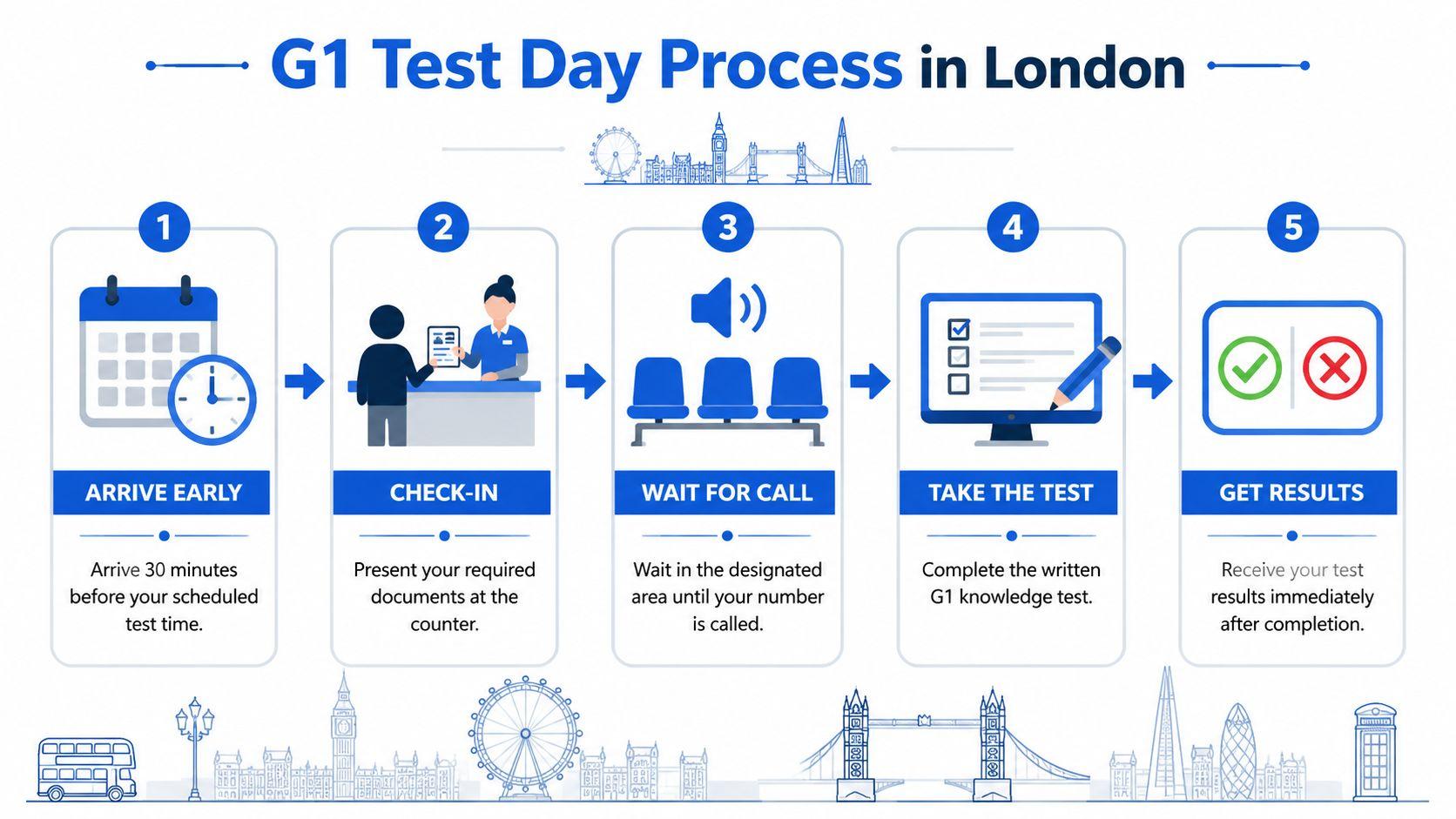
For a more detailed walk-through before you go, this G1 test day expectations guide can help you mentally rehearse the process.
What the actual written test is like
A lot of people worry about the clock. That usually isn't the actual problem. According to this London G1 test-day overview, there is no official time limit, and most applicants finish in about 20 to 30 minutes. The bigger risk is procedural error or weak preparation, not running out of time.
That should change how you behave at the computer. Slow down just enough to read properly.
- Read the whole question: Students often misfire on familiar topics because they answer before they finish reading.
- Watch for look-alike signs: Don't rely on colour or shape alone if two signs feel similar in memory.
- Stay present after one hard question: One uncertain answer doesn't mean the test is going badly.
- Treat each question as its own task: Don't carry panic from one screen to the next.
If you feel rushed, pause for a breath and read the question again. Calm reading beats fast guessing every time.
Most students leave the room saying some version of the same thing. “That felt more straightforward than I expected.” That's often true when they've prepared properly and know the process in advance.
You Took the Test Now What Happens
You walk out of the Wellington Road DriveTest centre and the tension breaks. Then the next question shows up fast. What does this result mean for you?
That part catches many new drivers off guard. They prepare hard for the knowledge test, but they do not always prepare for what happens right after it.
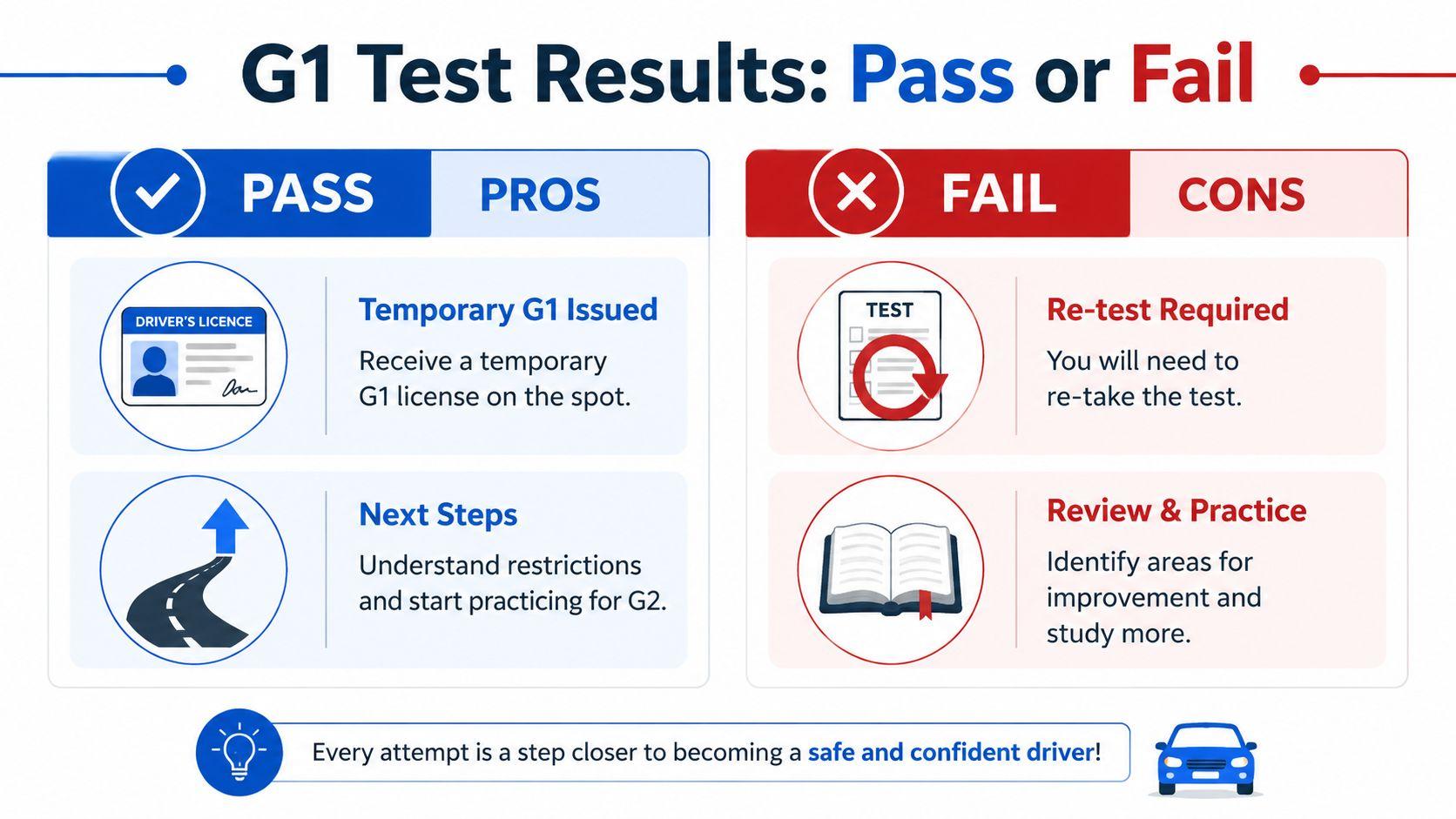
If you pass
If you pass, the staff will give you a temporary G1 licence at the centre. That is your entry point into Ontario's graduated licensing system, not the finish line.
Treat it like getting the key to a practice field, not a pass to drive any way you want. The goal now is supervised experience, clean habits, and patience. Students who understand that early usually make the G2 stage much easier for themselves later.
Keep your next steps simple:
- Know your G1 restrictions: Read them carefully so you do not guess or rely on what a friend told you.
- Start practising the right way: Use each supervised drive to build scanning, spacing, and decision-making habits.
- Plan ahead early: If you want to shorten your wait for the G2 test, driver education matters, so it helps to think about that soon after passing.
If you don't pass this time
A failed attempt stings. That is normal.
What helps next is diagnosing the weak spot clearly instead of treating the whole experience like one big failure. Instructors see this all the time in London. One student struggles with signs. Another understands the rules but rushes and misreads. Someone else knows the handbook fairly well but falls apart when similar answer choices appear on screen.
Ask yourself a few specific questions while the test is still fresh in your mind. Which section felt shaky. Did certain sign images blur together. Did right-of-way questions feel too similar. Did nerves make you read too quickly?
Those answers give you a study plan.
If the problem was... Do this next Sign confusion Review signs by category and quiz that section on its own Rules mixing together Study one topic at a time instead of jumping between random questions Nerves and rushing Practise in short sessions and force yourself to read each question twice General uncertainty Go back to the handbook, then rebuild with targeted mock tests
If you used random free quizzes before, switch to a more deliberate method. A platform like G1ready.ca helps because you can isolate weak topics instead of guessing what to study next. That is usually the difference between repeating the same mistakes and fixing them.
What the larger timeline means
Your result also affects your timeline. As noted earlier, Ontario's graduated system includes a waiting period before you can take the G2 road test. That wait is shorter for drivers who complete an approved beginner driver education course.
For many students, this is the first moment the process feels real. Passing the G1 means the clock starts. Failing means the clock has not started yet, so getting back on track quickly matters.
A good way to look at it is this. The written test opens the gate, but your progress after that depends on what you do next. Whether you passed today or need another try, a clear plan will get you farther than stress will.
Frequently Asked Questions About the London G1 Test
Do I need an appointment in London
No. The G1 knowledge test at the London DriveTest centre is a walk-in service. That's useful, but it also means timing affects your experience because you may need to wait depending on how busy the centre is.
How much does the G1 cost
The G1 test package fee was most recently cited as $158.25, and that package includes the knowledge test, the G2 road test, and the five-year licence, according to this Ontario G1 fee overview. It helps to know that before you go so you can budget properly.
What if I need glasses for the vision test
Bring them. If you normally use glasses or contact lenses to see clearly, don't leave them at home and hope for the best. That's one of the easiest ways to create a preventable problem.
What should I focus on if I'm nervous
Focus on process, not emotion. Get your documents ready the night before. Review the handbook instead of jumping between random notes. On the test, read slowly and answer what's in front of you, not what you assume the question says.
Is the test mostly about memorising facts
Not really. Some memorisation is part of it, especially with signs. But many students get stuck on interpretation. Right-of-way, yielding, demerit points, and reduced-visibility rules often cause more trouble than people expect because the wording can feel similar from one question to the next.
Should I study signs and rules together
Usually not at the start. Since the test is scored in separate sections, it makes more sense to study them separately first. Once both feel steady, move to mixed practice.
What happens right after I pass
You receive a temporary licence on the spot at the centre. After that, your next job is to understand your G1 driving restrictions and begin supervised driving practice safely.
If you want a simple way to practise before heading to Wellington Road, G1ready.ca offers Ontario-focused G1 practice tests, topic quizzes, and a simulator-style study experience that can help you rehearse the format and spot weak areas before test day.