You've got the MTO Driver's Handbook open in one tab and a practice question in another. The question is in Farsi, you understand every word of it, you choose the answer that sounds obviously correct, and the screen tells you it isn't.
That moment has nothing to do with intelligence or driving experience. The translation was fine. The rule underneath it wasn't the one you assumed. Ontario's G1 knowledge test doesn't ask whether you read Persian well. It asks whether you know what Ontario expects at a school bus, a streetcar stop, or a freeway on-ramp.
The fix is a habit rather than a trick. Learn the rule in the language you think in, then check it against the English term Ontario uses for it. An Ontario G1 practice test in Farsi is most useful when it forces that double check on every question instead of letting you coast on wording that feels familiar.
What the Farsi G1 Test Covers and What You Need
Yes, you can write Ontario's G1 knowledge test in Farsi. The province added it as part of an expansion to 21 available test languages, and the Ontario government's announcement notes that the test was already offered in 20 other languages, including English and French.
That makes Farsi an officially supported test language, not an unofficial translation passed around online. The province tied the expansion to helping newcomers learn provincial road rules, complete licensing requirements and gain the experience needed to drive safely. It also described Farsi as one of Canada's fastest-growing languages and pointed to Farsi-speaking communities in Richmond Hill and the surrounding area, which is why the change landed where it did.
The requirements fit on one screen, so scan them before you plan any study time.
Item Ontario G1 detail What it means for study Minimum age 16 Start practising only once you meet the age requirement for testing Test language Farsi, alongside English and French Study in Farsi, but check every Ontario term in English Number of questions 40 total, 20 in each section Practise with larger sets so no topic surprises you Sections Traffic signs and rules of the road Track scores for each section separately Pass mark 16 out of 20 in each section Aim above 16 in both sections, not just on average Other requirements Vision test and valid identity documents Arrange these before your test appointment
Why both sections decide your result
Signs are one paper. Rules of the road are the other. Each carries 20 questions and needs 16 correct to pass, which means a strong signs score won't rescue a weak rules score. Treat them as two exams that happen to share one appointment.
The subject list behind those papers is fixed. The knowledge assessment covers traffic signs and lights, seatbelts, emergency vehicles, speed limits, freeway entry and exit, school buses, streetcars, collision reporting, sharing the road, suspensions, demerit points and general rules of the road. None of that changes because the questions arrive in Persian.
The test of a good Farsi resource: if the question wouldn't make sense to a driver in Ontario, it isn't Ontario practice.
The Farsi version asks the same questions as the English version. Anything that claims to prepare you should cover those handbook areas precisely, not a looser translation of driving questions written for another country.
Practice Test Options and Which to Take First
Five practice sets sit on the site, and treating them as interchangeable is the first mistake learners make. Each one answers a different study question, so the order you take them in matters as much as the hours you put in.
Start with the set you would fail today. The Diagnostic Test mixes questions from both sections and shows which half is leaking marks before you spend a week drilling the wrong material. A set that mirrors the exam format, scoring signs and rules separately, reads your result the way the test centre will read it.
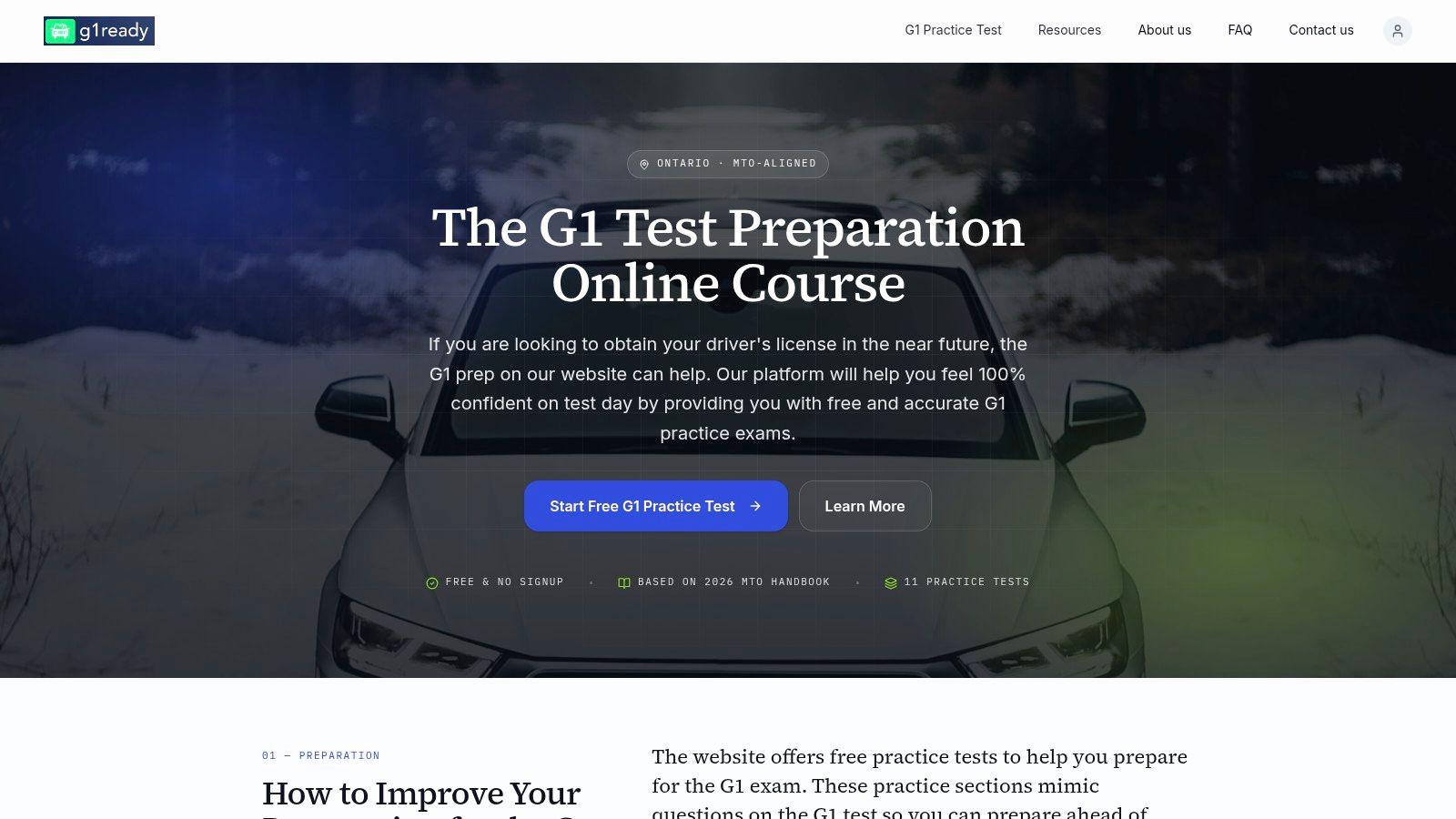
Practice test Questions Best use Diagnostic Test Mixed set covering both sections Find weak areas before you start studying Road Signs Test Signs only Drill regulatory, warning and guide signs Road Rules Test Rules only Practise rules of the road section by section 100-Question Test 100 Broad coverage of signs, rules and safe driving 200-Question Test 200 Full coverage, including the G1 Restrictions and Laws section, and endurance practice
The order that works
Run the Diagnostic Test once as a baseline, then repair each section in turn. The Road Signs Test comes first, the Road Rules Test second, so the heavier drilling happens while your study energy is fresh. After that, the 100-question set adds breadth: its traffic regulations section covers road rules, right-of-ways, lane changes and parking, its signs section covers regulatory, warning and guide signs, and its safe driving section covers defensive driving, hazard perception and emergency response. The 200-question set goes last, adding a G1 Restrictions and Laws block of 10 to 20 questions that the shorter sets never reach.
One practical sequence looks like this: diagnostic check, signs drills, rules drills, the 100-question set, then a second diagnostic pass to confirm both sections hold before you attempt the 200.
The site also runs chapter quizzes for Chapters 1 through 22 and topic tests on alcohol and impaired driving, demerit points, distracted driving, fines and suspensions, and intersections, signals and right-of-way. Those work as repair tools rather than general practice. If lane changes keep tripping you, one topic test tells you more than another hundred mixed questions would. The guide to free driving licence practice tests explains how the sets relate to one another.
Language comes next. Confirm a set is available in Farsi before you build a routine around it, and keep the English name of every Ontario rule beside its Persian explanation. An English-only set still helps, provided you read it as a check rather than as translation homework.
One decision rule covers the whole question of where to start. If the diagnostic comes back below 16 in either section, drill that section before you attempt a full set. Volume only helps once both sections hold steady.
Ontario Topics to Master Before Test Day
A translated syllabus can look endless. Group it into five buckets, and it becomes a checklist you can finish.
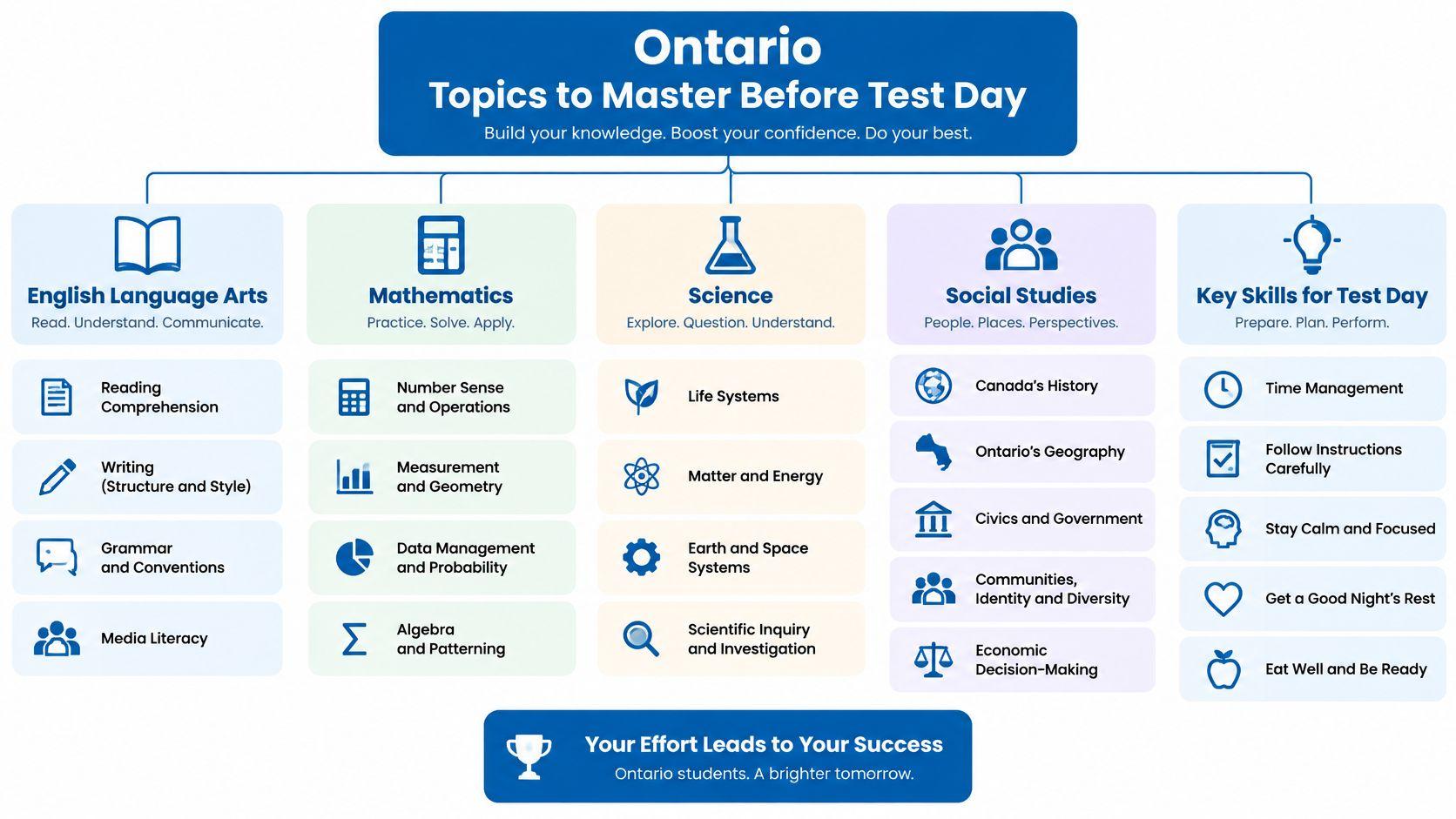
Ontario sets the bar plainly. Ontario's guide to getting a G driver's licence requires applicants to be at least 16, to pass a vision test, and to pass a knowledge test covering the rules of the road and traffic signs, and it names the Official MTO Driver's Handbook as the study source. The exam scores its signs and rules sections separately, so a weak bucket shows up on your result sheet as a weak section, not a rounding error. The handbook's sample questions use a multiple-choice format, which means practising in that structure is real rehearsal rather than busywork.
Signs, rules, safety, paperwork, special cases
Signs open the list because every misread one costs a mark in a section that is scored on its own. Regulatory signs set speed limits and stop requirements, warning signs flag hills, curves and school zones, and guide signs handle highway exits and navigation.
Rules of the road cover right-of-way, lane changes, parking, intersections, signals and sharing the road. Safe driving runs from defensive driving and hazard perception through emergency response, distracted driving, and alcohol and impaired driving. Vehicle and licensing topics include seatbelts, headlights, suspensions, demerit points, fines and penalties. Special situations close the map: emergency vehicles, school buses, streetcars, freeway entry and exit, and collision reporting.
The licensing bucket deserves a second look. Terms like demerit points and suspensions rarely come up in everyday Persian conversation, so their English names need deliberate study rather than recognition on sight.
Why exact Ontario wording matters
A school bus question looks simple in translation, then splits into two different answers. What you must do depends on the road underneath you. Following the bus, you stop. Meeting it head-on, you also stop, unless a median divides the road. One set of red lights, two different duties. Learn the general rule of thumb and you will miss it. Learn the Ontario duty and you will not.
Watch the walkthrough below before you attempt the next set.
Every topic on this map should end up explained in your own words, with the Ontario rule named in English. A memorised answer letter only survives until the question is reworded. For more on these topics, see the traffic rules questions guide.
Study Routine and the Mistakes That Cost Points
Six steps per question, every time. The routine feels slow for the first ten questions and automatic by the fiftieth.
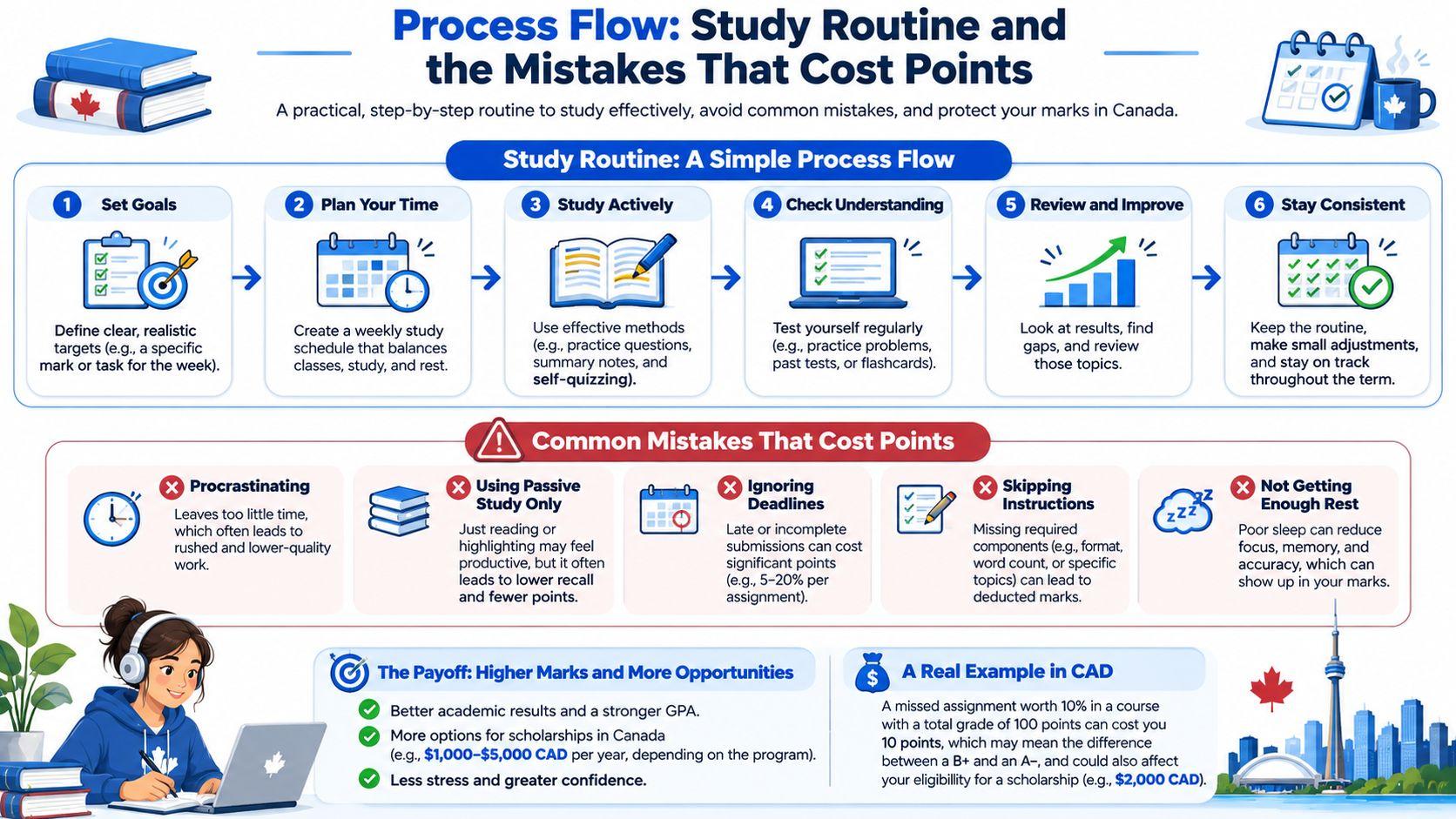
- Answer in Farsi first. Comprehension comes before correctness, so you find out whether the problem is language or rule.
- Name the English legal term. School bus, emergency vehicle, demerit points. The Persian wording stays anchored to an official Ontario concept.
- Classify the question. Sign, right-of-way, safe driving, licensing, special situation. When you miss it, the label tells you what to revisit.
- Read every wrong option. State in one sentence why each is unsafe or unlawful, which converts a guess into a rule.
- Log the miss. A short list grouped by topic, not a pile of screenshots.
- Retake the missed questions tomorrow. No answer key visible. Move on only when the topic is right twice.
Ontario's new-driver licensing page frames the knowledge test as a rules-and-signs assessment, and the same bilingual review habit applies at every stage: answer in Farsi to test understanding, identify the Ontario rule category in English, then explain why each rejected option fails.
Four mistakes that cost points
Memorising translated answers. A reworded question then reads as a new question and you miss it. The fix is to learn the rule sitting behind each answer, so the wording stops mattering.
Using generic driving questions translated into Persian. Foreign streetcar, freeway and school bus conventions teach the wrong duty. Ontario content only, checked against the handbook.
Skipping the explanations for wrong options. Four options means three teaching moments disappear when you jump straight to the next question. Write the one-sentence reason instead.
Studying from an outdated handbook. Rules and penalties change. Check that your material matches the current MTO edition before you trust a score from it.
Short sessions on most days beat one long weekend. Twenty minutes with a miss log does more than two hours of clicking.
The routine has a visible payoff. Your notes list should shrink week by week, and topics you once feared should stop appearing on it at all.
A Four-Week Study Plan Before Test Day
The schedule front-loads recognition, builds rule knowledge in the middle, and finishes with stamina under test conditions. Plan 30 to 45 minutes on most days, with one longer session at the weekend.
Week Focus Practice set Goal before moving on Week 1 Traffic signs Road Signs Test daily Recognise every regulatory, warning and guide sign without hesitation Week 2 Rules of the road Road Rules Test by topic Explain the rule behind each missed question in your own words Week 3 Mixed topics Diagnostic Test, then 100-Question Test Score above 16 out of 20 in both sections on the mixed set Week 4 Full simulation 200-Question Test in one sitting Hold steady scores across sections and repeat the weakest section
Week one is repetition without much thinking, deliberately. You want sign shapes and colours to register before your inner translator catches up. Week two slows down again and applies the six-step routine to each rule category in turn.
Week three is where you discover you've been strong on one section and shaky on the other. Run the diagnostic to measure progress, then the 100-question set, then review every miss rather than just the score. Week four simulates the day itself: the 200-question set in a single sitting, then a return to whichever section wobbled.
Readiness has a plain definition. Consistent scores above 16 out of 20 in both sections, on mixed sets, across several sittings. If a score falls below that line in either section, go back to that section for a few more days instead of pushing forward.
Readiness rule: book when your last three mixed sets both clear the pass mark, not when the calendar says week four is over.
The exam is a short sitting, which is exactly why a long practice set earns its place. You're training the focus to finish calmly rather than the ability to answer forty questions.
Newcomer Requirements and Booking Your G1 Test
Work through the checklist before you touch a booking page, because scores are the only reliable signal of readiness.
- Three clean runs. Two or three consecutive mixed sets above 16 out of 20 in both sections.
- Every recent miss has a named rule. Not "I'll remember it", but the Ontario rule plus one sentence on why the alternatives are wrong.
- English terms are locked in. You can state the English name for each topic area without checking.
- Format familiarity. You know how the two sections are scored and how the result is reported.
The practice tests here are free, including the Road Rules Test, Road Signs Test, Diagnostic Test and 200-Question Test, plus a 100-question extended set. Take them as many times as you need, because a retake costs nothing and a retake with a miss log is what moves the score.
Paperwork before you book
Newcomers arriving from jurisdictions without a licence-exchange agreement need a valid foreign licence where applicable, acceptable identity documents, payment of the applicable fees, a vision test and a knowledge test, according to Ontario's licensing requirements. Passing the knowledge test is what allows the applicant to obtain a G1 licence, so the order matters: documents and vision test first, knowledge test alongside.
Confirm the test language you'll sit in, and check the address and opening hours of your nearest testing centre before you choose a date. Some centres run different hours than the one you assumed was closest.
Book once the checklist is met. A calendar date won't tell you whether you're ready. Consistent scores will.
G1ready.ca gives Farsi-speaking learners a free way to rehearse the exact Ontario material the G1 test checks, with the Road Rules Test, Road Signs Test, Diagnostic Test and 200-Question Test available as often as you need them. Every question includes an explanation you can check against the English legal term, so the Persian stays tied to the Ontario rule instead of drifting from it. Start with the diagnostic at G1ready.ca, find the weaker of your two sections, and build from there.