You walk back into the parking lot certain you drove better than the result you just got. The examiner says you failed. You replay the route in your head. You stopped, checked, signalled, merged, parked. But the sheet says otherwise, and now you're stuck with the feeling that something about the whole test wasn't fair.
That reaction is common. Sometimes the issue is a clear driving error that didn't feel serious in the moment. Sometimes it's test anxiety. Sometimes the route, traffic, or centre conditions make a test feel much harsher than expected. When you've been unfairly failed on a driving test in Ontario, what you need most isn't generic encouragement. You need a practical plan.
The Moment You Realize You Unfairly Failed
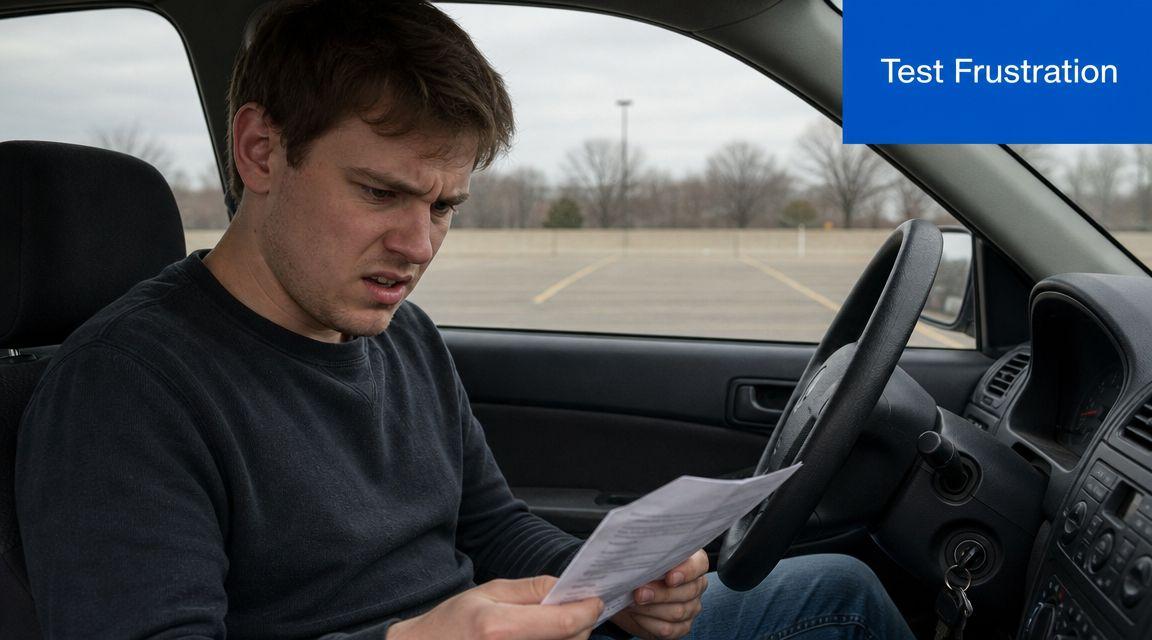
The hardest part is the uncertainty. If you know you rolled a stop or missed a shoulder check, the result hurts, but it makes sense. When you don't know what supposedly went wrong, the fail feels personal.
I've seen drivers come out of a test convinced they were judged more harshly than a friend who tested somewhere else. That feeling isn't always just frustration talking. An Ontario-centred review of DriveTest results reported a 53% failure rate at the Brampton DriveTest centre for the G2 road test and 7% in Kenora, a gap of 46 percentage points, which suggests local testing conditions can materially affect outcomes across centres in Ontario according to this Ontario pass and failure rate analysis.
Why that matters to you
That doesn't prove your examiner was wrong. It does prove something important. Location can shape the test experience.
Different centres have different traffic patterns, road layouts, lane markings, pedestrian activity, and pressure points. A complicated left turn near a busy plaza doesn't feel the same as a quieter route in a smaller community. Some centres also develop reputations because learners face the same tricky merge, school zone, or awkward intersection over and over.
Practical rule: Treat your result as a specific event, not a verdict on your whole ability to drive.
You have two real paths
Once the shock settles, most drivers should look at the situation through one of these lenses:
- Challenge the result if you believe the scoresheet doesn't match what happened, the examiner made a factual error, or there was an unusual event that directly affected the test.
- Prepare for a retake if the fail likely came from scoring judgment, nervousness, or mistakes that are difficult to prove after the fact.
Both paths can be reasonable. The mistake many people make is choosing neither. They stay angry, don't get the paperwork, and lose the best chance to either contest the fail or learn from it.
If you think you were unfairly failed on a driving test in Ontario, your next move needs to be immediate and organised.
Your First Action Get and Understand Your Scoresheet
Before you argue with anyone, get the document that explains the fail. The scoresheet is the only place where your reaction turns into something reviewable.
What to do before you leave the centre
Ask DriveTest staff for a copy of your driver test scoresheet. Be polite and direct. Don't try to relitigate the whole test in the lobby. Just ask for the record of how the test was scored.
Then do three things while the details are still fresh:
- Write down the route details you remember, including the turn, lane change, parking manoeuvre, or traffic event connected to the fail.
- Note the timing and conditions such as heavy traffic, construction, unclear lane markings, or another driver cutting you off.
- Mark the items on the scoresheet that seem unclear, incorrect, or out of proportion.
A lot of frustrated drivers skip this because they're upset. That's understandable, but it's a mistake. Memory gets fuzzy fast.
How to read the sheet properly
Ontario road tests aren't scored like a simple yes or no checklist. The examiner can deduct points for smaller mistakes, and a critical safety error can end the test regardless of how well you handled everything else. Ontario's official handbook also makes clear that items such as mirror checks, blind-spot checks, and proper stopping distance are graded competencies, including targets like stopping no more than 30 cm from the curb during curbside stopping, as outlined in the Ontario level two road test handbook.
That means your claim of unfairness has to start with one question. Did you fail because of accumulated mistakes, or because the examiner marked a critical?
A quick way to think about it:
Scoresheet pattern What it usually means Several small deductions across the route The examiner saw a pattern of weak habits One serious marked action The examiner treated it as a safety issue Parking, lane changes, checks, and stops marked inconsistently Worth reviewing closely before deciding what to do next
What usually helps and what doesn't
What helps is matching the score to an actual moment. If the sheet shows an issue on a lane change, ask yourself whether your mirror, signal, and shoulder check were obvious enough to be seen. If parking was flagged, review your spacing and position. If that's an area you're already working on, a focused guide on parallel parking for the Ontario driving test can help you compare your technique to what examiners expect.
What doesn't help is a general statement like, "I drove fine the whole time."
If you can't point to the exact item you dispute, you're not ready to challenge the result yet.
The scoresheet isn't just proof of failure. It's your map of what happened from the examiner's point of view.
Filing a Formal Complaint with DriveTest and MTO
If your scoresheet contains a clear discrepancy, or you believe the examiner's judgment was affected by something specific and documentable, file a complaint in a way that gives reviewers something concrete to assess.
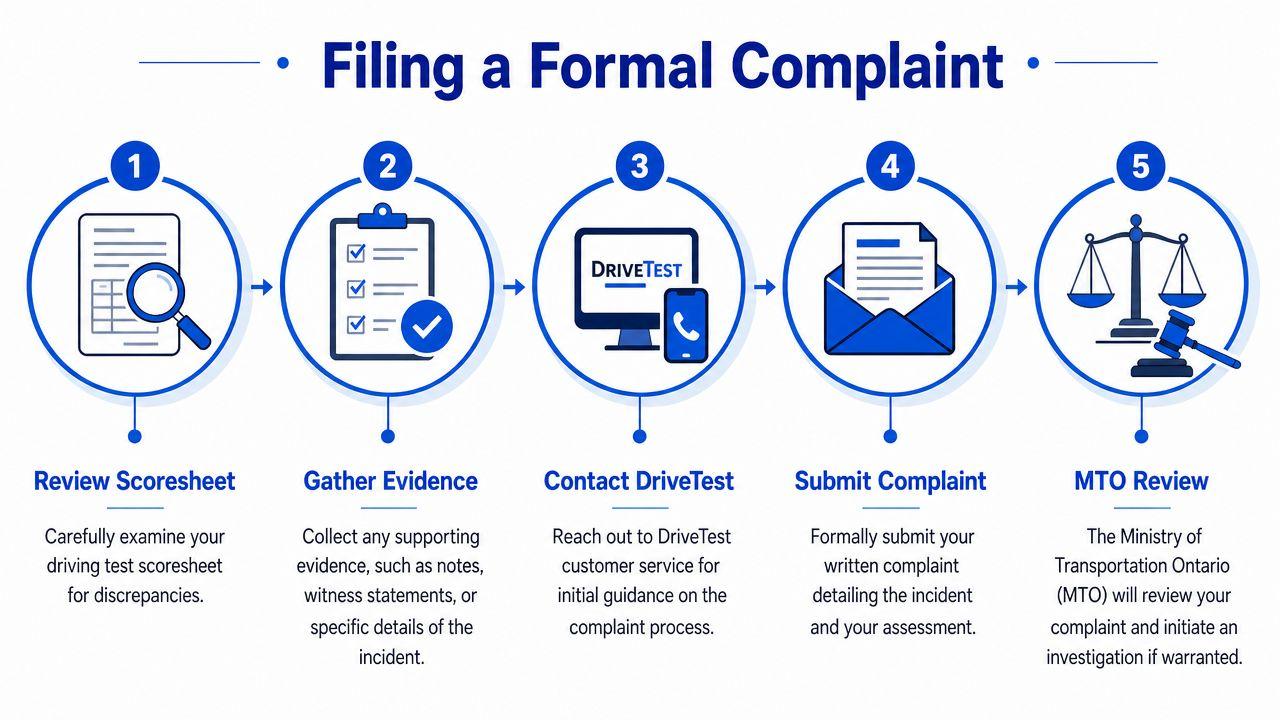
Ontario-specific guidance on this process is thin, and that's part of the problem. One Ontario-focused review specifically noted the gap around how to challenge a potentially unfair road-test failure with evidence, including uncertainty about process, timelines, and what material is persuasive to reviewers, as discussed in this Ontario complaint-process overview.
Start with DriveTest, not the Ministry
Many drivers jump straight to the Ministry of Transportation. In practice, your first complaint should go to DriveTest. That's the organisation that administered the road test and holds the operational record of the appointment.
Your complaint should be written, factual, and narrow. Include:
- Your identifying details such as full name, licence number, contact information, and test centre.
- The appointment details including date, time, and whether it was a G2 or G road test.
- The disputed event described in sequence, using plain language and no exaggeration.
- The scoresheet issue you believe is wrong, unclear, or unsupported.
- Any supporting material that helps establish what happened.
What counts as useful evidence
Most complaints falter due to a specific deficiency. General frustration isn't evidence. A detailed timeline can be.
Useful material can include:
- Immediate written notes made right after the test
- Witness statements from someone who directly observed part of the event, if applicable
- Dashcam footage if your vehicle had it and the recording clearly captures the situation
- Photographs or route details if road markings, signs, or temporary conditions matter to the issue
Less useful material includes emotional language, broad claims about a centre's reputation, or statements from people who weren't there.
Keep your complaint boring. Calm, specific complaints are easier to review than dramatic ones.
How to write the complaint
A strong complaint letter usually has a simple structure:
- State the result and the test details
- Identify the exact scoring issue
- Describe the event chronologically
- Attach the evidence
- Request a review of the result and scoring record
Don't demand punishment for the examiner. Don't speculate about motives. Stick to what can be checked.
If DriveTest's response doesn't resolve it
If you receive a response and still believe the issue wasn't handled properly, you can escalate the matter to the Ministry of Transportation of Ontario. At that stage, include the original complaint, DriveTest's response, your scoresheet, and the supporting evidence package.
Realistically, most complaints don't end with a road test result being reversed on the spot. More often, the process produces clarification, a record of the complaint, or an acknowledgement of the concern. That's not the answer many drivers want, but it's better to understand that before you spend energy on a weak challenge.
Weighing Your Options The Cost of a Challenge vs a Retake
There are two different goals people confuse after a disputed fail. One is being proven right. The other is getting your licence.
Those goals sometimes point in different directions.
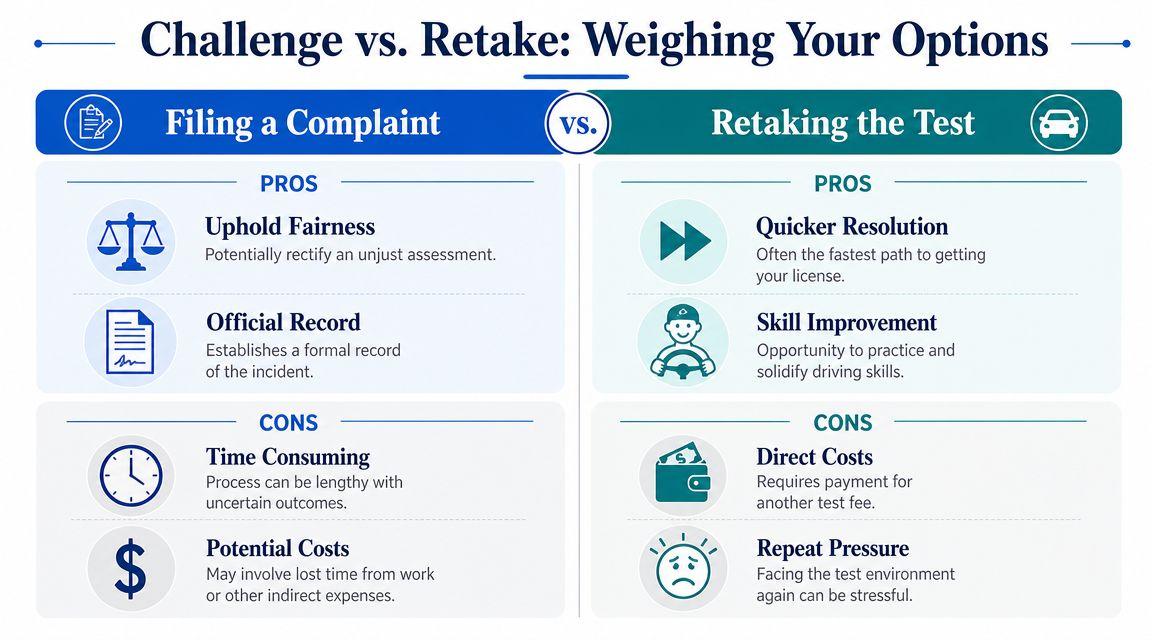
The practical comparison
A failed road test in Ontario means paying a $53.75 rebooking fee, which turns any disputed result into an immediate financial hit, as noted in this Ontario road test failure and rebooking guide. That makes the choice feel unfair twice. First in principle, then in cost.
Still, the cheapest emotional decision isn't always the most efficient practical one.
Option Best case Main downside File a complaint You create a formal record and may get a meaningful review Time, uncertainty, and no guaranteed change in outcome Rebook quickly You move directly toward the next pass opportunity You pay again and face the test environment again
When a challenge makes sense
A complaint is more sensible when your case has structure behind it. For example:
- The scoresheet appears inconsistent with what happened on the route
- A specific road or traffic event affected the assessment
- You have evidence, not just a strong feeling
If your main goal is to get back on the road as soon as possible, the more practical move is often to book your Ontario G road test again and use the failed attempt as a diagnostic.
What usually works better
For most drivers, a split strategy works best. File the complaint if you truly believe there was an unfair issue. But prepare as if the retest is the main path forward.
That keeps you from losing weeks to principle alone. It also gives you a sense of control, which matters after a bad test experience.
Turning Failure into a Pass Your Retest Strategy
Once the first wave of frustration passes, the most productive question is simple. What exactly needs to change before the next test?
A failed test gives you something useful that many first-time passers never get. It gives you targeted feedback under exam conditions. If you use that properly, the next attempt often feels less mysterious and more controllable.
Turn the scoresheet into a practice plan
Don't practise everything equally. Practise what the sheet flagged.
If the issue was observation, your drills should focus on making mirror checks, blind-spot checks, and scanning habits obvious and repeatable. If the issue was stops, work on full stops, timing, and controlled approach speed. If parking was weak, repeat the manoeuvre until your setup and corrections are automatic.
A clean retest plan usually has three parts:
- Habit repair for the errors that appeared on the scoresheet
- Route familiarity around the test centre area
- Rule refresh so your decisions are quicker and calmer under pressure
Fix the habits that examiners notice fastest
Many disputed fails come down to actions learners thought they did, but didn't do clearly enough to be observed. That's especially true with shoulder checks, mirror use, lane changes, and stops.
Try this approach over several practice sessions:
- Narrate your checks out loud during private practice so the sequence becomes fixed.
- Slow down your setup before turns, merges, and parking.
- Practise with one goal per drive, not ten.
- Ask your instructor or supervising driver to mark only the repeated habits, not every tiny issue.
The retest is easier when your good habits look unmistakable from the passenger seat.
Rebuild your rule knowledge too
Some road test mistakes start long before the car moves. A hesitant merge, a poor right-of-way decision, or a weak stop often comes from uncertainty about the rule underneath it.
That's where knowledge practice matters. For Ontario learners, one option is G1ready.ca, which offers handbook-based practice questions, immediate explanations, and targeted review for common weak areas. Used properly, a tool like that isn't just for the G1 stage. It helps sharpen the split-second rule recognition that supports better on-road choices.
This walkthrough is worth watching before your next attempt:
A calmer retest usually looks different
Drivers often think they need to become dramatically better between tests. Usually they don't. They need to become more consistent, more visible in their safety checks, and less rushed.
A good retest isn't flashy. It feels controlled. You stop fully, scan clearly, choose safe gaps, and keep the car organised. That doesn't erase the frustration of being unfairly failed on a driving test in Ontario, but it does turn that frustration into something useful.
Move Forward with Confidence
A failed road test can hit harder than people expect. It costs time, money, and confidence. When it feels unfair, it also creates doubt about the whole system.
Still, there is a workable response. Get the scoresheet. Read it carefully. Separate what you can prove from what you only feel. If there's a genuine discrepancy, file a calm, evidence-based complaint through DriveTest first and escalate only if needed. If the result is difficult to challenge, shift quickly into retest mode.
The drivers who recover best from a bad result usually do one thing well. They stop arguing with the event and start preparing for the next one. That doesn't mean accepting poor treatment. It means protecting your own progress.
You're not trying to win an argument with the examiner. You're trying to become the kind of driver whose next test is hard to fail.
If you've been searching for answers after being unfairly failed on a driving test in Ontario, the important thing to remember is this. One result doesn't define your driving future. A careful review, smart preparation, and a more deliberate second attempt can change the outcome fast.
If you want a structured way to rebuild confidence before your next attempt, G1ready.ca offers Ontario-focused practice that helps learners review rules, signs, and weak knowledge areas at their own pace. It's a practical way to tighten up the decision-making that supports a stronger road test.