You've got your G1. The photo card is still new, and now the next question hits fast: how do you learn to drive well in Waterloo?
For most new drivers, this is the confusing part. You search for driving lessons in Waterloo and find school listings, package names, and broad promises, but not much help with the decisions that matter. Should you choose a full course or a few private lessons? When should you start? How do you tell whether an instructor will prepare you for real Waterloo driving, not just a road test route?
Parents often feel the same uncertainty. They want a safe instructor, a clear timeline, and a plan that fits school, work, and family schedules. Newcomers to Ontario usually have another layer of stress because the rules, road habits, and testing expectations may be different from what they knew before.
Good driving lessons do more than help you pass. They help you judge space, read traffic, handle pressure, and stay calm when conditions change. In Waterloo, that includes busy student areas, pedestrians, cyclists, mixed urban and suburban roads, and winter conditions that can make an ordinary street feel very different.
Your Journey from G1 Holder to Confident Waterloo Driver
The first days after getting a G1 often feel oddly split. You're excited because driving is finally real, but you're also aware that knowing road signs isn't the same as turning left in traffic, checking blind spots, or judging whether a gap is safe.
That feeling is normal.
A G1 is permission to start learning, not a sign that you should already feel confident. Most learners need time to connect the rules they studied with the fast decisions that happen on actual roads. That's why choosing driving lessons in Waterloo should be less about finding the first available school and more about finding a path that helps you build skill in the right order.
A useful way to think about it is this:
- Stage one is knowledge: rules, signs, right-of-way, restrictions, and basic road judgment.
- Stage two is guided practice: lessons with an instructor who can correct habits before they stick.
- Stage three is independent confidence: handling common Waterloo situations without panic, rushing, or guesswork.
Some families focus too hard on the road test date. The date matters, but the bigger question is whether the student will be ready for real trips after the test. Can they manage a lane change when traffic feels fast? Can they stay composed near pedestrians and cyclists? Can they adjust when weather changes the road surface?
Practical rule: Book lessons early enough that learning can happen gradually. Cramming driving into a short window usually increases stress for everyone.
If you're still sorting out how Ontario licences work, this short guide to the Class G licence in Ontario gives helpful context before you compare lesson options.
For a new G1 driver, progress usually looks ordinary at first. One lesson might be mostly steering and stopping smoothly. Another might focus on turns, scanning intersections, or parking. That slow build is a good sign. Strong instructors don't rush students into harder situations before the basics are steady.
Understanding Ontario's Graduated Licensing System
A lot of new drivers in Waterloo feel stuck at this point. They know they need lessons, but they are not sure how the licence stages affect timing, test eligibility, or when to start serious road practice.
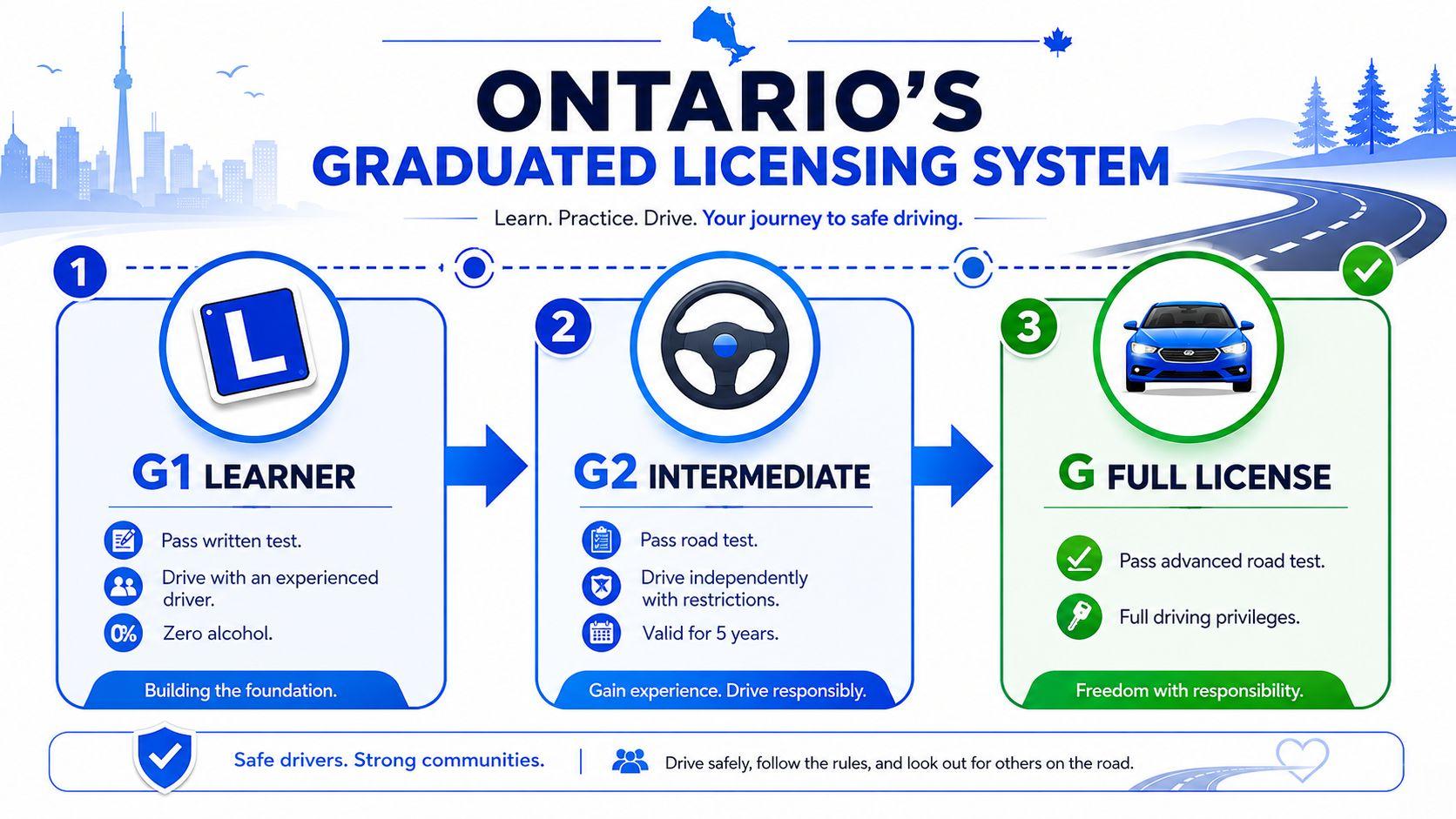
Ontario uses a graduated system because safe driving is learned in layers. You start with rules and supervision, then earn more freedom as your judgment improves. The official Ontario government overview of the G licence process for new drivers explains the timeline clearly: drivers can begin at 16, the usual wait from G1 to G2 is 12 months, and an approved beginner driver education course can reduce that to 8 months.
What the stages mean in plain language
G1 is the learning stage. You have passed the knowledge test, but you still drive with restrictions and with an experienced driver supervising you.
G2 gives you more independence. You have shown that you can handle basic on-road driving, but you are still gaining experience in real traffic, changing weather, and busier situations.
G is the full licence. At that stage, the province expects wider competence and steadier judgment across a broader range of driving conditions.
A simple way to view it is as a staircase, not a jump. Each stage adds responsibility after practice, feedback, and time behind the wheel. That matters in Waterloo because local driving readiness is not just about passing a test. A learner also needs to cope with snowy streets, roundabouts, student-heavy pedestrian areas, cyclists, and sudden congestion near the universities.
Why approved driver education affects your timeline
For many families, driver education is partly a scheduling decision.
Completing an approved course can shorten the wait before the G2 test. That changes when a student can book lessons, how practice fits around school, and whether a learner has enough time to build skill before a summer job, college move, or regular commute. The full path also takes less time with an approved course than without one, as noted earlier from the provincial rules.
That timing matters more than many parents expect. If lessons start too late, the student may be eligible for a road test before they are ready for the kinds of situations Waterloo drivers face every week.
Paying for lessons is not only about getting instruction. It can also change when a learner is allowed to take the next step.
If you want a clearer breakdown of restrictions, waiting periods, and how each stage fits together, this guide to Ontario graduated licensing explained is a helpful companion to the official rules.
Waterloo-area school planning can shape the timeline too. One local driver education reference, Waterloo high school driver education planning information, reflects the same pattern many families run into: students often begin early so they can spread learning out instead of rushing lessons around exams, part-time work, and test dates.
From G1 Practice Tests to Practical Driving
A lot of learners treat the knowledge test and in-car lessons like two separate jobs. They're not. They support each other.
Why theory still matters once you're in the car
If you already know right-of-way rules, sign meanings, and core road law, your instructor can spend more lesson time on actual driving behaviour. That means more practice with observation, lane position, speed control, parking, and decision-making.
If you don't know those basics well, paid lesson time often gets used on explanations that could have been learned before you ever started the engine.
That's why many students keep using study tools even after they pass the G1. A platform like G1ready.ca practice tests for Ontario learners gives you targeted quiz practice, immediate feedback, and explanations tied to the Ontario handbook. Used properly, that kind of preparation helps you arrive at lessons ready to apply rules instead of hearing them for the first time.
Strong theory knowledge makes practical lessons feel calmer because fewer things are happening at once in your head.
What to practise before your first lesson
Before your first in-car session, try to be comfortable with these ideas:
- Signs and markings: You should recognise common signs without hesitation.
- Right-of-way basics: Four-way stops, uncontrolled intersections, and pedestrian priority confuse many beginners.
- Lane purpose: Know the difference between turning lanes, through lanes, and merge situations.
- Mirror and blind-spot habits: Even before driving, you can learn the sequence your instructor will expect.
A short visual explanation can help if you learn better by watching than by reading. This overview is useful before practical training starts.
Students often think driving confidence appears after a few lessons. More often, confidence comes from familiarity. You stop using all your mental energy on basic rules, and that leaves room to notice pedestrians, judge distance, and plan ahead.
Private Lessons vs Driving Schools What's the Difference
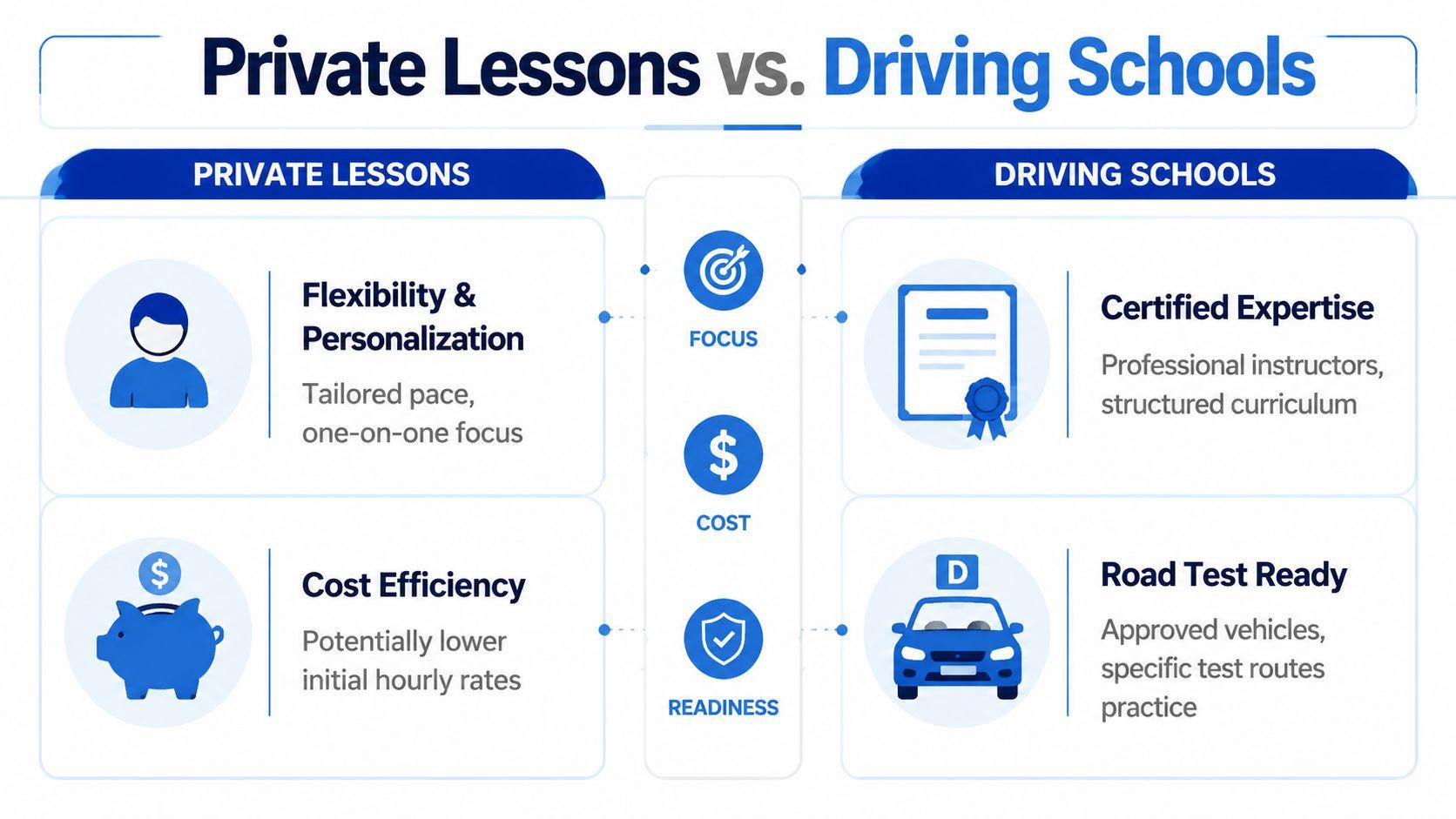
Many assume that all options for driving lessons in Waterloo are basically the same. They're not. The choice between a full driving school programme and private lessons affects structure, flexibility, documentation, and how steadily a learner improves.
When a full school programme makes more sense
A formal driving school is usually the better fit when the learner wants a structured path. That matters for teens who are brand new to driving, families who want clear milestones, and students who benefit from steady sequencing rather than random lesson topics.
A school programme may include classroom or online theory, assigned lesson progression, and support aimed at road-test preparation. For some families, that organisation reduces stress because everyone knows what comes next.
This option can also matter for timing because approved driver education affects licensing progression, as covered earlier. If your goal includes both skill-building and following the recognised route through the system, a school programme often aligns better.
When private lessons can be the better fit
Private lessons can work well for a different kind of learner.
They're often a good choice when someone already has experience and wants targeted practice. That could include a nervous driver who needs help with lane changes, a newcomer who understands driving but wants Ontario-specific coaching, or a learner who already has family practice and only wants professional correction in certain areas.
Private lessons can also suit people with changing schedules. If school, work, or family responsibilities make a fixed programme hard to manage, a more flexible arrangement may be easier to maintain.
Here's a simple comparison:
Option Often a good fit for Main strength Main trade-off Driving school Brand-new drivers, teens, families wanting structure Clear progression and formal course path Less flexible scheduling in some cases Private lessons Refresher learners, newcomers, skill-specific coaching Personalised focus and scheduling flexibility May offer less structure overall
A few practical points matter whichever path you choose:
- Check course approval: If you want the licensing timeline benefit discussed earlier, confirm that the programme is an approved one.
- Ask how lessons are sequenced: Some providers build skills step by step. Others leave the content to each instructor.
- Think about your learning style: A nervous student may need patience and repetition. A more experienced learner may need concise correction and local rule adjustment.
The best option isn't the one with the longest package name. It's the one that matches the learner's starting point.
Finding an Instructor Who Understands Waterloo Roads
A common mistake is choosing an instructor based only on availability, a low price, or a short online review. Those things matter, but they don't tell you whether the instructor can prepare you for the roads you'll use.
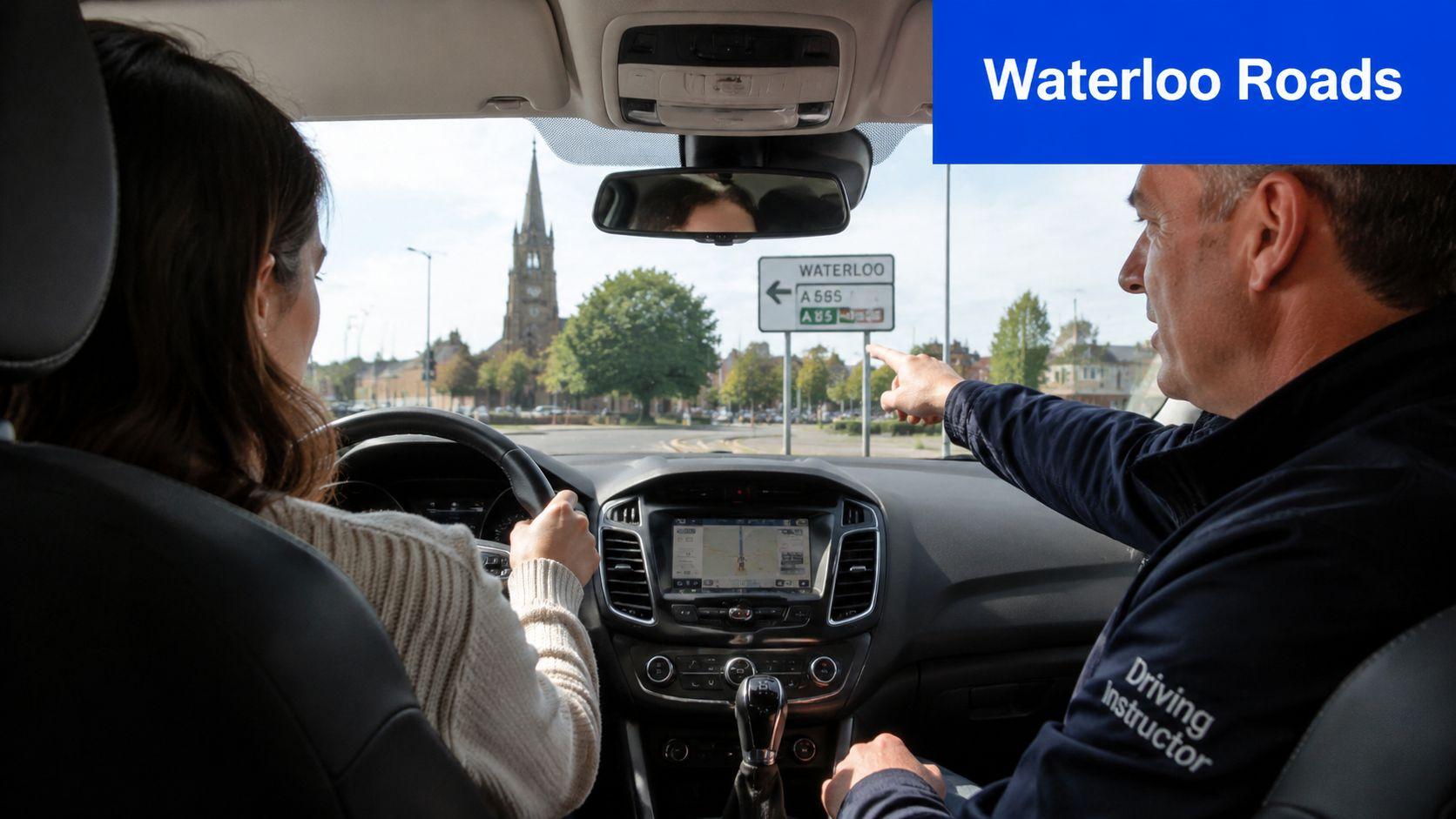
According to a Waterloo-focused review of local driving school coverage, a frequently missed issue is the difference between passing the road test and being ready for Waterloo-area driving conditions, especially when local instruction should reflect season, road type, and the presence of a large student population, as noted in this Waterloo driving schools overview.
Local readiness is different from test readiness
A student can memorise a test route and still feel lost on a normal weekday drive.
Waterloo creates its own learning demands. A learner may need to handle dense pedestrian activity, cyclists, changing road environments between residential and busier commercial areas, and the pressure of student-heavy traffic near campuses. In colder months, those same roads can require very different braking, turning, and following-distance decisions.
An instructor who understands Waterloo won't treat every lesson the same all year. They'll adjust.
For example, a winter lesson should include more than “drive carefully.” It should show the learner how earlier braking feels, how reduced traction changes turning, and how to stay calm when the car doesn't respond as crisply as it does on dry pavement.
What local knowledge looks like in a lesson car
You can often hear local expertise in the way an instructor answers basic questions.
A strong Waterloo instructor should be able to explain how they teach in different settings, such as:
- Urban areas: tighter spacing, more pedestrians, cyclists, and frequent decision points.
- Suburban roads: higher speeds, longer sightlines, and different turning judgment.
- Student zones: unpredictable crossing behaviour and more visual scanning demands.
- Seasonal conditions: adapting speed, space, and braking when roads are slippery.
Ask whether they intentionally vary lesson routes. If every lesson stays on easy roads, the student may feel good in the moment but still be unprepared later.
Readiness means a learner can transfer skills from the lesson route to an unfamiliar road without falling apart.
You're not hiring someone to sit in the passenger seat and say “good job.” You're hiring someone to notice weak habits early, build safe routines, and coach a new driver through the specific pressures of Waterloo driving.
Questions to Ask Before You Pay for Lessons
A short phone call or email exchange can save a lot of frustration later. The goal isn't to interrogate the school. It's to find out how they teach, what they include, and whether their approach fits the learner.
Use this checklist when comparing driving lessons in Waterloo.
Driving School Evaluation Checklist
Category Question to Ask Instructor Is the instructor experienced with first-time G1 drivers, nervous drivers, or newcomers to Ontario? Instructor Will the same instructor teach most lessons, or will the student rotate between instructors? Instructor How do you correct mistakes during lessons without overwhelming the student? Instructor How do you adapt lessons for winter driving, busy pedestrian areas, and mixed urban or suburban roads in Waterloo? Vehicle Will lessons happen in the instructor's vehicle, and what safety features does it have? Vehicle Is the lesson vehicle the same one used for road-test preparation, if that service is offered? Vehicle Is the car automatic or manual, and can the learner choose? Course Is the programme an approved beginner driver education course if the learner wants that route? Course How are lessons organised for a brand-new driver? Course Do you include parking, lane changes, busy intersections, and highway or higher-speed practice when appropriate? Course How do you decide when a student is ready for a road test? Cost What is included in the quoted price? Cost Are there extra charges for test-day vehicle use, pick-up areas, missed lessons, or rescheduling? Cost What is your cancellation policy?
A few questions reveal a lot very quickly.
- Ask for specifics: If the answer is vague, ask for an example of how they teach a beginner.
- Listen for local detail: Good instructors mention Waterloo conditions naturally.
- Notice the tone: If the school sounds rushed before you've paid, support may not improve later.
Parents can also ask how the school expects home practice to work. That matters because the best learning often happens when instructor feedback and family practice reinforce each other rather than conflict.
Common Questions About Waterloo Driving Lessons
When should I start lessons after getting my G1
Usually, sooner is better. Starting earlier gives you more time to build habits slowly and practise between lessons instead of rushing everything close to a road test date.
If school, sports, part-time work, or family schedules are busy, early planning helps even more. It gives you room to spread lessons out and learn without cramming.
Should I choose lessons mainly to pass the road test
No. Passing matters, but it shouldn't be the only goal.
For Waterloo drivers, the better question is whether the instruction prepares you for the roads you'll drive after the test. That includes handling changing conditions, staying calm around pedestrians and cyclists, and adjusting to different road types instead of only repeating one familiar route.
Do I need a full course or just a few lessons
It depends on your starting point.
A full course often fits first-time teen drivers and families who want structure. A few private lessons may be enough for someone who already has driving experience, wants refresher coaching, or needs help with specific Ontario expectations. If you're unsure, ask the school how they assess a learner's current level before recommending a package.
What should I look for in Waterloo driving lessons
Look for three things first:
- A clear teaching method: You should know how the instructor builds skills over time.
- Local road awareness: Waterloo conditions should shape the lesson plan.
- Good communication: The student needs calm, direct feedback, not constant criticism or vague praise.
The right instructor doesn't just make the learner feel comfortable. They make the learner more capable.
If you're still preparing for the knowledge side of the process, G1ready.ca offers Ontario-focused G1 practice tests and handbook-based study tools that can help you strengthen rules, signs, and road-law understanding before or alongside in-car lessons.