
You passed the written test, or you're close, and now the next step should be simple. Instead, your Ontario driving test appointment feels like a mini project. You open the booking page, see limited options, wonder whether the site is glitching, and start thinking, “Am I doing this wrong?”
You're probably not. The system handles a huge amount of demand. Ontario's DriveTest network includes 56 DriveTest centres and 36 satellite locations, and it administered 1.34 million road tests in 2022, which helps explain why good appointment times disappear fast, especially in busy areas, according to the Ontario Auditor General's report on driver training and examinations.
Your Guide to Navigating the DriveTest Booking System
After your G1, the road test feels like the milestone. It's also where many drivers hit their first practical snag. The problem usually isn't understanding that you need a booking. It's figuring out how to get one without losing days to refreshing pages, chasing bad advice, or booking a slot that doesn't suit your schedule.
That stress makes sense. Demand is high, and the system serves drivers across the province. If you're still sorting out where services are offered, it helps to look at a current list of Ontario G1 and DriveTest locations before you start searching.
Why booking feels harder than it should
A road test isn't like signing up for a gym class. You need the right licence stage, a workable date, a suitable vehicle, and enough flexibility to take whatever decent slot appears first. If you only search one popular centre, one day of the week, and one time window, your odds get worse quickly.
Practical rule: Treat your Ontario driving test appointment like a limited inventory purchase. The more flexible you are on location and time, the better your chances.
A lot of frustration also comes from mixing up the test itself with the booking process. People prepare for driving, but they don't prepare for scheduling. That's a mistake. You need a system for the system.
The approach that works
Keep your goal simple. First, get a legitimate appointment through an official channel. Second, choose a location and time that you can realistically keep. Third, build enough buffer that one website error or one inconvenient date doesn't knock you off track.
What doesn't work is panicking and clicking through unofficial pages that promise to “secure” a faster slot. What does work is staying organised, checking methodically, and using the official options properly.
How to Book Your Ontario Driving Test Appointment
There are three official ways to book. Ontario's booking process requires your Ontario driver's licence number and expiry date, whether you book online, by phone at 647-776-0331 or 1-888-570-6110, or in person, according to the Ontario government's guide to getting a G driver's licence.
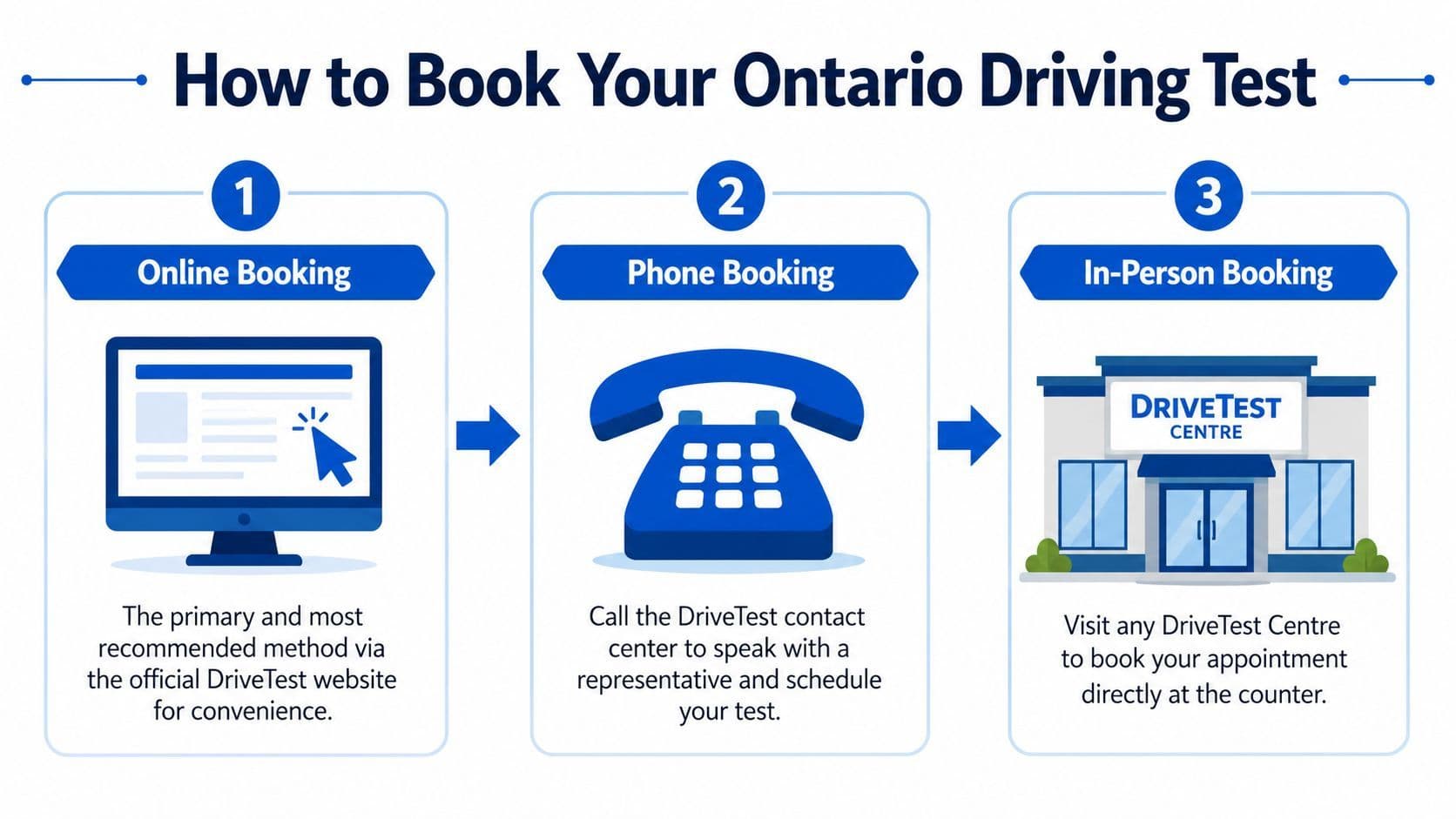
Online booking works best for most people
Online is usually the easiest option because you can search, compare, and adjust without waiting on hold. Have your licence details ready before you open the booking page. If you stop midway to look for your card, the session can feel longer and more annoying than it needs to.
When the system asks for location choices, don't lock yourself into one centre. Use your preferred site, then add second and third options you'd be willing to drive to. That small bit of flexibility often matters more than people expect.
A practical online routine looks like this:
- Sign in with your licence details so you're ready to act fast if a decent slot appears.
- Search more than one location instead of refreshing the same centre over and over.
- Take the first acceptable appointment if your timeline matters more than your ideal time of day.
- Double-check the confirmation details before closing the page.
Phone booking is slower but useful
Phone booking helps when the website won't cooperate, or when you want confirmation from a real person. It's also useful if you're not confident that you selected the right test or centre online.
The trade-off is obvious. You may wait. If you call, keep your calendar nearby and know your backup locations before the agent answers. The worst phone booking habit is making the representative wait while you decide what you want.
If the site is glitching, don't keep repeating the same failed action for half an hour. Switch methods and keep moving.
In-person booking helps when you're already at a centre
Booking in person can make sense if you're at a DriveTest centre anyway for another service. It gives you immediate human help, and some people find that less stressful than dealing with a screen.
Still, it's rarely the most convenient option if your only goal is to secure a date. You have to travel, wait, and fit the visit into the centre's hours. For most drivers, online first and phone second is the cleaner path.
A simple way to choose:
- Use online if you want speed and flexibility.
- Use phone if you want help or the site won't behave.
- Use in person if you're already there and want to finish everything in one trip.
What You Must Bring to Your Road Test
A lot of failed test days have nothing to do with driving skill. They start with something preventable: the wrong licence card, missing vehicle paperwork, or a car that clearly shouldn't be used for a test.
That's why this part needs a checklist, not good intentions. If anything important is missing, you create stress before the examiner even speaks to you.
Your documents matter more than people think
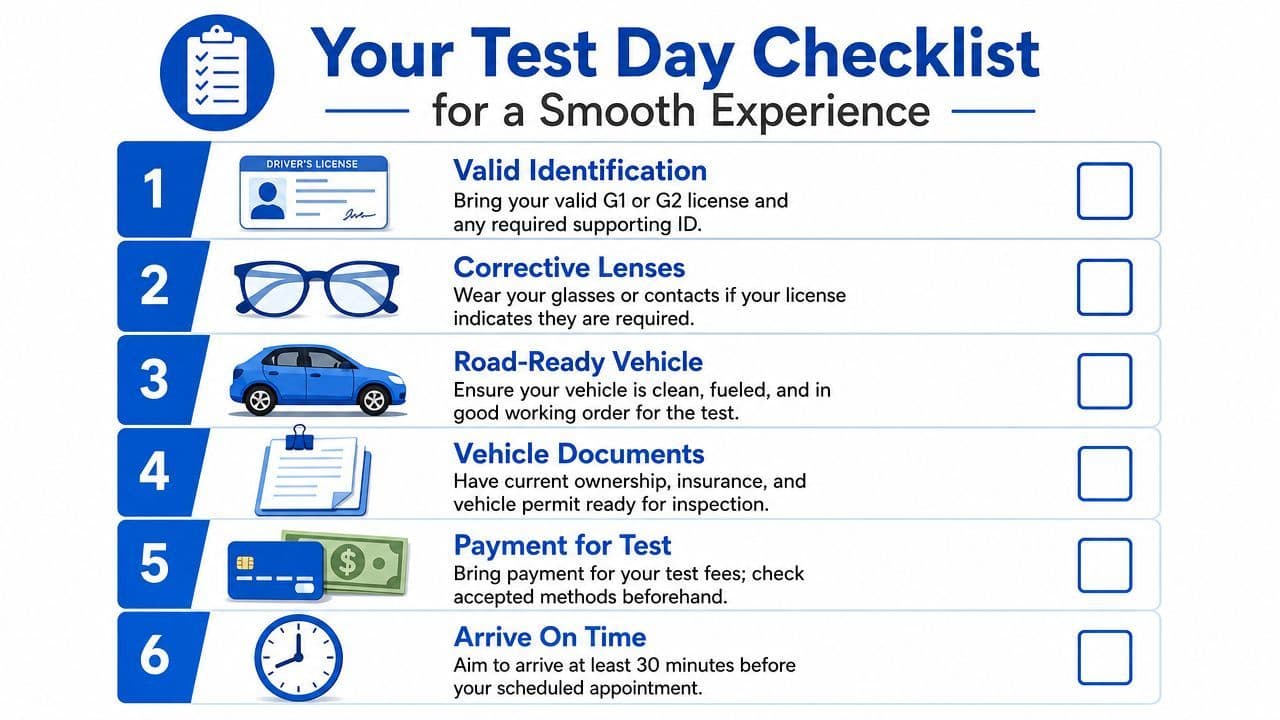
Bring your valid driver's licence. Bring the vehicle documents you may need to show. If you wear glasses or contact lenses for driving, wear them. Don't assume you can “manage for one day.”
If you're still reviewing the basics around licence-stage expectations, this G2 road test requirements guide is a useful checkpoint before test day.
Your vehicle needs to be test-ready
The examiner isn't looking for a fancy car. They're looking for a safe, normal, roadworthy one. Signals, brake lights, horn, mirrors, seat belts, and brakes should all work properly. The car should also be clean enough that nothing inside distracts you or the examiner.
Borrowed cars can be fine. So can instructor cars. What usually causes trouble is using a car you haven't checked carefully, especially if you only notice a warning light or broken signal after you arrive.
Item Requirement Details Why It's Critical Driver's licence Bring your valid physical licence for the test you're taking You can't check in properly without it Corrective lenses Wear glasses or contacts if required for your driving If you need them to drive safely, they're part of your legal readiness Vehicle condition Use a safe, roadworthy vehicle with working basic controls and equipment An unsafe car can stop the test before it starts Insurance and registration Have current vehicle documents available The vehicle must be legal to operate Interior setup Remove clutter and anything that could shift around A calm, usable cabin helps you and avoids unnecessary issues Fuel and basic readiness Make sure the car has enough fuel and is ready to drive Last-minute scrambling raises stress and can derail timing
Bring less drama to the centre. The best test-day car is the one that feels familiar, predictable, and boring.
One more point people overlook: don't test in a vehicle that you've barely driven. Even if it's perfectly legal, unfamiliar controls can throw off simple habits like checking blind spots, adjusting speed smoothly, or finding the wipers under pressure.
Strategies for Finding an Appointment Sooner
The booking struggle didn't come out of nowhere. After DriveTest centres reopened on June 14, 2021, the province faced a backlog of about 700,000 tests, and Global News reported that third parties were reselling appointments for as much as $300. The Ministry stressed that DriveTest.ca is the only official booking channel and said appointments bought through unofficial sites wouldn't be honoured, as reported by Global News on Ontario test booking legality and resales.

What actually helps
You can't control demand, but you can improve how you search.
- Search a wider area: Many people only check the closest major centre. Expand your map. Smaller or less convenient sites can have openings that busier centres don't.
- Check repeatedly, not randomly: Cancellations happen. If someone changes plans, that slot can reappear. A steady habit beats one giant search session.
- Be flexible on time: Midday or awkward weekday times may be easier to grab than the slots everyone wants.
- Book first, optimise later: If you find a workable date, take it. You can keep an eye out for something better after you've secured a real appointment.
- Use one tracking method: A simple calendar note or reminder system stops you from forgetting what you booked and what alternatives you're still watching.
For drivers who want a second reference point on the booking process itself, this Ontario G road test booking guide can help you compare your plan before you lock in a date.
What usually wastes time
The biggest trap is chasing shortcuts that aren't real.
If someone online claims they can “sell” you a faster Ontario driving test appointment, walk away. Even if the offer sounds plausible, the risk is yours, not theirs. You can lose money, lose the appointment, or show up believing you're booked when you're not.
Another common mistake is over-filtering your search. People reject perfectly workable appointments because the time isn't ideal, the centre is a bit farther away, or the date isn't their first choice. If your licence progress matters, “good enough” often beats “perfect but unavailable.”
Be stubborn about using official channels. Be flexible about everything else.
Rescheduling or Cancelling Your Driving Test
Plans change. Work shifts move, school gets hectic, cars break down, and weather can make a solid driver rethink a test date. The key is making changes early instead of hoping things sort themselves out.
The 48-hour rule is the big one
Ontario states that you must cancel at least 48 hours before your appointment to avoid a cancellation fee, as noted earlier in the official booking rules. That deadline matters because it turns scheduling into a real commitment, not a placeholder.
If you're unsure whether you can make your appointment, don't wait until the last minute hoping your schedule clears. That's how people lose money and still have to rebook.
How to make changes without creating a bigger problem
Use the same official route you used to book, or another official DriveTest channel if needed. Keep your confirmation details handy. Then make the change in one sitting so there's no confusion about whether the old booking is still active.
A practical rescheduling checklist:
- Decide early: If the date looks shaky, act before the deadline sneaks up on you.
- Check your replacement plan first: Don't cancel casually if your timeline is tight.
- Confirm the new details: Screenshot or save the updated appointment information.
- Review your vehicle situation: If the actual problem is the car, solve that before booking another date.
People also run into avoidable trouble by arriving unprepared and effectively wasting the appointment themselves. Late arrival, missing documents, or bringing an unsuitable vehicle can derail the day just as surely as a missed cancellation deadline.
Your Test Day Checklist for a Smooth Experience
The roughest test days usually fall apart before the examiner even gets in the car. A missing licence, a dead brake light, a last-minute scramble for insurance papers. That is what creates panic.
Set yourself up before you leave home
Plan to arrive at least 30 minutes early. That extra time helps with parking, check-in, and the small problems that show up on busy test days, especially at crowded centres where lines and confusion can cost you more than the drive itself.
Do one full check at home, not in the parking lot.
- Licence in hand: Check before you walk out the door.
- Glasses or contacts on: If your licence requires them, wear them.
- Vehicle checked: Test signals, brake lights, horn, mirrors, fuel level, and windshield condition.
- Documents ready: Keep insurance and vehicle paperwork easy to reach.
- Phone on silent: Remove one more distraction before you start.
If you are borrowing a car, inspect it yourself. Do not rely on someone saying, "It should be fine." I have seen solid drivers lose their shot because a warning light came on, a tire looked low, or a brake light failed during the pre-test check.
Keep the test day calm and boring
A boring test day is a good test day. The goal is steady decisions, clear observation, and no surprises.
Listen carefully to the examiner. If you make one mistake, reset fast and keep driving safely. Many candidates hurt themselves more by dwelling on one imperfect turn than by the turn itself.
Your examiner is looking for safe, controlled driving under normal conditions.
Use a simple routine in the car. Check mirrors, scan intersections, control your speed, and respond to one instruction at a time. If traffic is messy or the test centre feels chaotic, stay with the basics. That is usually enough to keep a stressful appointment from turning into a wasted one.


