
You've been in Ontario for a few weeks, you've opened the MTO Driver's Handbook, and the English traffic vocabulary still feels slippery. You understand the general idea of safe driving, but terms such as right of way, yield, demerit points, and temporary conditions don't always stay clear when you're studying in a second language. That's exactly where an Ontario G1 practice test in Hindi can make preparation more practical.
The Hindi option can remove much of the language friction, but it doesn't replace learning Ontario's specific rules. You still need to recognise the signs, understand right-of-way situations, and know how the test is delivered at your local DriveTest Centre. The most effective approach combines Hindi-first practice with English comparison, official handbook review, and careful attention to the two separate test sections.
Why an Ontario G1 Practice Test in Hindi Changes the Game
A newcomer named Aman studies after work, usually on his phone. He reads a page of the handbook in English, understands it while looking at the paragraph, and then forgets the meaning when a practice question presents the same rule in different words. The problem isn't a lack of effort. He's trying to memorise English sentences instead of building a reliable understanding of Ontario driving rules.
Ontario's G1 knowledge test covers foundational topics from the Official MTO Driver's Handbook, including traffic signs and lights, seatbelts, emergency vehicles, headlights, speed limits, freeway entry and exit, streetcars, school buses, licence suspensions, demerit points, passing, collision reporting, and sharing the road. The handbook is the source material, so a practice tool should help you understand those concepts rather than just repeating translated answers.
Hindi helps with understanding, not shortcuts
DriveTest provides computerized knowledge tests in up to 31 languages, with full audio support, and paper-based G1 knowledge tests in 20 languages at DriveTest Centres, as stated on the Ontario DriveTest knowledge-test page. Hindi-speaking learners therefore have legitimate language-access options, but they still need to prepare for Ontario-specific wording and visual information.
Practising in Hindi lets you focus first on the rule itself. Checking the English wording afterward helps you recognise the terminology you may see in instructions, diagrams, or explanations. On G1ready.ca, you can rehearse questions in Hindi and use English back-translation when a phrase feels unclear. That combination builds recall that can survive reworded questions.
Practical rule: Use Hindi to understand the concept, then use English to confirm the Ontario driving vocabulary.
Language practice also affects confidence. When you've already worked through a rule in a familiar language, you're less likely to freeze because one sentence looks unfamiliar. The next step is to set up your practice environment correctly, then study the same categories the actual test uses.
Finding the Hindi Option and Getting Set Up
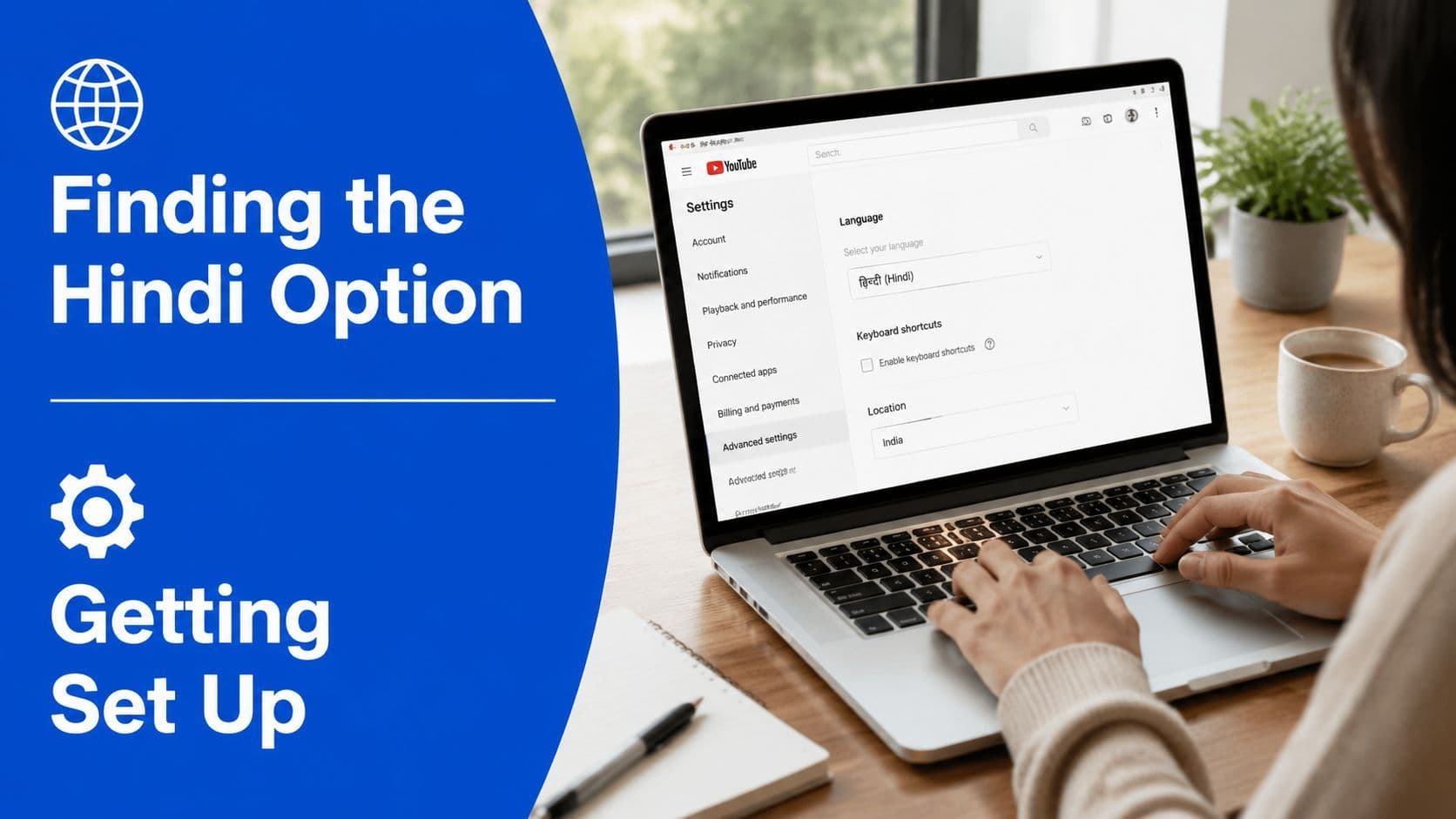
Start with the G1ready.ca guide to G1 test languages if you want a quick language-access reference, then follow a simple setup routine on the practice platform.
- Open the G1ready.ca homepage on your phone, tablet, or computer.
- Look for the language selector or globe icon.
- Choose हिन्दी from the language list.
- Confirm that the questions, navigation, and explanations have switched into Hindi.
- Keep the small English toggle available for difficult terms. Use it to compare wording instead of guessing what a translation means.
Choose the right practice tool
Begin with the Diagnostic Test. It uses 20 mixed questions to show where your current knowledge is strongest and where mistakes cluster. Take it before reading every chapter, because an early baseline gives your study time direction.
Then locate these tools:
- Simulator: A timed set of 40 questions designed to mirror the exam structure.
- Targeted Quizzes: Focused practice for Road Signs, Rules of the Road, and individual subtopics.
- Mixed Tests: Broader review that prevents you from memorising one predictable question pattern.
The platform works through a mobile browser, so you don't need to install an app. That makes short practice sessions easier during a commute or between appointments, provided you're not driving while using it. Complete the diagnostic first, record your section and topic mistakes, and use that record to choose your next quiz rather than starting randomly.
How the Ontario G1 Test Is Structured
A learner can answer many questions correctly overall and still fail because the G1 knowledge test treats its two parts separately. The exam has 40 multiple-choice questions, divided into 20 road-sign questions and 20 rules-of-the-road questions, as explained in this Ontario G1 test-format guide.
You need at least 16 correct answers in each section, or an 80% passing mark per section. A combined result does not replace either requirement. For example, 36 out of 40 overall can still mean a fail if one section is below its minimum.
G1 Test Structure at a Glance
Section Topic Questions Passing Mark Section 1 Road Signs 20 16 correct Section 2 Rules of the Road 20 16 correct
The two sections test different kinds of knowledge. Road Signs depends on recognising visual symbols quickly. Rules of the Road asks you to apply decisions about right-of-way, speed limits, collision reporting, and sharing the road. A strong sign-recognition score cannot make up for weak rule-based answers.
Your practice record should therefore show two separate results. If the signs section is strong but road rules remain low, choose quizzes for the weaker category instead of relying on one overall percentage. Treat the sections like two gates, and prepare to pass through both.
At DriveTest, the test may be computerized, with questions displayed on a screen and audio support available in the selected language. A paper test uses a printed booklet and answer sheet where that format is offered. Hindi availability and delivery format can differ by location, so confirm your chosen DriveTest Centre's arrangement before test day. If Hindi is unavailable, ask staff what language or format options are provided, then practise with that setup so the change does not surprise you.
A Two-Week Study Plan That Targets the 80% Threshold
A useful plan doesn't ask you to read the entire handbook repeatedly. It gives each study session a clear purpose and records the errors that need attention.
Days 1 and 2
Take the Hindi diagnostic on G1ready.ca. Don't look up answers while completing it. Afterward, log every missed question by section, topic, and reason for the mistake. Mark whether you misunderstood the rule, confused two signs, missed a key word, or changed a correct answer.
Days 3 to 5
Use targeted quizzes for the weakest categories. Work through Road Signs and Rules of the Road separately, then revisit specific topics such as traffic lights, emergency vehicles, speed limits, passing, school buses, or demerit points. Aim for consistent performance around 90% within a category, but treat that as a study goal, not the official pass requirement.
Mix Hindi and English wording during these sessions. Hindi helps you grasp the principle, while English comparison prepares you for vocabulary transfer and prevents dependence on one fixed translation.
Days 6 to 8
Complete the timed simulator in Hindi twice. Practise with the same concentration you'll need at the centre, and test whether audio helps or distracts you. The test's two-section design matters more than rushing through easy questions, so keep checking whether both sections remain strong.
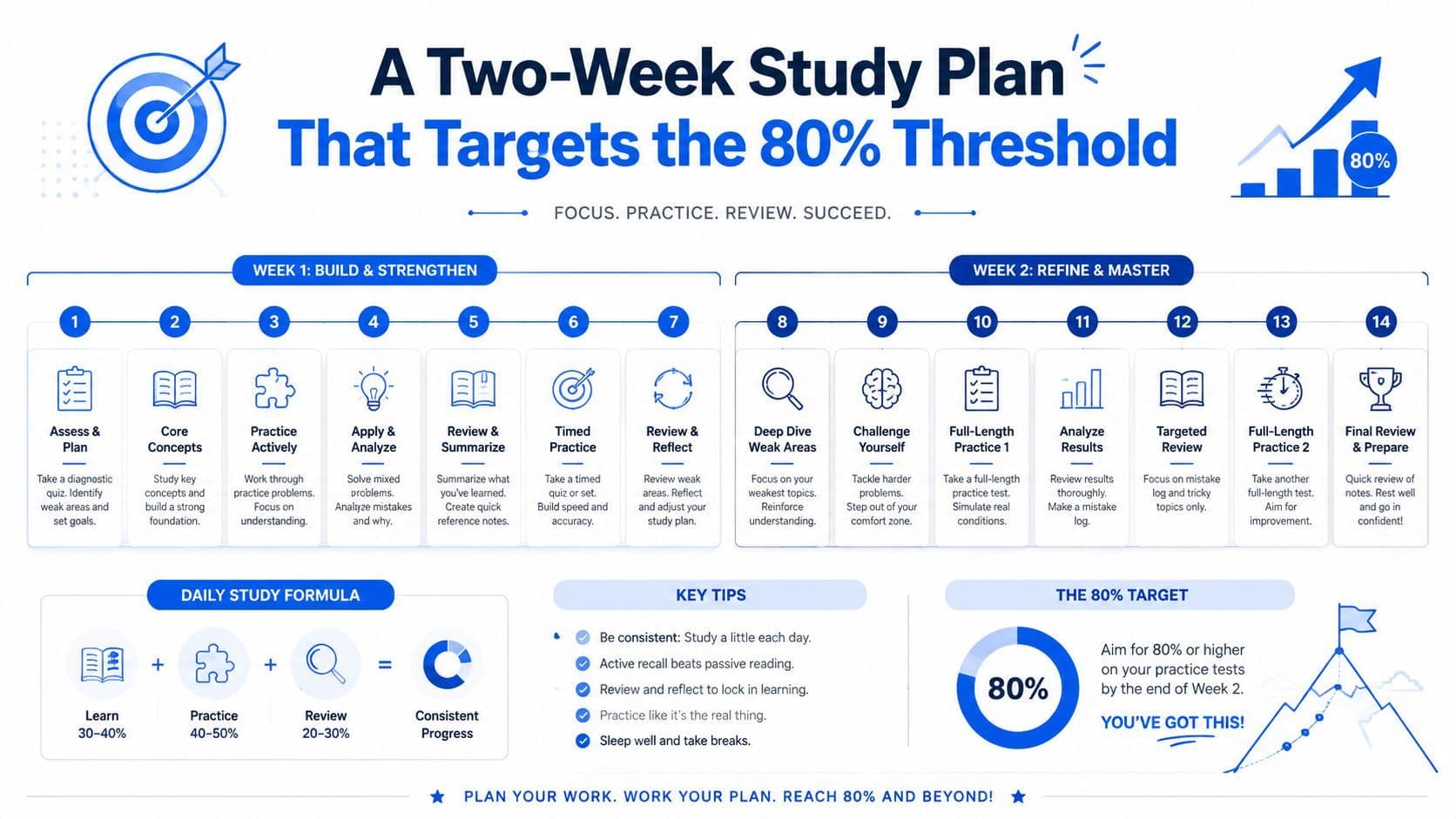
Days 9 to 11
Alternate mixed-question sets with written error-log reviews. For every missed answer, write the rule in your own Hindi words, then write the key English term beside it. This is slower than memorising an answer letter, but it teaches you to recognise the same rule when the question changes its wording.
Days 12 to 13
Take full-length mock tests in Hindi. Aim for at least 17 correct in each section repeatedly, giving yourself a margin above the official cutoff rather than treating one lucky result as readiness.
Day 14
Keep the final review light. Revisit sign shapes, fines, and blood-alcohol limits from the handbook, then rest. Keep your error tracker active if you need a third week. A missed target isn't a failure of the plan. It's information about what to practise next.
Sample Hindi and English Questions With Reasoning
Translation can clarify a question, but it can't make the decision for you. Consider a four-way stop. The Hindi version may be easy to read, yet the important detail is still which vehicle arrived first. If two vehicles arrive at the same time, the right-side relationship matters. Read the diagram and identify the sequence before choosing an answer.
Hindi takeaway: पहले यह देखें कि कौन-सी गाड़ी पहले पहुँची, फिर right of way तय करें।
A sign question creates a different problem. The Hindi word used for a sign may not resemble the English name you remember. Instead of relying on the label, identify the shape and colour first, then confirm the meaning. Ontario's official handbook explains that signs include regulatory, warning, temporary-condition, and information-and-direction categories. It also identifies a stop sign by its eight-sided shape, red background, and white letters, with a complete stop required at the appropriate stopping point, as detailed in the Ontario handbook signs section.
Hindi takeaway: पहले sign का आकार और रंग पहचानें, फिर उसका अर्थ पढ़ें।
Numerical questions require a third strategy. A Hindi translation can make the sentence understandable while leaving an exact figure easy to miss. For following distance, blood-alcohol limits, fines, or demerit thresholds, read the wording slowly and memorise the figures from the handbook. Don't choose an answer because it sounds familiar.
The free Ontario G1 practice-test guide can support this process with immediate feedback, but feedback only helps when you explain the mistake to yourself. After each wrong answer, ask, “Which fact or decision rule would still be true if this question were rewritten?”
Pitfalls Hindi Learners Hit Just Below the Passing Line
A learner who scores close to the cutoff often knows a great deal already. The final mistakes usually come from a combination of logistics, uneven section preparation, and over-reliance on memorised translations.
Pitfall Why It Hurts Your Score Counter-Move Assuming every centre offers Hindi in the same format A language may be listed while the available delivery method differs locally Verify Hindi availability and format with your specific DriveTest Centre before attending Choosing paper without checking audio needs A printed test won't provide the same computer audio experience Ask which computerized and paper options are available, then choose based on how you understand questions Expecting a guaranteed Hindi terminal without checking First-come-first-served computerized testing can affect test-day expectations Confirm local procedures and ask staff about language support at check-in Using a translation app during the test Personal devices aren't a substitute for approved test support Leave translation tools outside the testing process and prepare with bilingual practice beforehand Memorising Hindi answer keys Reworded questions can expose gaps in the underlying rule Explain every answer in your own words and practise mixed question sets Tracking only the combined result One weak section can fall below the requirement even when the total looks strong Record Road Signs and Rules of the Road separately Studying signs while neglecting rules Speed limits, blood-alcohol information, demerit points, and right-of-way decisions also require precise recall Give both sections dedicated practice time Practising in only one language Switching terminology under pressure can slow recognition Alternate Hindi-first questions with English review and explanation
DriveTest states that computerized knowledge tests have full audio support and that paper-based G1 tests are available in listed languages at DriveTest Centres. That distinction matters. “Available in Hindi” isn't always a complete answer to the question you're asking. You need to know whether your centre offers Hindi on computer, on paper, with audio, or through another approved arrangement.
Before booking: Confirm the language and delivery format with the centre you plan to visit, not only with a general online list.
Tracking Progress and Walking Into the DriveTest Center Ready
Your final preparation should combine study evidence with test-day logistics. A mobile-friendly progress dashboard can show section-level results, recurring error patterns, and study activity, so you can identify whether Road Signs or Rules of the Road still needs attention. Short sessions on a phone can keep review consistent, while saved quiz activity and reminders can support spaced repetition when those features are available on your platform.
Use a practical checklist before leaving home:
- Identification: Bring valid identification, including your passport plus a printed Ontario health card or equivalent.
- Booking details: Keep your confirmation accessible.
- Arrival: Plan to arrive 30 minutes early so check-in doesn't become a last-minute language problem.
- Language request: Ask at the front desk for the Hindi audio option before the kiosk assigns your seat.
- Headphones: Check the volume during the two practice questions and make sure you can hear clearly.
- Format confirmation: If you expected a computer test but are offered paper, ask what approved options are available before beginning.
The official DriveTest model supports multilingual knowledge testing, but local logistics still deserve attention. A paper booklet may suit someone who reads more comfortably without audio. Another learner may benefit from computerized audio because listening reduces the strain of reading English instructions. Choose based on how you process questions, then rehearse that experience during practice.
Your next action should be specific: take the free diagnostic tonight, set Hindi as your default language, and record each mistake by section. Don't schedule the DriveTest attempt until you've completed two full timed simulators with at least 16 correct answers in each section, and preferably a margin above that threshold.
G1ready.ca offers Hindi practice, diagnostic questions, targeted quizzes, mixed tests, and a timed simulator aligned with Ontario G1 preparation. Visit G1ready.ca tonight, complete the diagnostic, and use the results to build a focused study routine before booking your test.


