
You're approaching an Ontario intersection and notice the familiar inverted triangle with a red border. There's no vehicle directly in front of you, but another car may be approaching from the side, a cyclist may be crossing, or a pedestrian may be waiting near the corner. Should you stop, slow down, or continue?
That hesitation is exactly why the Ontario yield sign deserves more attention than a quick definition. The sign doesn't give you one automatic action. It requires you to assess traffic, pedestrians, cyclists, visibility, and road layout before moving ahead.
Why the Ontario Yield Sign Trips Up New Drivers
A new driver often treats a yield sign as a softer version of a stop sign. At a quiet intersection, they stop every time, even when the road is clearly open. At a busy intersection, they may do the opposite and roll forward because they believe the sign only matters when another vehicle is already in front of them.
Both reactions miss the central rule. A yield sign creates a conditional legal obligation. You must approach carefully, give way to traffic that has priority, and stop when stopping is necessary. You don't automatically stop because the sign is present, but you also can't treat it as a suggestion.
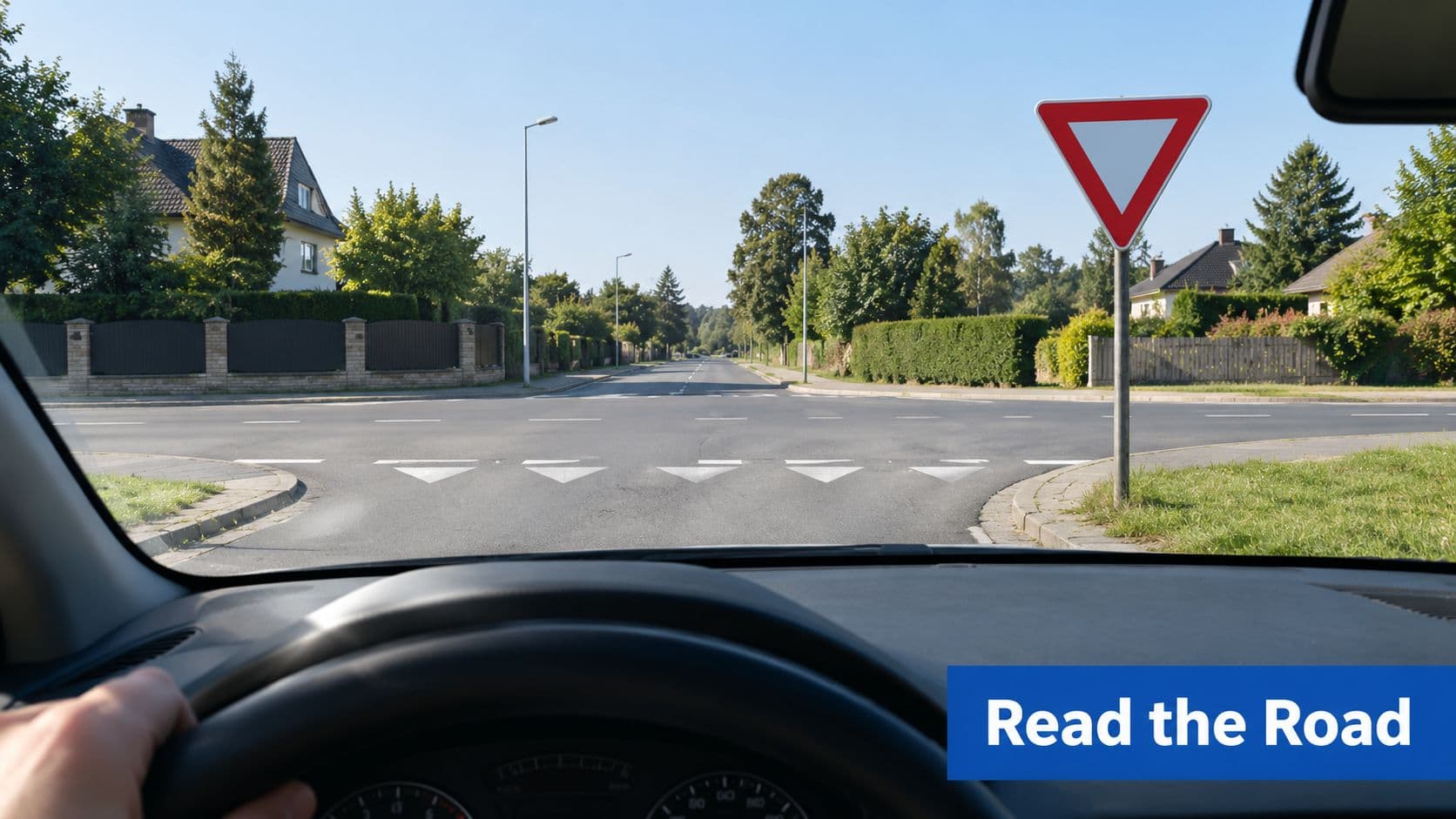
Consider a T-intersection. You're approaching the end of a side road and see a yield sign. A vehicle is already travelling along the main road, so you slow and wait. If another vehicle is approaching closely enough that entering would create a hazard, you wait for that vehicle too. If the road is clear, you may proceed carefully without making a full stop.
Why G1 questions feel harder than the sign looks
A test question may remove the obvious clue. There might be no car immediately beside the intersection, but a vehicle could still be close enough to have priority. Another question may place a pedestrian on a sidewalk or in a crosswalk, testing whether you remember that yielding applies to more than cars.
Practical rule: Don't ask only, “Is there a car in front of me?” Ask, “Who could be affected if I enter now?”
The confusion comes from the decision, not the symbol. You need to choose the right response for the conditions, and that response can be slow down, stop, or proceed with caution.
What an Ontario Yield Sign Looks Like and What It Means
You approach an intersection and see a red-and-white triangle. The road appears empty, but a pedestrian is crossing to your right and a vehicle is approaching from the side. The sign does not give you one automatic action. It tells you to assess who has priority, then choose whether to slow, stop, or proceed.
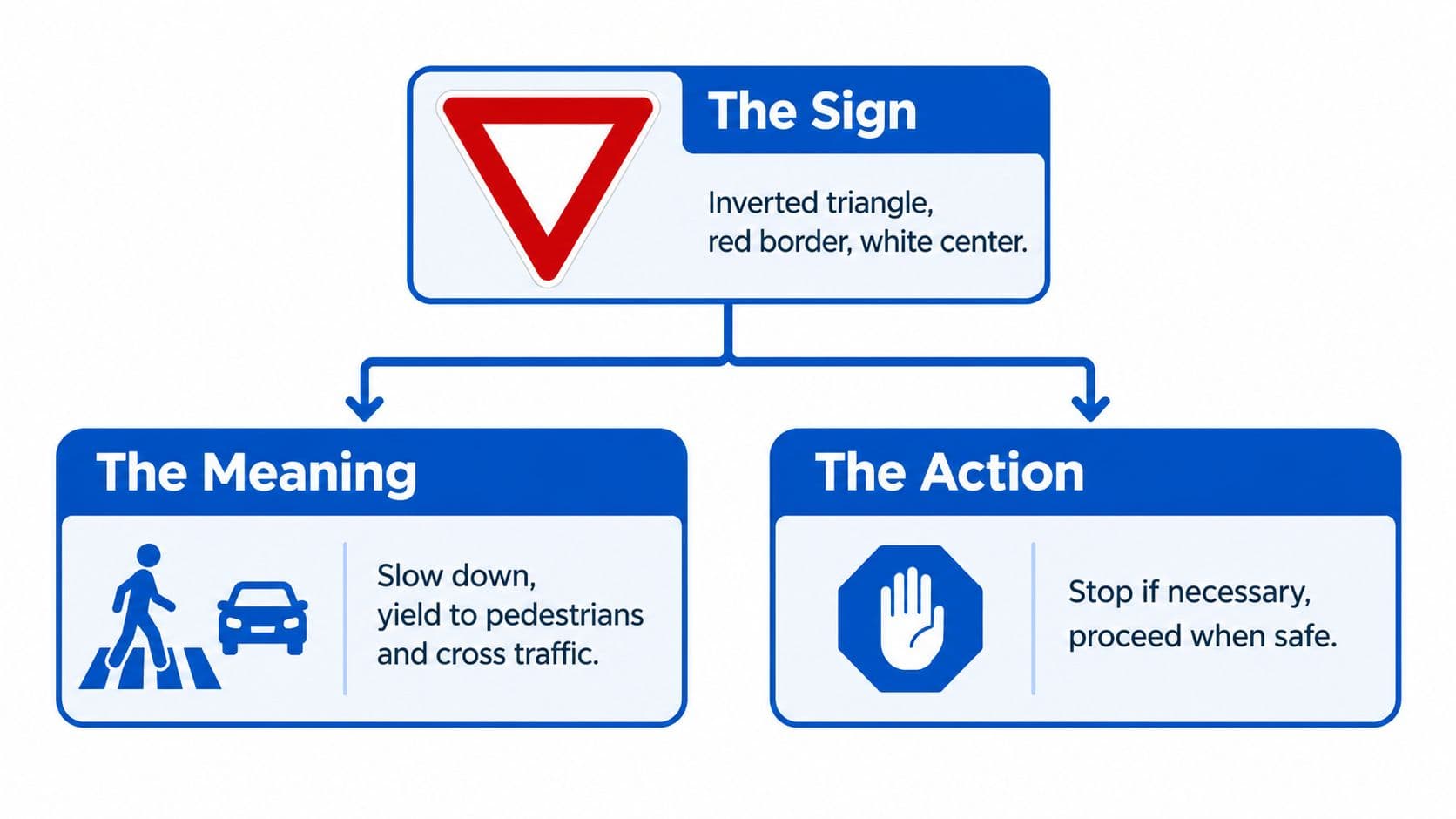
Ontario's yield sign is a white, downward-pointing triangle with a red border. Its unusual shape separates it from the octagonal stop sign and diamond-shaped warning signs. The red-and-white design warns that traffic from another direction may have priority.
Under the Highway Traffic Act rule for yield right-of-way signs, you must reduce speed to a reasonable level for the conditions, stop when necessary, and yield to traffic in the intersection or approaching closely enough to create an immediate hazard. After yielding, you may proceed carefully.
Use this sequence:
- Slow down. Approach at a speed that gives you time to see and respond.
- Scan the conflict area. Check vehicles, cyclists, pedestrians, and the lane you will enter.
- Stop if needed. Stop when another road user has priority or entering would create a hazard.
- Proceed carefully. Continue only when the relevant path is clear.
Yielding isn't the same as stopping
A stop sign always requires a complete stop. A yield sign requires you to give way, so stopping depends on the situation. If you have a clear view, no conflicting traffic or pedestrian has priority, and the route is safe, you can continue after slowing and checking.
This conditional rule causes confusion at roundabouts and channelized turns. At a roundabout, you may need to wait for traffic already circulating. At a separate turn lane, the main intersection may look clear while a pedestrian or vehicle still crosses your path. The sign applies to that conflict area, not just the nearest lane.
Ontario regulations set physical standards for the sign, including an equilateral triangle with sides of not less than 75 centimetres. Its bottom point must be between 1.5 metres and 2.5 metres above the roadway. It must face approaching traffic on the right side of the highway, between 1.5 metres and 15 metres from the intersecting roadway, as set out in the Ontario sign regulation.
The design is consistent. Your response must match the conditions.
Right-of-Way Rules You Must Follow at Yield Signs
The most important question isn't whether another vehicle is already inside the intersection. It's whether a road user is close enough that your entry would create an immediate hazard.
Start scanning before you reach the sign. Check the intersection, the road you're entering, the pedestrian area, and any lane into which you'll merge. Keep your speed low enough that you can stop smoothly rather than braking suddenly at the edge of the conflict area.
Three possible actions
Slow without stopping when the intersection is open, visibility is adequate, and no vehicle, cyclist, or pedestrian has priority over your movement. You still need to check carefully before proceeding.
Stop and wait when traffic is already in the intersection, when a vehicle is approaching closely enough to pose an immediate hazard, or when a pedestrian or cyclist is crossing the path you intend to use.
Proceed with caution only after you've yielded and confirmed that your route is clear. A quick glance isn't enough if a sightline is blocked by a vehicle, wall, hedge, snowbank, or traffic island.
At a T-intersection, traffic on the through road normally has the advantage over a driver entering from the side road. At a merge, the driver facing the yield sign must find a safe gap and give way to traffic already using the lane. At a channelized right turn, the separate lane may appear to bypass the main intersection, but the yield sign still controls entry into the road ahead.
Pedestrians are a frequent G1 test trap. Ontario guidance explains that yield-controlled approaches include pedestrians on sidewalks and in crosswalks. The Ontario guidance on sharing the road reinforces that a driver must consider pedestrian movement when entering, turning, or crossing a roadway.
Look beyond the windscreen centre: A clear vehicle lane doesn't always mean a clear path. Check the crosswalk, sidewalk, bike space, and merge lane before you move.
For additional practice with these decisions, use the G1 right-of-way rules guide and focus on the reason for each answer, not just the answer itself.
Common Yield Sign Scenarios on Ontario Roads
A roundabout entrance is a classic example. You approach the yield sign, reduce speed, and look toward circulating traffic. If a vehicle is already circulating and entering would make it brake or change direction, you wait. If the roundabout is clear, you don't need to make an unnecessary full stop, but you still enter cautiously and remain alert for pedestrians and cyclists.
A private driveway creates a different-looking version of the same decision. You're leaving a driveway and entering a public road, so you must give way to traffic already on that road. Check both directions, look for pedestrians on the sidewalk, and don't assume that a vehicle some distance away can be ignored without judging its speed and distance.
Road layouts that change the decision
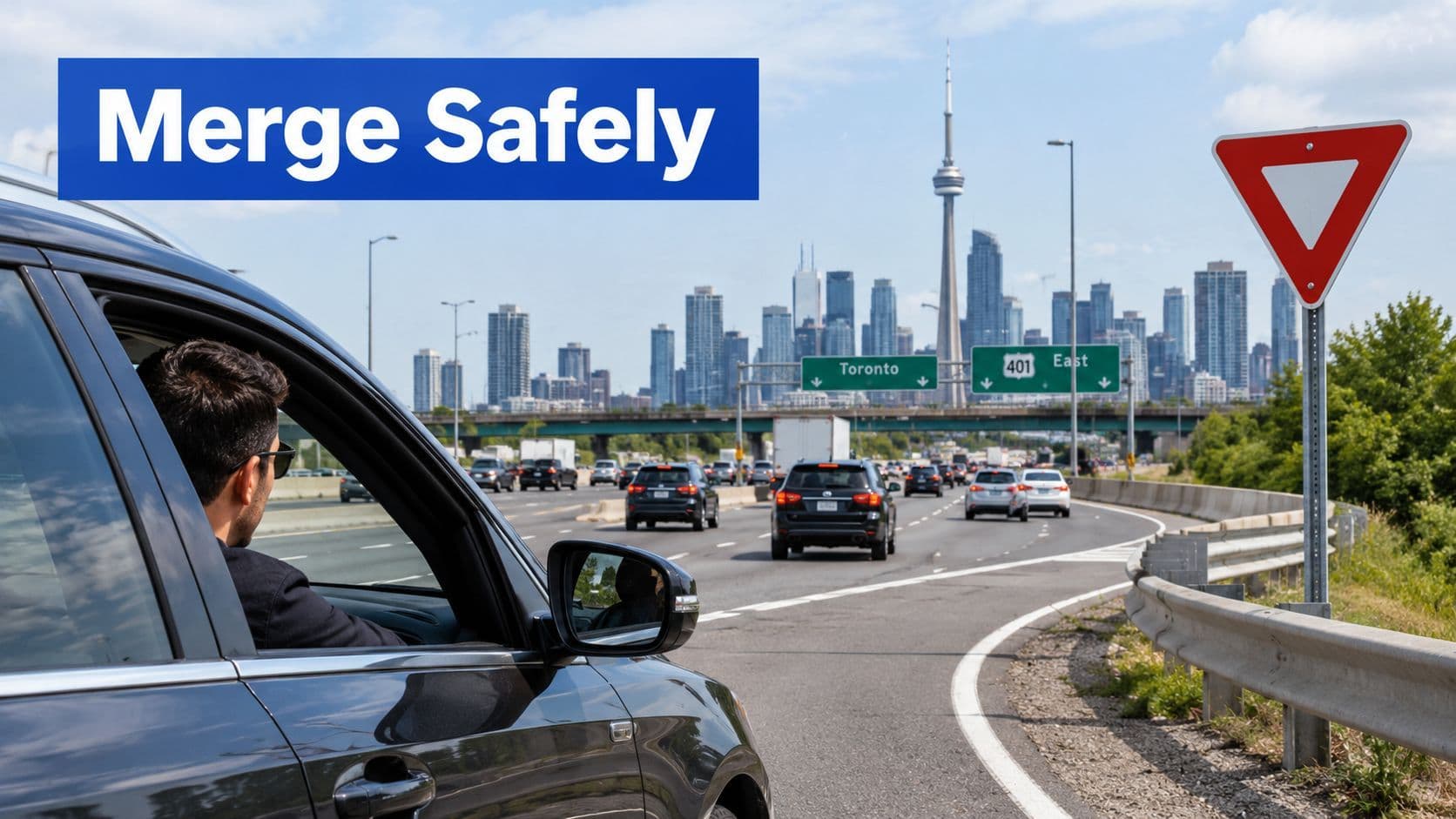
Lane reductions can use yield control where two traffic streams must share less road space. The driver facing the sign must yield to traffic with priority and merge only when a safe gap exists. Signal appropriately, check mirrors and blind spots, and avoid forcing another driver to brake.
Channelized right-turn lanes often separate turning traffic from the main intersection with a traffic island. The turn may feel independent, but the yield sign still requires you to give way before entering the cross street. A pedestrian crossing the turn has to be accounted for before you continue.
Work zones can use yield control when work vehicles enter live traffic lanes. Ontario guidance also includes a specialized “yield to oncoming traffic” sign for situations where only one lane remains available on a two-way road. In that setting, the sign tells you that opposing traffic has priority through the shared section.
The Ontario MTO bus handbook sign guidance describes these specialized applications. They show why yield control isn't limited to a conventional four-way intersection.
Before watching any visual practice material, try to name the conflict point yourself. Is it a roundabout entrance, a pedestrian crossing, a merge, or a narrowed lane? Your answer should determine what you scan first.
Penalties for Ignoring Yield Sign Rules in Ontario
A yield sign can feel simple until the road fills with people, cars, and tight gaps. The mistake is usually not “forgetting to stop.” It is entering before the space is clear.
Ontario's Highway Traffic Act requires a driver approaching a yield right-of-way sign to slow to a reasonable speed, stop when necessary, and yield to traffic in the intersection or to a vehicle approaching closely enough to create an immediate hazard. The official Highway Traffic Act text makes the decision conditional, but it does not make the obligation optional.
What can follow a failure to yield
A driver who goes ahead without giving way may face enforcement under Ontario traffic law. The result can affect a driving record and may also create insurance complications, depending on the offence and the situation. What happens next depends on the facts, how the violation is handled, and whether a collision or other harm results.
The safety risk is easier to picture in real driving terms. If you enter while another vehicle already has priority, that driver may have too little time to brake or steer away. At a driveway, a pedestrian may be crossing the sidewalk. At a roundabout, a vehicle already in the circle may have to react suddenly. At a lane reduction, forcing your way into the lane can turn a workable merge into a dangerous conflict.
A nervous learner sometimes thinks the safest choice is always a full stop. Stopping is safer than moving into immediate danger, but an unnecessary stop can also interrupt traffic and still miss the underlying rule. A yield sign asks for controlled judgement, not automatic braking.
A useful way to remember it is this. The sign protects the road user who already has priority, while giving you room to enter when the conflict has cleared.
That same judgement matters on the G1 exam and on real roads after you are licensed. A test question is only a small version of the decision you will make at the curb, the roundabout entrance, or the merge point. Read the scene, identify who has priority, and choose the action that avoids conflict.
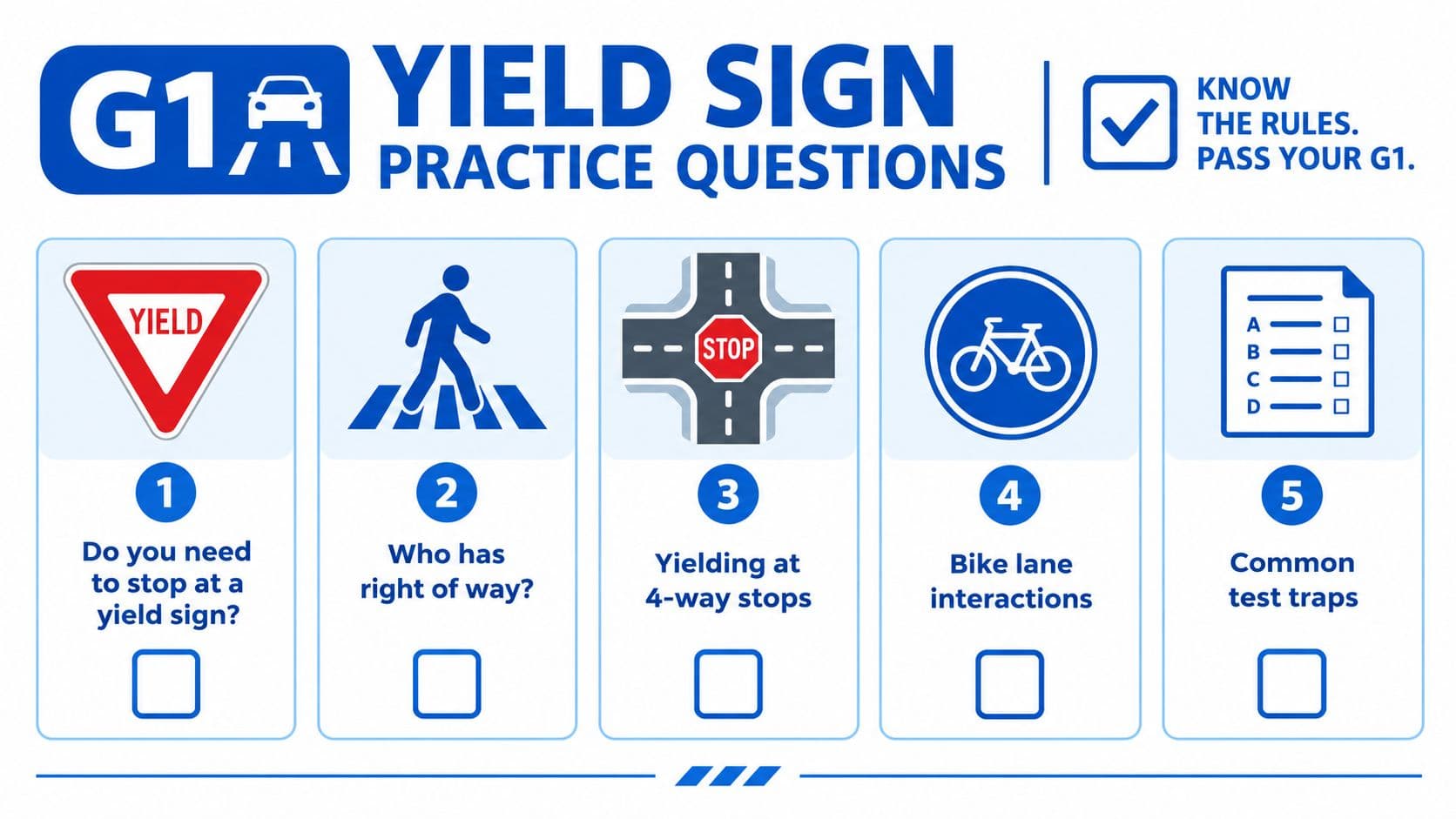
Practice Questions to Test Your Yield Sign Knowledge
Use these scenarios as short mental drills. For each one, identify the conflict, decide who has priority, and then choose whether to slow, stop, or proceed carefully.
Question 1: You approach a yield sign at a roundabout. No vehicle is circulating, and you can see the entrance clearly. What should you do?
Answer: Slow down, check the roundabout and pedestrian areas, and enter when the route is clear. A yield sign doesn't require an automatic full stop when no road user has priority over your entry.
Question 2: You're turning through a channelized right-turn lane. A pedestrian is crossing the marked path ahead of you. What's the correct response?
Answer: Slow and stop if necessary to let the pedestrian clear your path. Looking only for vehicles would miss the main hazard in this situation.
More test-day decisions
Question 3: You're leaving a private driveway. A vehicle is approaching on the road, but it isn't beside the driveway yet. What should you consider?
Judge whether the vehicle is close enough or moving quickly enough that entering would create an immediate hazard. If it is, wait. If there's adequate space and the path is safe, enter cautiously without forcing the other driver to alter course.
Question 4: Your lane is ending near road work, and you see a yield sign. Can you continue because your lane is already moving?
No. The sign tells you to give way according to the temporary road arrangement. Identify the traffic using the available lane, signal, check your surroundings, and merge only when safe.
Question 5: A yield sign is present, but you can't see the full intersection because a large vehicle blocks your view. Can you continue slowly?
Not until you can confirm that entering is safe. Reduce speed and be prepared to stop. Limited visibility increases the need for caution, even when no vehicle is immediately visible.
The Ontario road signs practice resource can help you rehearse the visual pattern, but don't memorise a single phrase such as “stop only if cars are visible.” The stronger test strategy is to ask three questions:
- Who is already in the conflict area?
- Who is approaching closely enough to create a hazard?
- Does a pedestrian, cyclist, merge, or blocked sightline change the decision?
Mastering Yield Signs for G1 Test Confidence
A reliable way to remember the Ontario yield sign is to separate recognition from judgement. Recognition tells you that the inverted red-and-white triangle controls your approach. Judgement tells you what to do next based on the people, vehicles, visibility, and road design around you.
Compare the common mistakes with the correct application:
Common mistake Correct application Treating every yield sign like a stop sign Slow down and stop only when conditions require it Looking only for vehicles Scan for pedestrians, cyclists, and crossing traffic Moving because no car is directly in front of you Judge whether an approaching road user is close enough to create a hazard Assuming a roundabout entrance is clear because you're moving slowly Yield to circulating traffic and enter only when safe Entering a merge because your lane is ending Give way as directed and merge into a safe gap
The key phrase to remember is “slow, assess, yield, proceed.” It gives you a repeatable process without forcing you to make the same movement at every location. Use it at roundabouts, driveways, channelized turns, lane reductions, and work zones.
For structured preparation, practice for the Ontario driving test should include both road-sign recognition and right-of-way questions. Read every scenario carefully on test day, especially words describing pedestrians, approaching vehicles, blocked visibility, or traffic already inside an intersection.
You don't need to rush through a yield question. Eliminate answers that demand an automatic stop in every situation, and reject answers that let you proceed without checking. The safest correct answer usually reflects the actual legal sequence: slow to a reasonable speed, yield where required, stop if necessary, and continue with caution.
G1ready.ca offers free, registration-free practice exams, targeted road-sign quizzes, mixed tests, explanations, hints, and progress tracking for Ontario learners. Visit G1ready.ca to practise yield-sign decisions and build confidence before test day.


