
You pass the G1, or you book the test and start looking at schools the same week. One school is cheaper, another has better reviews, a third promises fast scheduling. The wrong pick usually shows up later, through rushed in-car lessons, long gaps between bookings, or a package that does not fit where you live in London.
Choosing a driving school in London Ontario is less about finding a perfect brand and more about matching the school to your budget, learning style, and route to the G2. Ontario follows a staged licensing system, and an approved Beginner Driver Education course can shorten the wait for the G2 road test under provincial rules. For many new drivers, that changes the math. Paying for training is not only about confidence behind the wheel. It can also affect how soon you are eligible to book the next test.
A useful comparison starts with four practical checks. Confirm MTO approval. Look at how the school teaches, not just what it charges. Check whether pickup areas and lesson times fit your part of the city. Then see whether the school helps with the full path, from written-test prep to road-test readiness.
If you are still working on theory, keep that piece moving too. A school can teach the driving side well, but you still need steady study habits for signs, rules, and test wording. Pair your shortlist with a G2 drivers test guide and use the rest of this guide to compare London schools in a way that reflects how people typically learn.
How to Choose a Driving School in London Ontario
You pass your G1, start comparing schools, and quickly run into the same problem. Every provider sounds similar until you look at the details that affect cost, pace, and how confident you feel behind the wheel.
Start with your end goal. Some learners want a full Beginner Driver Education course because they want a structured path and earlier eligibility for the next licensing step. Others already know the basics and only need focused in-car practice, road-test prep, or help adjusting to London traffic. If you are still sorting out the licensing path, review how the Ontario Class G licence system works before you compare packages.
Package names can be misleading. One school's beginner course may put more weight on online theory, while another puts more attention on in-car scheduling, test preparation, or completion standards. The primary variation comes from delivery, instructor quality, and how clearly the school explains what is included.
What matters most
- MTO approval: Confirm the course is officially approved if you want BDE credit. “Beginner-friendly” is not the same as an approved BDE course.
- Course format: Some schools keep it simple with online theory and car lessons. Others add simulators, mock road tests, or separate coaching for the G2 or G test.
- Instructor fit: This matters more than many first-time drivers expect. A calm, clear instructor can help an anxious learner progress faster than a cheaper package with inconsistent teaching.
- Pickup area and scheduling: London schools may serve different parts of the city and nearby communities, but pickup windows, evening slots, and weekend availability vary a lot.
- Price clarity: Compare the full package, not just the starting number. Ask about tax, use of the school car for a road test, cancellation fees, extra lesson rates, and how long it usually takes to book in-car sessions.
- Your learning style: Nervous beginners usually do better with repetition and a predictable lesson structure. Drivers with experience from another country often need Ontario rules, local road-test habits, and feedback on what examiners mark.
A low headline price can cost more later if the school is hard to schedule with or if you end up buying extra lessons because the teaching was too rushed.
Theory prep is part of the decision too. The G1 knowledge test is separate from BDE, so many learners study the handbook on their own, use G1ready.ca for extra practice, and then pay a school for the part that is harder to self-teach: supervised driving, local road habits, and test-day preparation. As noted in Ontario-focused BDE guidance, that split approach can work well for students who want to control costs without skipping professional instruction where it matters most.
1. Western Driving Academy WDA
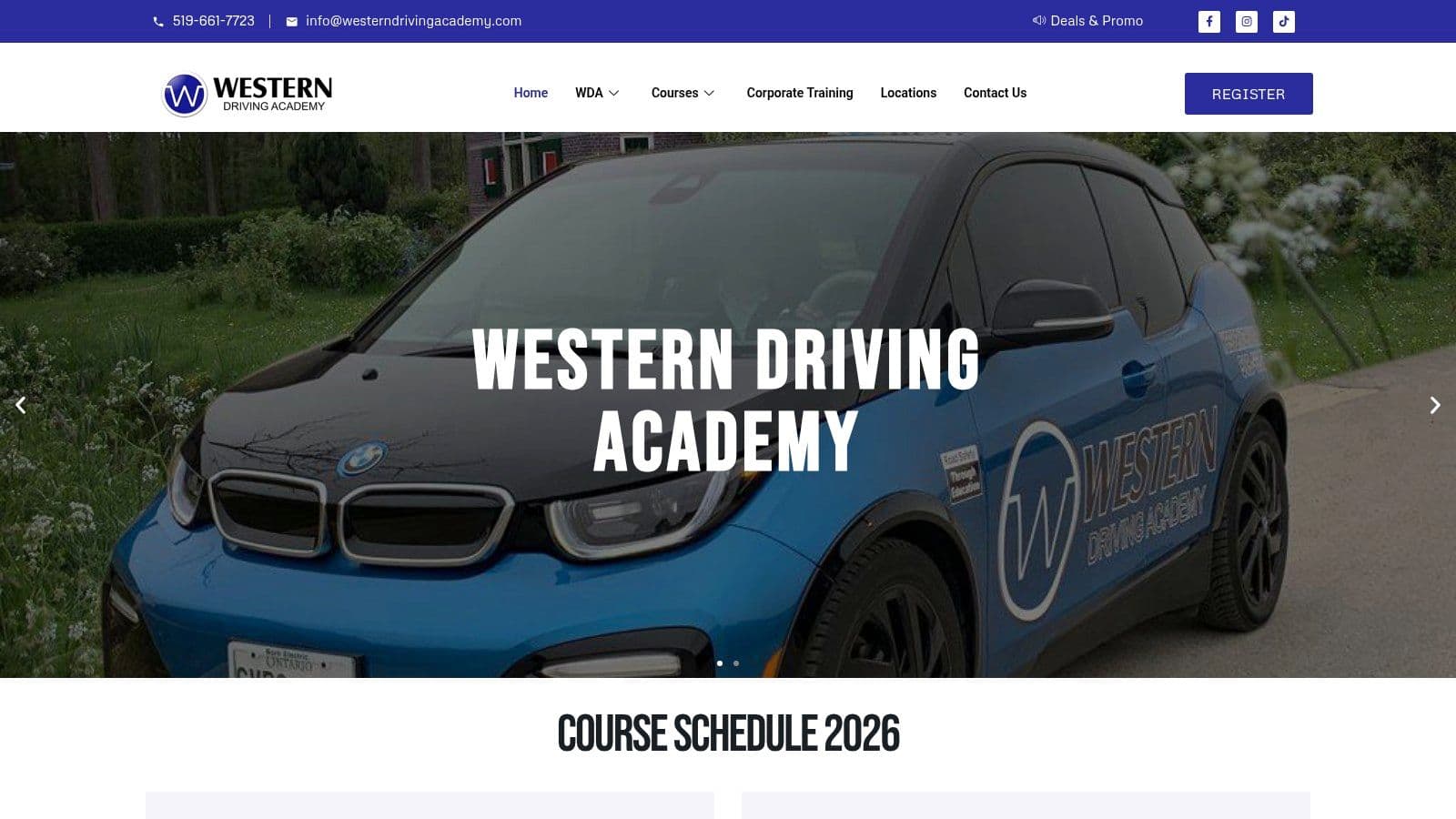
Western Driving Academy stands out because it doesn't rely on a one-format teaching model. It combines online theory, in-car instruction, and simulator-based training through its eDrive+ approach. For learners who freeze under pressure or need repetition before facing real traffic, that extra structure can be useful.
This isn't the obvious pick for everyone. If you already learn best by doing, and you only want road time, simulator hours may feel like an extra layer you won't fully use. But for anxious beginners, a controlled practice environment can make the first on-road lessons less overwhelming.
Best for learners who want more structure
Western also offers training in different vehicle types, including gas and electric options, and that's more practical than it sounds. Some students care about getting used to a vehicle closer to what they'll drive at home. Others just want flexibility if they're planning to test in a school car.
A few details make the school easier to plan around:
- Broader training format: Online theory, simulator sessions, and in-car lessons create a more guided progression.
- City convenience: The school advertises free London pickup and drop-off for in-vehicle lessons.
- Add-on clarity: Road-test car use and extra simulator time are easier to budget for when a school describes them up front.
If your next milestone is road-test prep, it also helps to understand what the examiner expects at the next stage. This G2 driver's test guide from G1ready.ca is a useful companion if you want to connect lesson time with actual test-day skills.
A school like Western makes the most sense when confidence is the bottleneck, not just knowledge.
The main trade-off is cost positioning. Schools with more layered training and more vehicle choices often sit at the premium end of the market. That can be worth it if you'll use those features. It's less compelling if all you need is a simple BDE package and a calm instructor.
2. Xplore Driving School

Xplore Driving School suits learners who want to make a clean decision fast. If you are comparing schools after work, checking prices on your phone, and trying to figure out what your teen needs, a simpler offer has real value. Xplore presents an MTO-approved BDE path with online theory and in-car training in a format that is easy to follow.
That matters more than many schools admit. A straightforward package reduces comparison fatigue, and it lowers the chance of paying for extras you never use. For budget-conscious families, that can be the difference between booking now and putting lessons off.
Best for learners who want clarity over customization
Xplore fits the student who does well with a standard BDE structure and does not need simulator sessions, specialty packages, or a long menu of add-ons. The format is familiar and practical. Complete the knowledge portion online, then schedule the in-car portion around school, work, or family availability.
A few details stand out:
- Clear pricing: Tax-included pricing makes the actual cost easier to compare with other London schools.
- Payment options: Paying in full or in instalments gives families more control over timing.
- Simple package structure: One main path is often easier to assess than several tiers with small feature differences.
There is also a practical planning benefit here. Students who start with a simple BDE package often need help later with the next step, especially once they are ready to line up a road test. If you want to map that part early, this Ontario G road test booking guide helps connect your lessons to the licensing timeline.
The trade-off is range. Xplore looks less appealing if you want a highly customized learning experience or expect to need extra coaching in several stages. In that case, a school with more package variety may fit better. If your priority is clear pricing, a standard learning path, and less time spent decoding offers, Xplore is a strong shortlist option.
3. iPass Driving School
iPass Driving School is often the right shortlist candidate when you want options without stepping into a fully premium program. It offers multiple BDE tiers, road-test preparation, and mock exams, so you can buy closer to what you need instead of stretching into a package with extras you won't use.
That tiered setup matters in a practical way. Some learners just need the baseline BDE requirement. Others already know they'll want test-day car use or a faster completion path.
Best fit for practical shoppers
iPass also serves a wider regional area beyond London, which can help families outside the core city who don't want to keep hunting for an instructor local to their area. If you live in a nearby community and still want a school that actively works the London testing ecosystem, that wider service footprint is helpful.
A few strong points stand out:
- Package choice: Value, Plus, and Expedited tiers make it easier to match price with urgency.
- Road-test support: Mock exams and prep lessons are useful for drivers who are close to test-ready but still inconsistent.
- Regional coverage: The school promotes pickup and service beyond central London.
One thing to watch is site usability. Some of the useful course information sits alongside general blog content, so you may need more scrolling than you'd like before you confirm details. That's not a deal-breaker, but it can slow down comparison shopping.
If you're already thinking ahead to the final road-test stage, this Ontario G road-test booking guide from G1ready.ca is worth reviewing while you compare schools that offer test-day support.
If you know you'll probably need a warm-up, a mock exam, and maybe a car for test day, a tiered school like iPass can save you from piecing everything together later.
4. Wards New Drivers

Wards New Drivers tends to appeal to a specific type of buyer. A parent wants a school with a long local track record. An adult learner wants a teaching approach that puts defensive habits ahead of rushing to the road test. In that lane, Wards has a clear identity.
The practical advantage is format choice. Wards offers both e-learning and in-person BDE, which matters if you are using this guide to choose based on learning style rather than brand name alone. Some students do well with self-paced theory at home. Others retain more when they have a scheduled classroom and an instructor in front of them.
Wards also presents a fairly traditional BDE setup, with online and classroom pathways that both lead into in-car training. Monthly e-learning start dates can help if you want a clearer starting point instead of waiting to hear when the next group opens.
Where Wards becomes a real decision point is price.
This usually is not the school people pick for the lowest upfront package. It makes more sense for learners who value teaching philosophy, local familiarity, and a school identity that feels established. If your comparison framework starts with budget, keep Wards beside a lower-cost option before you commit. If your framework starts with confidence, structure, and parent comfort, Wards may justify the higher spend.
A few fit notes stand out:
- Best for families who want an established local name: Reputation often matters more when a parent is paying for a teen's first training program.
- Best for learners who want classroom choice: In-person theory is still useful for students who struggle with fully online instruction.
- Less suitable for price-first shoppers: Compare the full BDE cost, what is included in the in-car portion, and any add-on fees before booking.
Wards is a school to choose deliberately. It fits learners who care about how they are taught, not just how fast they can finish.
5. First Route Driving School London location
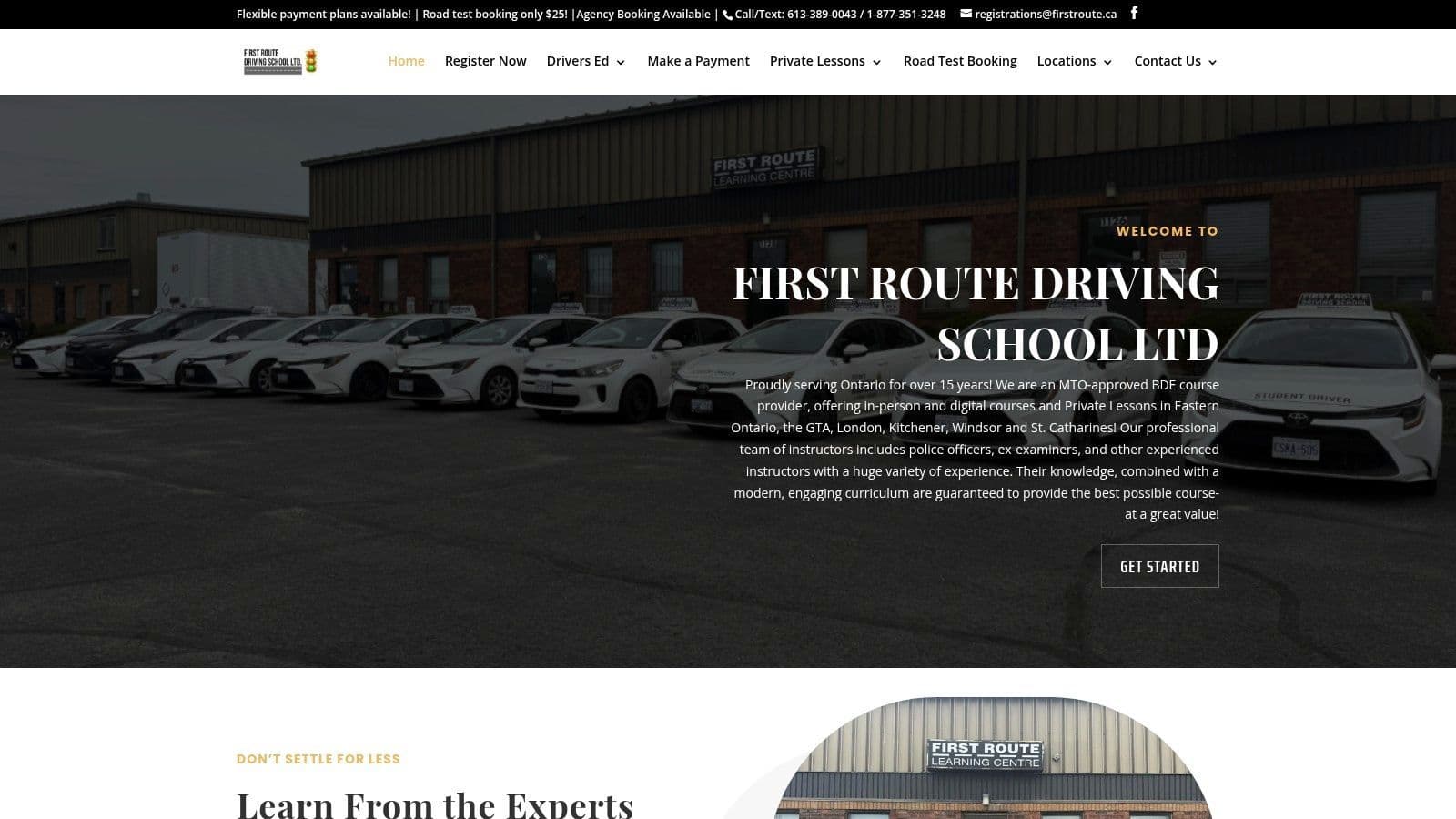
First Route Driving School works well for people who want a larger, standardized operator rather than a purely local boutique school. It offers MTO-approved BDE in online and in-class formats, plus private lessons, road-test packages, and payment plans.
That wider menu can be useful if your needs might change. A learner could start with BDE, then later book a highway lesson, parking practice, or a test-day package without switching providers.
When First Route makes sense
The strongest selling point here is planning flexibility. If cash flow matters, the deposit-and-instalment structure is more manageable than schools that expect a larger upfront commitment. For adult learners, newcomers, or families coordinating multiple schedules, that can matter more than small differences in package design.
First Route tends to fit best in the following contexts:
- Budget-sensitive learners: No-interest instalment options reduce pressure.
- Mixed training needs: Private bundles and road-test support make it easier to customize after BDE.
- People comfortable confirming details: Because it's a broader provincial brand, you should verify London-specific in-car availability before paying.
The trade-off is local certainty. Province-wide providers can have strong systems, but instructor availability and scheduling can vary by city. If you want a school with a clearly local office identity and visible London-first operations, a smaller provider may feel more predictable.
Bigger networks can be convenient. They're not automatically more personal. Ask who will actually teach you in London and how soon those in-car lessons can start.
6. Forest City Driving School
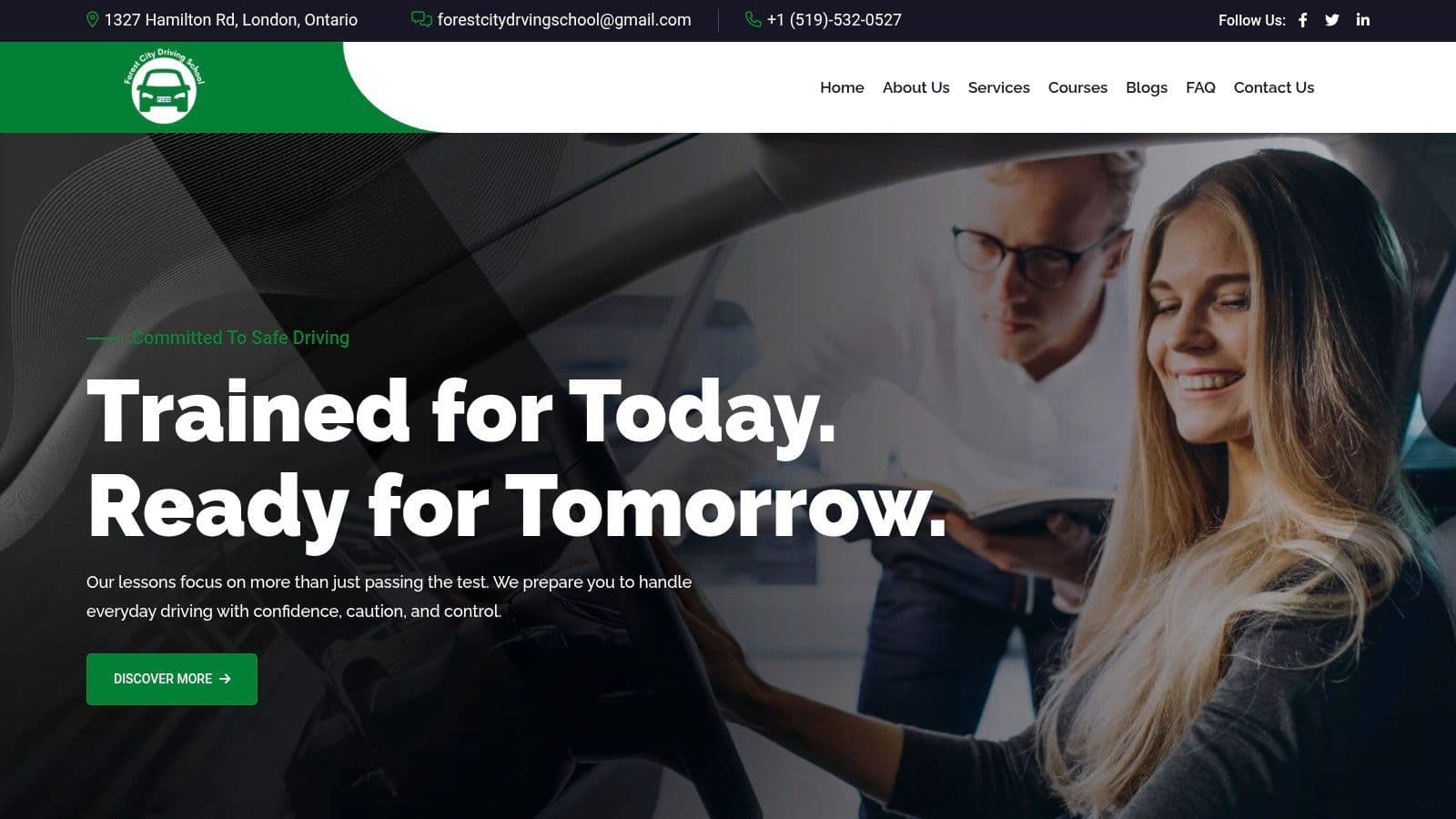
Forest City Driving School has a very local feel, and for many students that's a plus. It operates from a London address, promotes pickup and drop-off within the city, and offers several package tiers rather than forcing everyone into the same training path.
That tiered structure can be useful if you want to compare inclusions rather than just ask, “What's your cheapest package?” A Bronze-level learner and a Diamond-level learner often need different things, especially when test-day support enters the picture.
Good local option for flexible package shopping
Forest City also leans into student-oriented positioning. If you're in high school, college, or university, that focus can be attractive because the school appears to understand the scheduling and budget realities of student drivers.
Its practical strengths are clear:
- Local convenience: Pickup and drop-off within London reduce the friction around in-car booking.
- Tiered choice: Bronze, Silver, Gold, and Diamond packages let you shop by inclusion level.
- Student orientation: Discounts and school-friendly messaging make it appealing for younger drivers.
The caution is simple. Exact public pricing isn't always posted clearly, so you may need to contact the school directly before you can compare it fairly with others. That's not unusual in this category, but it does mean the school rewards people who are willing to ask more questions before enrolling.
This is often a good fit for learners who want a local relationship and don't mind doing one extra step to get firm package details.
7. Thames Valley Driving School
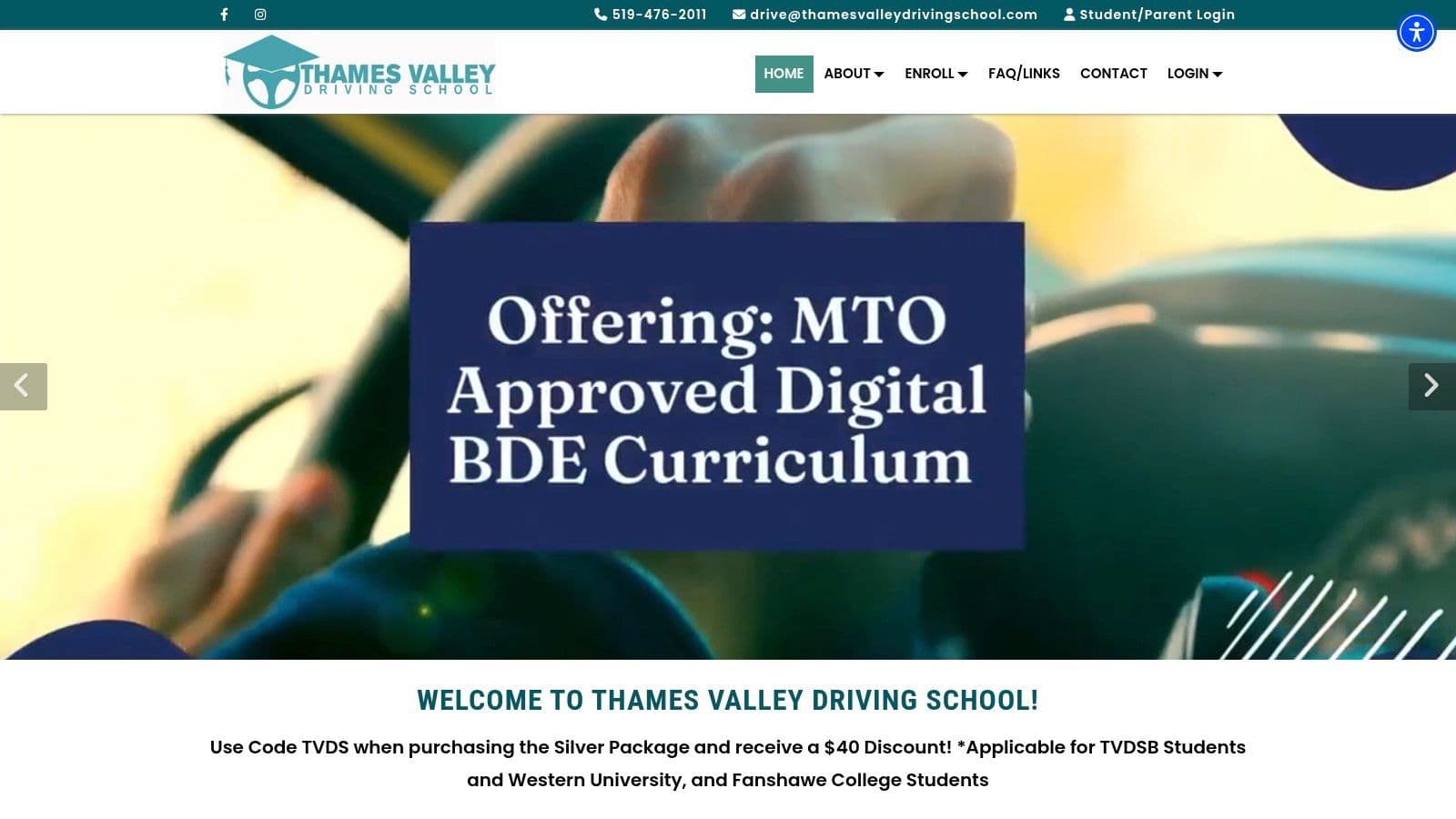
Thames Valley Driving School has a straightforward service menu and a central London location that will appeal to learners who like dealing with a real office, not just a form and a text message thread. It offers BDE packages, private lessons, and road-test packages, plus a student and parent portal for scheduling.
That portal matters more than it sounds. For teens whose parents are helping manage lessons, a shared scheduling system can reduce the usual back-and-forth over missed calls and booking confusion.
Who should shortlist Thames Valley
This school makes sense for learners who want simple categories of service and a downtown presence. If you're already in central London for school or work, that accessibility can be a real convenience.
Its strongest practical points:
- Clear menu: BDE, private lessons, and road-test packages are easy to identify.
- Central location: Helpful for people who prefer in-person contact or easy downtown access.
- Parent visibility: A login system can make coordination easier for families.
The main downside is that some of the pricing and pickup details aren't fully visible on static public pages. You may need to contact the school or use its system to get a complete picture. That adds friction during comparison, but some learners will gladly trade that for a more locally grounded setup.
London, ON Driving Schools, 7-Point Comparison
School Implementation complexity 🔄 Resource requirements ⚡ Expected outcomes ⭐📊 Ideal use cases 💡 Key advantages ⭐ Western Driving Academy (WDA) High, blended eDrive+ (simulator + online + in-car) Moderate–High cost; simulator sessions; EV/gas vehicle options Strong hazard-avoidance practice; broad driving exposure Learners wanting simulator practice, EV training, university students On-site simulator, EV training options, free London pick-up, transparent packages Xplore Driving School Low–Medium, standard MTO BDE (20h online + 10h in-car) Clear, tax-included pricing; pay-in-full or instalments Meets MTO BDE requirements with defined in-car hours Budget-conscious learners wanting pricing clarity Upfront tax-included pricing; payment flexibility iPass Driving School Medium, multiple tiers (Value/Plus/Expedited) Budget-friendly packages; extended pickup area Good road-test prep and mock exam readiness Value seekers and those needing expedited or test-day support Multi-tier options, mock exams, road-test support Wards New Drivers Medium, defensive-driving focus; cohort cadence Higher price point; scheduled monthly e-learning cohorts Emphasis on defensive driving skills; established instruction Learners valuing long local history and defensive training Longstanding local reputation; predictable monthly starts First Route Driving School (London) Low–Medium, self-paced online or in-class options Flexible payment plans; provincial network (local availability varies) Meets BDE standards; private lesson bundles available Budget-sensitive learners needing instalments or flexible formats Province-wide transparency, payment plans, lesson/road-test bundles Forest City Driving School Medium, tiered packages (Bronze→Diamond) Student discounts; local pick-up; pricing often requires contact Student-focused preparation with test-day support in higher tiers High-school/college/university students seeking tailored packages Tiered packages, student discounts, local pick-up/test-day support Thames Valley Driving School Low–Medium, private lessons + full BDE packages Central office, online scheduling portal; pricing via contact Clear service menu and organized scheduling Those wanting central office support and parent/student portal Central London location, scheduling portal, straightforward services
Final Thoughts
A new driver in London can end up with the wrong school for a simple reason. They choose based on the lowest price or the first name a friend mentions, then realize too late that the class format, pickup area, or booking process does not fit how they learn.
The better approach is to use this list as a filter, not just a ranking. Western Driving Academy makes sense for learners who want more structure and extra support tools. Xplore suits people who want a clear BDE option without much guesswork. iPass is a practical pick if package choice and road-test help matter. Wards will appeal to families who put more weight on defensive-driving habits and a long local track record. First Route fits learners who need payment flexibility. Forest City is worth a look for students comparing package levels and local pickup options. Thames Valley stands out for organized scheduling and a central office setup.
The shortlist usually gets clearer once four questions are answered. Is the school MTO-approved? Does the teaching format fit your learning style? Can the school cover your area and schedule without friction? Do the package details make it clear what is included, what costs extra, and how lessons are booked?
Weak points should drive the decision. A nervous learner often does better with a school that offers a steadier pace, clearer instructor communication, and enough in-car time to build routine. A learner who struggles with scheduling should favor schools with simpler booking, pickup options, and payment plans they can stick with. A price-sensitive learner should compare total value, not just the headline package price.
The full path is simple. Prepare for the G1 theory test, choose a school that fits your road-learning needs, complete enough in-car practice to build consistency, and then get targeted help before the next licence step. As noted earlier, G1ready.ca fits into the theory-prep part of that path. It does not replace in-car instruction, but it can help keep written-test prep and practical training on track at the same time.


