You've just passed your G1 at a DriveTest centre. You're relieved, your family is texting congratulations, and then the practical question lands: How long is my G1 test valid for?
Confusion often arises for new drivers at this point. Some people mean the written test result. Others mean the learner's licence they received after passing. Those aren't the same thing, and mixing them up causes a lot of last-minute panic later.
I've seen this confusion with teens, parents, newcomers, and experienced drivers switching into Ontario's system. They'll say, “I passed a while ago, is my test still valid?” Usually, the better question is: Is my G1 licence still valid, and what deadline am I dealing with?
Your G1 Pass and the Ticking Clock
You pass the written test, tuck your new licence into your wallet, and a year later you start wondering, “Is my G1 test still valid?” I hear that question all the time. The confusing part is that two different ideas get blurred together.
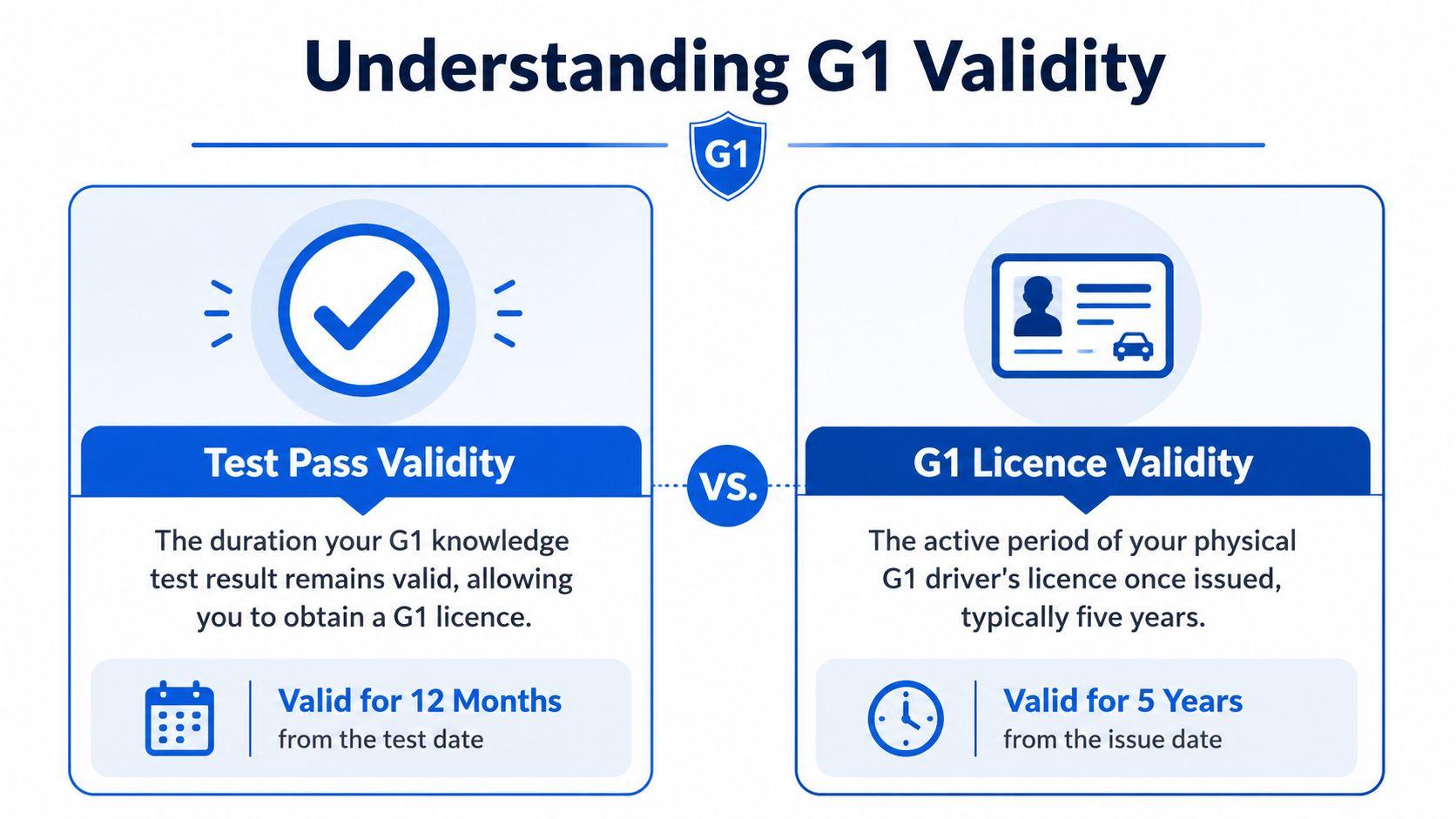
Your written test pass is the one-time result that lets you get a G1 licence. Once the licence is issued, that pass is no longer a separate clock you keep track of. The date that matters now is the expiry date printed on the licence itself.
A good way to picture it is this: passing the test is like using a key to open a door. Once the door is open and you are inside, you stop worrying about the key and start paying attention to how long you are allowed to stay. With a G1, the pass gets you the licence. The licence is what stays active for a set period.
That small distinction clears up a lot of stress. Many new drivers search for “g1 test validity” when what they really need to check is their G1 licence status and timeline. If you want a plain-language overview of how the whole graduated system fits together, this guide to Ontario graduated licensing explained gives the bigger picture.
So here is the practical rule to remember.
Once you pass and receive your G1, stop tracking the pass as if it has its own long-term expiry. Start tracking the licence you were granted. That is the clock that shapes your next steps, your test timing, and what happens if you wait too long.
Test Pass Validity Versus G1 Licence Validity
A concert ticket gets you through the door once. A season pass stays active for a longer period. Your G1 written pass works like the ticket, and your G1 licence works like the season pass.
Test pass validity
The written test is valid in a very specific sense. You must pass both sections of the G1 knowledge test, with at least 80% or 16 out of 20 in each section, and if you make more than 4 mistakes in either section, the attempt is a fail and you can't proceed to get your licence, according to Mitch Insurance's explanation of Ontario graduated licensing.
So when people ask about G1 test validity, this is the clean answer: the pass is the successful result that allows the licence to be issued. It isn't a separate long-term status you manage for years afterward.
If you want a broader plain-English breakdown of how the system fits together, this guide on Ontario graduated licensing explained lays it out well.
G1 licence validity
The longer clock belongs to the licence itself. Once issued, your G1 licence is valid for up to five years, and that is the period in which you need to move through Ontario's graduated licensing system.
Here's where many learners get caught. They pass the written test, drive occasionally, delay their road test, and suddenly they're much closer to expiry than they realised. The written pass didn't quietly stay active in the background. The licence did, and the licence has the deadline.
Validity type What it means in practice What you need to watch Test pass You met the required mark on both written sections and can be issued a G1 Whether you passed both parts on test day G1 licence Your learner's licence is active and lets you continue through the system The expiry date on the licence card
The safest habit is simple. Treat your licence expiry date as the real deadline from day one.
Navigating Your Five-Year G1 Licence Timeline
You pass the written test, tuck your new licence into your wallet, and tell yourself you will deal with road tests later. A year passes quickly. Then another. By the time many learners check the date on the card, the deadline feels much closer than expected.
That is the part people often miss. Your written test pass gets you the G1 licence. The five-year clock belongs to the licence itself, not to the pass.
What starts the clock
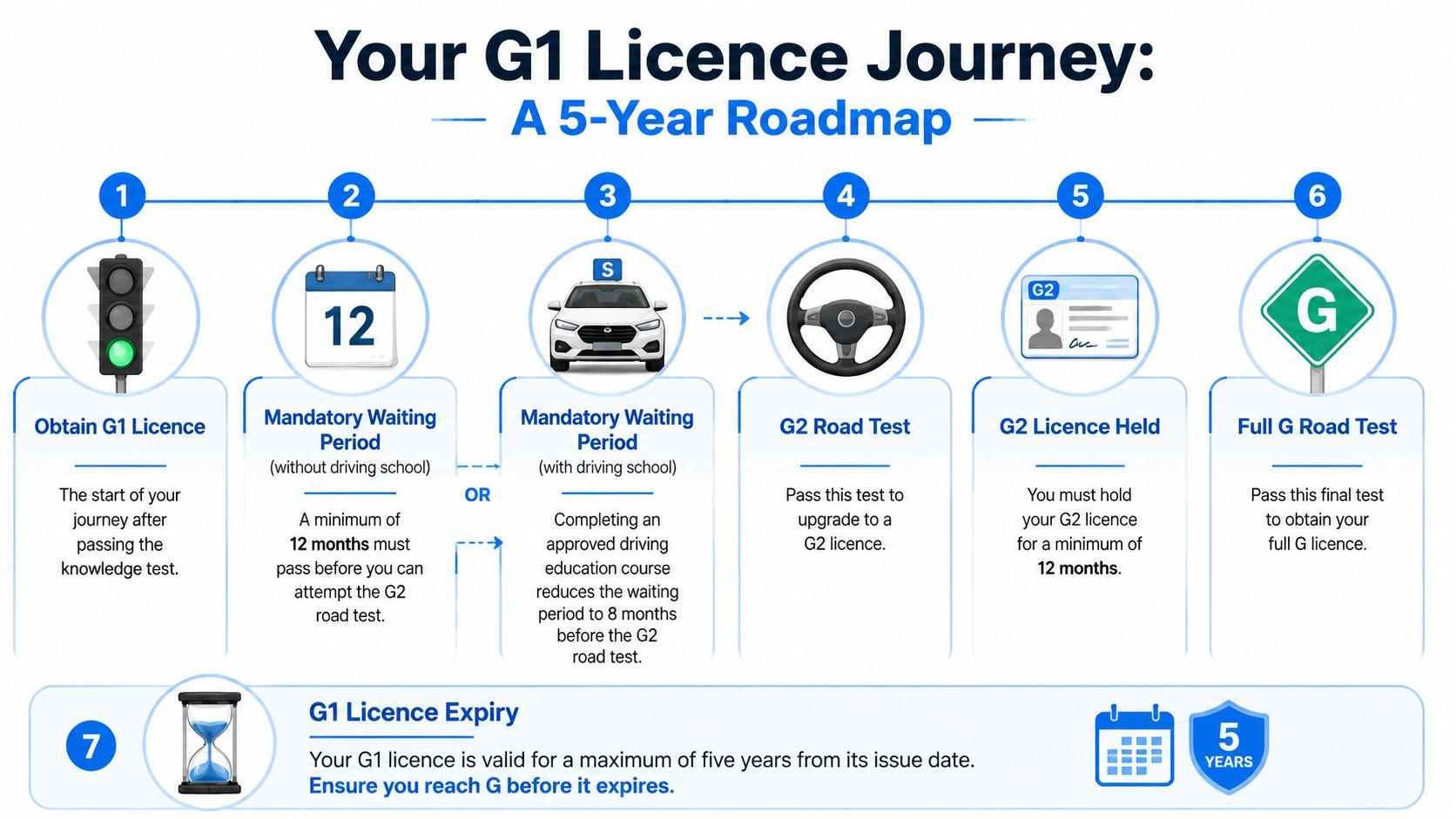
The date that matters is the day your G1 licence is issued. From that point on, the graduated licensing timeline keeps running whether you practise every week, drive only a few times a year, or pause entirely.
A good way to picture it is a course with a final deadline. Finishing the first assignment gets you into the course, but it does not pause the final due date. Your G1 pass is the first step. Your G1 licence is the document carrying the longer timeline.
That difference matters because learners often delay for ordinary reasons. School gets busy. Work changes. Access to a supervising driver becomes inconsistent. The system does not stop counting during those gaps.
A practical timeline you can follow
Ontario's licensing path has stages and waiting periods built into it, so late starts create pressure faster than many new drivers expect.
Here is the usual flow:
- Get your G1 licence. This starts your learning period and your overall timeline.
- Practise under G1 rules. Use this stage to build steady habits, not just collect occasional driving time.
- Take your G2 road test when you are eligible. Approved driver training can shorten the wait before this test, as noted earlier.
- Hold your G2 and prepare for the full G road test. This stage still takes time, so it helps to plan well before your expiry date.
If you want a clear explanation of what can slow your progress, this guide on what happens if you fail the G1 test also helps show why leaving everything to the last minute can create problems later.
Ontario Graduated Licensing Timeline Summary
Milestone What to keep in mind Obtain G1 licence This is your starting date Prepare for G2 Waiting periods apply, so early practice helps Hold G2 before full G You still need enough time for the final stage Finish full G Aim to complete the process before your licence expiry date
A calm plan works better than a rushed one near the end.
- Check the dates on your licence card right away. Save reminders in your phone for key milestones, not just the final expiry.
- Practise regularly. Weekly driving builds skill faster than long breaks followed by panic practice.
- Book tests with breathing room. One cancelled appointment or one failed attempt feels much less serious if you still have time left.
- Treat the five-year licence period as your real deadline. That is the rule that shapes every later step.
Failing the G1 Test and Your Next Steps
Failing the written test feels worse than it is. Many candidates walk out thinking they blew the whole process. They didn't. They've hit a delay, not a dead end.
What a failed attempt actually means
The G1 knowledge test has 40 multiple-choice questions, split into 20 on road signs and 20 on rules of the road. You need 16 correct answers in each section to pass. If you fail either section, you fail the whole test, as described in this overview of the Ontario G1 test structure on YouTube.

That's why someone can do well on signs, struggle on rules, and still leave without the licence. It's frustrating, but it's also clear. You know exactly which knowledge area needs more work.
How to regroup without spiralling
If you fail, you may be able to retake the test the same day if the DriveTest centre has availability, and the re-attempt fee is $15.75 CAD, according to this breakdown of Ontario G1 test costs.
That same source notes the full test fee is $159.75 CAD, which covers the knowledge test, the first G2 road test, and the licence itself.
A calm retake plan usually works better than cramming harder:
- Review the section you missed: Don't restart everything. Fix the weak area.
- Use targeted practice: If road signs were the problem, drill signs. If rules were the issue, focus there.
- Retest while it's fresh: Same-day retakes help some learners because the format is still familiar.
For a plain-language walkthrough of the process, this guide on what happens if you fail the G1 test answers the commonly asked questions right after a failed attempt.
What to Do When Your G1 Licence Expires
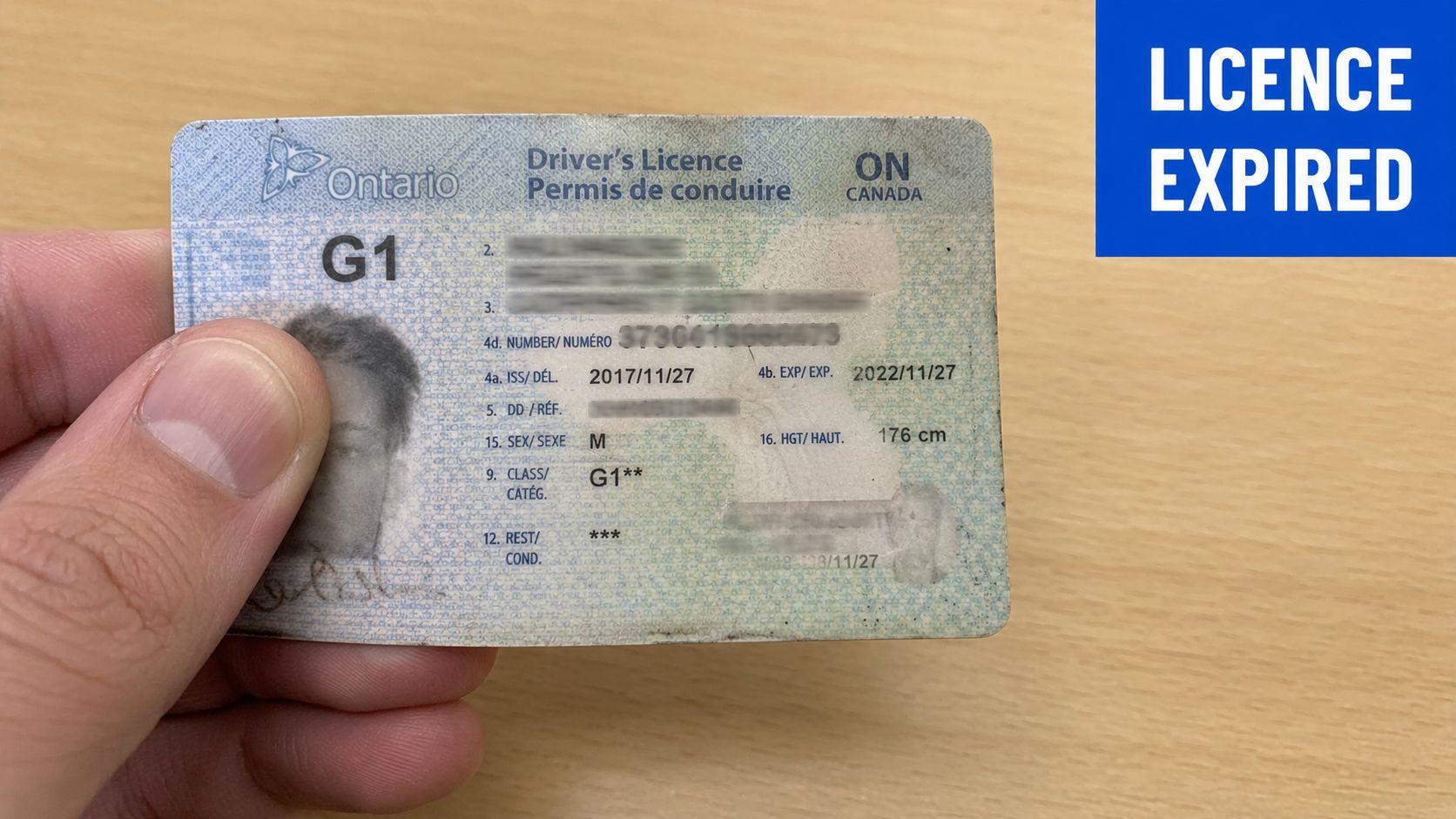
This is the part many drivers ignore until the date is right in front of them. A G1 licence doesn't work like a health card or some other ID people casually renew. If it expires, you need to deal with it properly.
Requalifying within the allowed window
If your Ontario G1 licence has expired, there is a path back, but it's time-sensitive. A holder can pass the written knowledge test again within six months of expiry, pay a $90.00 requalification fee, and have the G1 validity extended for another five years, while keeping any waiting periods already served, based on this discussion of G1 expiry requalification in Ontario.
That last part matters a lot. If you've already served the wait needed for your next step, requalifying within that window means you don't lose that time.
Don't think of this as a normal renewal. Think of it as proving you still qualify by passing the written test again.
A lot of learners hear “expired” and assume they must start from zero immediately. Sometimes that's true, but not always. The key question is whether you're still within that six-month period after expiry.
If your expiry date is getting close
This is the point where action beats research. If your G1 is active but nearing its expiry date, stop guessing and make a plan this week.
- Check the card, not your memory: Many people are off by months.
- Figure out your stage: Are you still on G1, or are you eligible for your next road test?
- Leave buffer time: Booking delays and personal schedule issues happen.
If you need a simple overview of the process and options, this page about renewing a learner's licence in Ontario is a useful starting point.
A short video can also help if you prefer hearing the process explained:
If your licence has been expired longer than the allowed requalification window, people often have to start the graduated licensing process again. In that situation, it's worth confirming the current process directly before you make assumptions.
Frequently Asked Questions About G1 Validity
Does my G1 written test pass stay valid on its own?
Not in the commonly understood sense. The pass is what qualifies you to be issued the licence. After that, the practical deadline is the validity of your G1 licence, not a separate long-term test result.
How long is a G1 licence valid?
A successful G1 gives you a licence valid for up to five years, as noted earlier from the Ontario licensing guidance.
Can I get more time if my G1 is about to expire?
There isn't a casual extension process in the usual sense. If it expires, your next steps depend on how long ago it expired and whether you can still requalify by rewriting within the allowed window described above.
If my G1 expires and I requalify, do I lose the waiting time I already served?
If you requalify within the permitted post-expiry window discussed earlier, your previously served waiting times are preserved. That's one of the most important details in the whole process.
Can I fail just one part of the written test?
Yes, and that still means a full fail for the attempt. The test is divided into signs and rules, and you must pass both parts.
Is there a study resource I must use?
Ontario's official driver handbook is the required study resource, and the written test is based on that material, as covered in the earlier requirement summary.
Can I take the test without an appointment?
At most DriveTest centres, no appointment is required for the written test application process, based on the earlier Ontario requirements source.
If you want a simple way to practise before test day, G1ready.ca offers free Ontario G1 practice tests, targeted quizzes, and realistic exam-style prep that can help you build confidence before you go to DriveTest.