
You pull out of the DriveTest parking lot, and within the first minute the examiner is already judging more than whether the car stays in the lane. They are watching for signs that you can manage the vehicle calmly, spot risk early, and make decisions that do not need to be rescued.
That is how the G2 test should be approached. It is an evaluation of visible competence. A driver can feel prepared and still lose marks by hiding mirror checks, braking late, rushing turns, or hesitating at the wrong time. Examiners are trained to score what they can see, so your job is to make safe habits obvious from the passenger seat.
I tell students to practice with that standard in mind. Do not just complete the manoeuvre. Complete it in a way that clearly shows control, awareness, and judgment under pressure.
Local route familiarity can help, but it does not replace sound habits. A familiar intersection may reduce surprises. It will not save a driver who misses a head check, drifts on a lane change, or rolls a stop.
The seven tips below focus on what examiners look for during a G2 road test in Ontario. Use them to turn basic driving ability into a pass-ready performance.
1. Master Smooth Steering and Vehicle Control Techniques
If your hands are tense, the whole car tells on you. The examiner sees it in late corrections, drifting within the lane, and jerky turns that make the drive feel rushed even when your decisions are correct.
Smooth steering starts with stable hand placement and early planning. Keep both hands in a balanced position, look where you want the car to go, and feed in steering gradually instead of snapping the wheel. On a G2 test, smooth inputs signal that you're scanning ahead and thinking early, not reacting late.
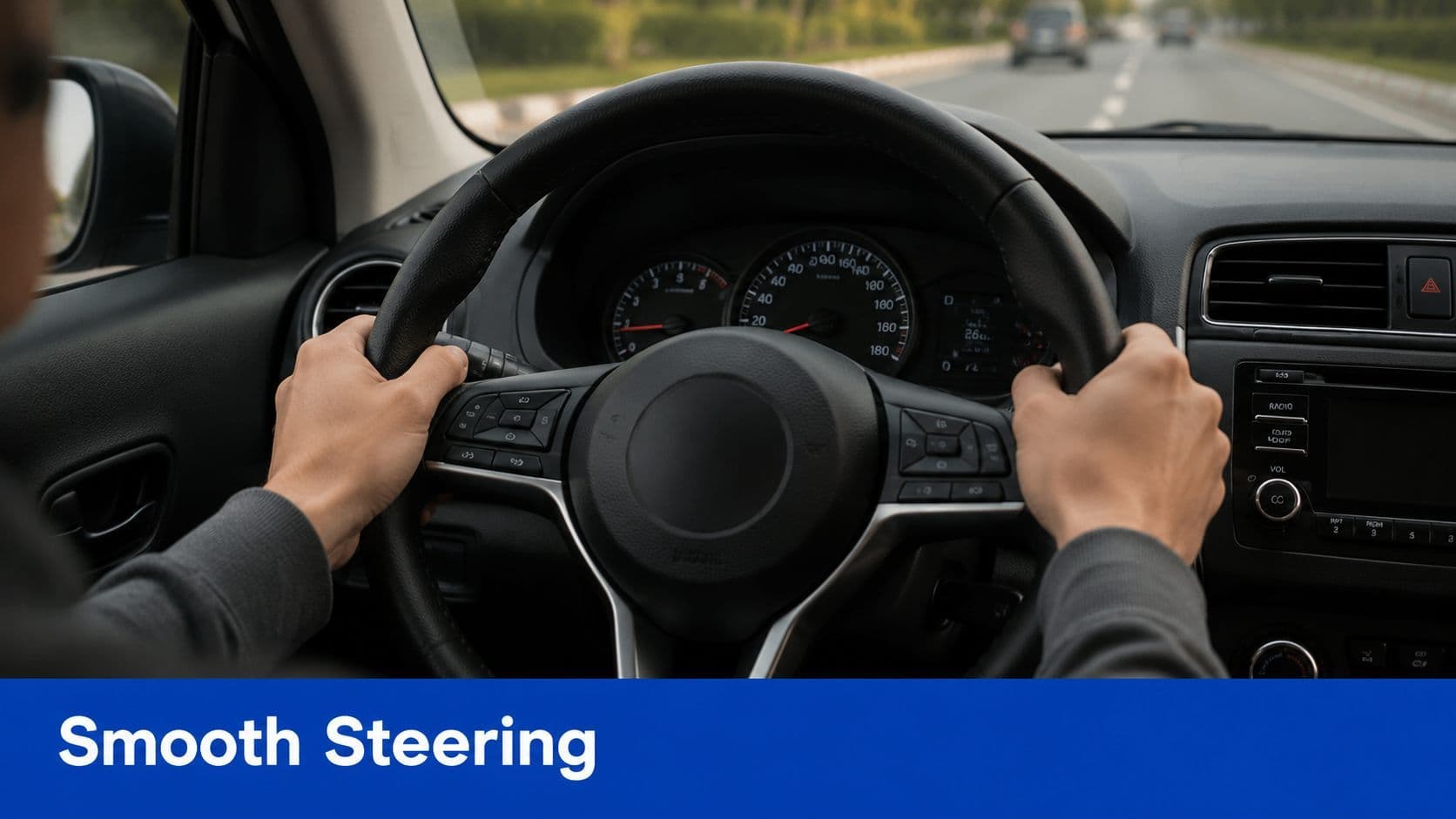
What smooth control looks like to an examiner
A roundabout or sweeping curve is a simple example. A prepared driver enters at the right speed, turns the wheel once with purpose, and unwinds it cleanly on exit. A nervous driver often adds extra little corrections halfway through the turn.
The same thing happens in a three-point turn. Strong candidates choose a safe starting position, steer decisively, and finish each phase without panic. Weak candidates stop mid-manoeuvre, change their mind with the wheel, or rush the reverse portion and lose alignment.
Practical rule: If you have to fix the same steering mistake twice, the first input was probably too late.
A few habits make a big difference:
- Relax your grip: Hold the wheel firmly enough to control it, but not so tightly that every bump moves your hands.
- Turn once, then assess: Don't keep adding steering unless the car needs it.
- Look far ahead: Your hands usually follow your eyes. If you stare at the curb, parked cars, or lane line, the car drifts toward them.
- Practise in stages: Residential streets are better than busy arterials when you're trying to clean up steering habits.
Ontario's graduated system is staged from G1 to G2 and then onward to a full G licence, which is why these fundamentals matter early and keep mattering later, as outlined in the Ontario graduated licensing and pass-rate overview. Smooth control isn't fancy driving. It's examiner-friendly driving.
2. Develop Comprehensive Mirror and Head-Check Habits
A lot of G2 candidates lose marks here without realizing it. They do check. The problem is that the check is late, rushed, or too small for the examiner to verify. On a road test, observation only counts if it is both timely and visible.
Examiners are trained to watch for a pattern. They want to see that you scan before the car moves, before your position changes, and before any turn could affect another road user. If your head stays still and your eyes just flick around, it can look like guesswork from the passenger seat.
Make your observation easy to score
Use the same sequence every time the situation calls for it. Check mirrors, signal, confirm with mirrors again if needed, do a clear shoulder check, then move only when the space is safe. That rhythm makes your driving easier for the examiner to trust because it shows the decision came before the action.
I see one mistake all the time in lessons. The driver signals, starts drifting, then throws in a token shoulder check halfway through the move. From the examiner's perspective, that is backwards. The observation should clearly happen before the steering input.
What to drill until it becomes automatic:
- Before moving from the curb: Set mirrors and do a blind-spot check on the side you're entering traffic from.
- Before lane changes: Check the rear-view mirror, the target side mirror, then turn your head enough to verify the blind spot.
- Before right turns: Look for cyclists, pedestrians, and anyone approaching along the curb lane or shoulder.
- After the check: Get your eyes back up the road quickly so you do not miss what is happening ahead.
There is a trade-off here. Exaggerated checks that pull your eyes off the road too long can create a new problem. Tiny checks can cost you marks because the examiner cannot confirm them. The right habit is brief, deliberate, and obvious.
As noted earlier in the official test guidance, scanning ahead and making deliberate observations matter throughout the G2 test. Good observation does more than reduce risk. It shows the examiner that your decisions are based on active awareness, not hope.
3. Execute Proper Lane Changes and Merging with Confidence
Confidence on a G2 test doesn't mean forcing your way in. It means choosing the gap early, matching traffic properly, and moving once. The examiner wants to see a driver who can join traffic without making everyone else react.
When learners struggle with lane changes, it's usually because they hesitate too long or commit too fast. One creates confusion. The other creates risk. The best lane changes feel almost boring because they're timed well.
Confidence is timing, not aggression
Take a typical multi-lane road. You're asked to change lanes left. A strong sequence is simple: scan ahead, check mirrors, signal, confirm the gap with a blind-spot check, maintain a steady speed, then drift smoothly into the new lane. No sudden braking. No sharp steering. No hanging between lanes while you decide.
Merging works the same way. If the ramp or lane gives you room, build speed to fit traffic instead of arriving too slowly and hoping someone rescues the situation. A slow merge often forces other drivers to brake. Examiners notice that immediately.
What works well in practice:
- Pick the gap before the last second: Early planning makes your move look controlled.
- Keep speed consistent: Sudden slowing during a lane change signals uncertainty.
- Use one clean steering action: Don't wobble into the lane.
- Cancel the signal after the move: Leaving it on suggests you're not settled.
What doesn't work:
- Signalling and waiting forever: If the opening is gone, choose the next one instead of drifting indecisively.
- Turning your head too long: A blind-spot check should be clear but brief.
- Merging below traffic speed when space allows: That creates pressure behind you.
If you want more road-specific defensive habits that support cleaner lane choices, this Ontario defensive driving guide from G1ready.ca is a useful companion. Instructors see this all the time. Learners who think “be careful” means “be timid” often create the very problems they're trying to avoid.
4. Practice Defensive Driving and Hazard Perception Skills
You are driving through a quiet residential block on the test. A ball rolls toward the street from between two parked cars. An examiner is watching for what happens before any child appears. Do you keep your speed, or do you read the clue and prepare early?
That is the core of hazard perception on the G2. Examiners are trained to notice whether you recognize risk soon enough to make calm, small adjustments instead of late, obvious corrections. Anyone can slam the brake after the problem is fully visible. A passing drive shows prediction.
Show the examiner that you are reading the road, not just reacting to it
In a school zone, near a plaza entrance, or beside a stopped bus, posted speed is only part of the job. The stronger habit is matching your speed and following distance to what could develop in the next few seconds. If a pedestrian is close to the curb, if a driver is angled out of a driveway, or if a parked vehicle blocks your view, your driving should show that you noticed.
That usually means easing off the gas early, increasing space, and being ready to brake without making the car lurch. Those choices stand out to an examiner because they show judgment under normal traffic conditions.
One practice method works well. Use commentary driving. Name the hazard to yourself, then name your response. “Van blocking sightline, reduce speed.” “Cyclist near parked cars, leave more space.” “Wet road, stop earlier.” It sounds simple, but it trains you to connect observation with action, which is exactly what the examiner wants to see.
On-road insight: The strongest test drives often look calm and slightly restrained in uncertain areas. They do not look timid or slow for no reason.
Use these drills during practice:
- Choose one environment at a time: residential streets, school areas, shopping plazas, or busy downtown roads.
- Identify hazards early: pedestrians, cyclists, hidden driveways, brake lights ahead, opening doors, vehicles edging out.
- Attach each hazard to one response: reduce speed, cover the brake, increase following distance, or hold your lane.
- Review what you missed: if a risk surprised you, figure out what clue appeared earlier.
For more road-reading examples, this Ontario defensive driving guide from G1ready.ca is a useful companion. Defensive driving is not a separate test skill. It is the habit that makes your decisions look safe, deliberate, and examiner-ready.
5. Master Proper Intersection Navigation and Decision-Making
You can drive well for 15 minutes, then lose marks in three seconds at a four-way stop. That is why intersections matter so much on the G2 test. They force you to show judgment in real time, and the examiner can see every part of your decision. Your speed on approach. Your stopping point. Your eye movement. Your choice to wait or go.
From the examiner's seat, intersections answer one question fast. Do you recognize risk early enough to stay in control without hesitating when the way is clear?
That changes how you should practise. Do not treat an intersection as a place to perform one rule, then move on. Treat it as a sequence. Read the signs and lane early. Adjust speed before the stop. Stop in the right place. Scan in a way the examiner can see. Then make one clean decision.
Show a full decision process, not just the final move
A complete stop means the vehicle is fully still before the stop line, crosswalk, or edge of the road, depending on the layout. A slow roll tells the examiner you decided it was safe before you had all the information. That is a habit they mark down quickly.
Green lights are not automatic permission to continue at the same pace. Check the intersection before entering it. Examiners watch for drivers who notice a pedestrian stepping off late, a vehicle turning across their path, or a car trying to beat the light from the cross street. Calm restraint reads as control.
Yellow lights expose poor planning. If a safe stop is available, take it early and smoothly. Rushing through on a stale yellow often creates two problems at once. Late decision-making and unstable speed control.
Use this routine at every intersection:
- Read it early: identify the control type, lane markings, and any turn restrictions well before you arrive.
- Set your speed before the line: braking late makes the whole approach look reactive.
- Stop where it counts: behind the line or crosswalk, with the car fully still.
- Scan visibly: left, right, left, and through the path you plan to take.
- Claim the gap once it is safe: hesitation after a clear opening can also cost marks.
Left turns deserve extra attention because they combine right-of-way, timing, and steering accuracy. Enter only when you can complete the turn without forcing oncoming traffic to slow down. If you are waiting in the intersection, keep the wheels straight until you begin the turn. That protects you if a vehicle behind bumps you forward.
The same examiner logic shows up in right turns. Learners often stop correctly, then ruin the move by turning wide, missing a pedestrian check, or accelerating before the car is fully settled in the new lane. The pass-level version is simple. Stop, observe, turn into the proper lane, and build speed after the car is straight.
If parking setup and low-speed positioning still feel inconsistent, this guide to parallel parking for the driving test also helps with the same skill underneath many good turns: placing the car accurately while keeping your observations active.
Intersection errors carry weight because they reveal how organized your driving really is. An examiner does not need a dangerous moment to question your readiness. A rushed stop, a hidden scan, or a hopeful yellow-light decision is enough.
6. Perfect Parking Manoeuvres Parallel, Perpendicular, and Angle Parking
You pull into the lot near the end of the test, and the pressure spikes. That is normal. From the examiner's seat, parking is not a trick task. It is a clear check of low-speed control, judgment, and observation when you have enough time to do the job properly.
That is why parking mistakes stand out. At low speed, the examiner expects organized driving. If the setup is sloppy, the wheel work is rushed, or the checks disappear once you shift into reverse, it suggests the driver is guessing instead of placing the car on purpose.
A visual walkthrough can help before you practise:
Show the examiner a controlled plan
Parking gets marked long before the vehicle is fully in the space. Examiners watch how you approach, where you position the car, whether you check around before reversing, and how calmly you correct if the first attempt is slightly off. One clean adjustment is fine. Blind correction is what loses confidence.
Parallel parking is the clearest example. The setup distance from the parked car, the timing of the first turn, and the pace of the reverse all affect whether the manoeuvre looks controlled or improvised. If you want a broader breakdown of what Ontario examiners look for across the full road test, review this G2 drivers test guide before your next practice session.
The same standard applies to perpendicular and angle parking. The examiner is looking for a car that enters the space slowly, stays within the lines, and finishes straight. A fast park with a crooked finish does not look confident. It looks lucky.
Use this checklist in practice:
- Set the vehicle up first: Good parking starts with the approach position, not the steering correction halfway through.
- Keep reverse speed slow: Walking pace gives you time to judge distance and make small corrections.
- Make your checks visible: Use mirrors, then turn your head before and during reversing so the examiner can see you are tracking the full area.
- Correct early: If the angle is off, fix it while there is room instead of forcing the car into place.
- Finish cleanly: Center the car, straighten the wheels, and stop with the vehicle settled.
One point matters on test day. Examiners do not expect perfection. They expect control that they can clearly see.
7. Manage Test-Day Stress and Mental Preparation Strategies
A lot of learners fail for mental reasons before they fail for technical ones. They rush a turn after one small mistake. They stare at the examiner's clipboard. They start replaying an earlier moment instead of driving the road in front of them.
That's why some of the best G2 driving test Ontario tips have nothing to do with the wheel itself. Your mindset changes how every manoeuvre looks.
Calm driving looks deliberate
One Ontario-focused mock-test video points out that a learner's main issue was rushing, while the rest of the driving was otherwise strong, which is a useful reminder for anxious candidates watching the Ontario mock G2 test discussion on YouTube. Under pressure, many drivers don't become unsafe because they lack skill. They become unsafe because they speed up their decisions.
Before the test, reduce stimulation instead of adding more. Don't cram new tricks that morning. Use a familiar vehicle if possible. Get settled early, adjust your seat and mirrors properly, and take a few slow breaths before the examiner arrives.
During the test, shrink your focus to the next task only. If you missed one mirror check or made a slightly wide turn, move on. Examiners often care more about how you recover than whether the entire drive was perfect.
“Drive the moment you're in, not the mistake you just made.”
Helpful test-day habits:
- Arrive with time to spare: Rushing into the parking lot carries straight into your driving.
- Use a short reset breath at red lights: Inhale, loosen your shoulders, and refocus.
- Narrate in your head: Mirror, signal, blind spot, move.
- Accept minor imperfections: Safe recovery beats visible panic.
If you want a broader overview of what skills are commonly expected on the road test, this G2 driver's test guide from G1ready.ca is worth reviewing before your final practice sessions. Calm doesn't mean casual. It means your actions stay organized when the pressure shows up.
G2 Driving Test: 7-Point Skills Comparison
Skill / Item Implementation complexity 🔄 Resources & efficiency ⚡ Expected outcomes ⭐📊 Ideal use cases 💡 Key advantages ⭐ Master Smooth Steering and Vehicle Control Techniques Moderate, requires deliberate, repetitive practice Low–medium: quiet roads, practice time; efficient once learned ⭐⭐⭐⭐, improved vehicle stability and examiner impression Turns, roundabouts, lane-centering during G2 test Reduces corrections, improves comfort and control Develop Comprehensive Mirror and Head-Check Habits Low–moderate, habit formation and timing practice Low: any vehicle and short practice sessions; high long-term efficiency ⭐⭐⭐⭐, better situational awareness; fewer blind-spot incidents Lane changes, merges, urban traffic and intersections Observable by examiners; legally compliant and preventive Execute Proper Lane Changes and Merging with Confidence Moderate–high, needs timing and multi-lane exposure Medium: supervised highway practice; requires traffic access ⭐⭐⭐⭐, smoother merges; reduces interference with other drivers Highway on-ramps, passing, multi-lane urban arterials Demonstrates traffic integration and assertive safety Practice Defensive Driving and Hazard Perception Skills Moderate, cognitive shift to anticipation and prediction Low–medium: study materials, dashcam review, instructor coaching ⭐⭐⭐⭐⭐, lowers crash risk; strongly weighted by examiners All driving contexts, unpredictable or dense traffic areas Differentiator on borderline tests; lifetime safety benefit Master Proper Intersection Navigation and Decision-Making Moderate, requires judgment and timing per intersection Low–medium: varied intersection practice; familiarity reduces effort ⭐⭐⭐⭐, prevents common accidents; consistent right-of-way use Urban intersections, signalized crossings, complex junctions Directly testable skill; reinforces rule compliance Perfect Parking Manoeuvres (Parallel, Perpendicular, Angle) High, spatial precision and vehicle-specific feel Medium: practice spaces, cones, multiple attempts; time-consuming ⭐⭐⭐⭐, demonstrable test skill; practical everyday benefit Parallel parking on streets; crowded parking lots; test scenarios Strong confidence builder; distinguishes competent drivers Manage Test-Day Stress and Mental Preparation Strategies Low–moderate, routines and rehearsal required Low: breathing, sleep, visualization; very efficient payoff ⭐⭐⭐⭐, improves consistency; aids recovery from mistakes Test day, high-pressure manoeuvres, initial highway exposure Reduces error cascade; improves overall performance consistency
Your Next Step Turn These Tips Into Action
You pull out of the test centre, and within the first two minutes the examiner is already building a picture of you. They are not looking for flashy driving. They are looking for proof that your habits are reliable, visible, and safe without reminders.
Treat your final practice the same way.
The G2 road test is easier to prepare for when each drive has a job. Run one session focused on speed control, stopping, and steering accuracy. Run another on lane changes, turns, and intersection judgment. Then do a full mock test where someone scores only what an examiner sees: mirror checks, blind-spot checks, lane position, gap selection, stop quality, and how well you recover after a small mistake.
That examiner view matters. A head check that is too small to notice may not get credit. A rolling stop tells the examiner you are guessing instead of confirming. A rushed park job can outweigh ten minutes of decent driving because it shows loss of control under pressure. The standard is not just doing the manoeuvre. The standard is doing it in a way that clearly shows competence.
Where you book your test also matters in a practical sense. Route familiarity, traffic pace, lane markings, and the type of intersections near a test centre can change how demanding the drive feels. Choose a location you can practise in beforehand so fewer things feel new on test day.
If your weak point is road rules rather than car control, review those gaps before your next lesson or practice drive. G1ready.ca is one option for brushing up on Ontario signs, rules, and common decision-making errors that show up during the G2 test.
Book when your drives are consistent. One clean run is luck. Repeating the same safe habits under light pressure is readiness.


