
You're probably reading this with a test date coming up, a knot in your stomach, and one question repeating in your head. How do I pass the driving test without freezing up or making a stupid mistake?
That's a normal place to be. Most learners don't fail because they're incapable of driving. They fail because nerves expose weak habits, or because they overlook something basic before the test even starts, like the wrong paperwork, a warning light on the dash, or an unsafe lane change they'd normally catch.
I've seen the same moment many times. A student sits in the parked car at the test centre, hands tight on the wheel, replaying every turn they've ever messed up. Then the examiner walks over, says hello, and suddenly everything feels serious. The good news is that this process is not random. Ontario built graduated licensing to phase in driving privileges and reduce risk, and that system began in 1994. Research cited in one licensing overview also notes a 14% lower crash rate for first-attempt theory passers in one large study, which is one reason structured preparation matters so much for new drivers (Ontario graduated licensing background and theory-pass crash finding).
Confidence doesn't come from trying to “be calm”. It comes from knowing what the examiner wants, practising the right way, and handling the administrative details so nothing derails you before the car moves.
Your Guide to Acing the G2 Road Test
The jump from G1 to G2 feels bigger than it looks on paper. When you passed the written test, you proved you could learn the rules. Now you have to show that you can apply them in traffic while someone watches every mirror check, stop, and turn.
That pressure makes good drivers feel clumsy. A learner who drives well in lessons may rush a right turn on test day. Another may forget to scan an intersection because their mind is stuck on the last instruction. Nerves don't mean you're not ready. They mean the test matters to you.
The best approach is to treat the G2 road test as a demonstration of habits, not a performance. The examiner isn't asking whether you drive like someone with decades of experience. They're asking whether you make low-risk choices consistently enough to drive on your own.
You don't need a perfect drive. You need a safe one that stays organised under pressure.
That's why cramming doesn't work very well for this stage. Last-minute drives around the block can help you loosen up, but they won't fix weak observation, uncertain parking, or sloppy speed control. What works is repetition with a purpose. One session focused on turns. One focused on lane changes. One focused on parking. One focused on route awareness and staying calm after a mistake.
If you're asking how do I pass the driving test, start with this mindset shift. Your job is not to impress the examiner. Your job is to make them comfortable sitting in the passenger seat.
Understanding What Your Examiner Is Really Looking For
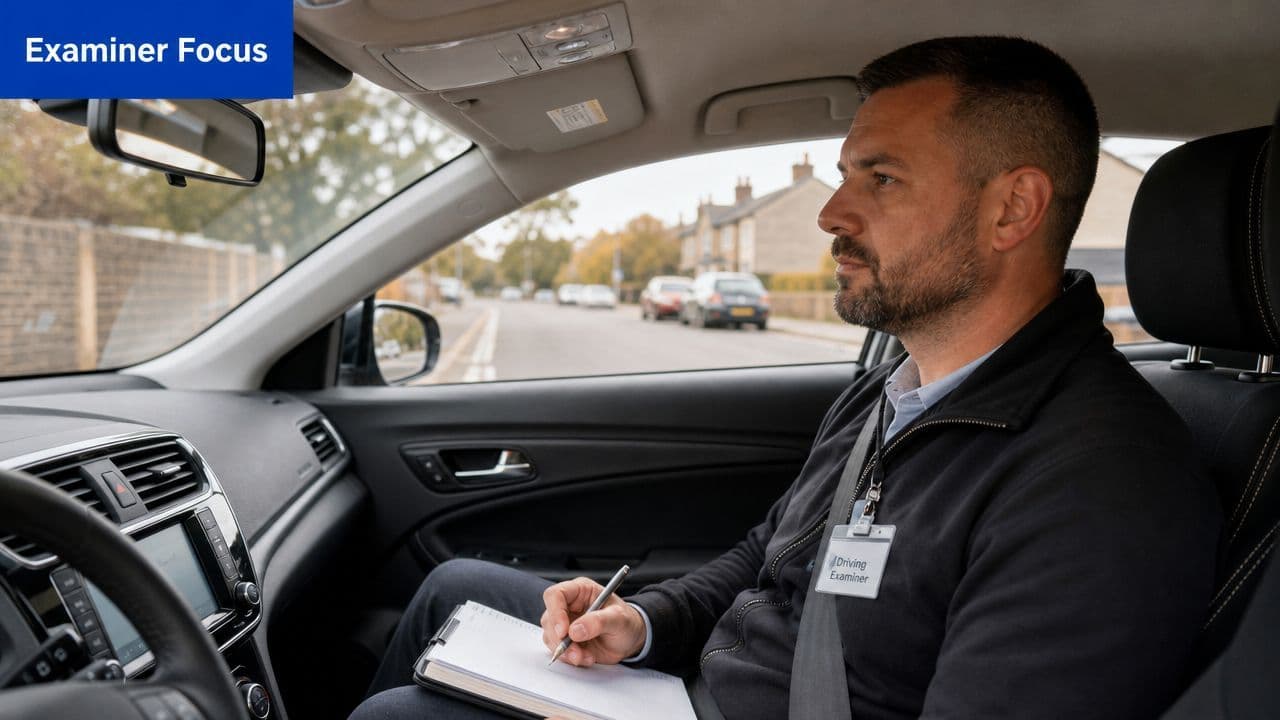
The examiner is not hunting for tiny technical flaws. They're watching for three things that tell them whether you can drive alone safely. Observation, control, and communication.
Safe beats flashy every time
Observation is the first one. That means checking mirrors at the right moments, scanning intersections early, looking for pedestrians, and doing clear shoulder checks before moving sideways. A lot of learners steer and brake reasonably well, but they don't give enough visual evidence that they've noticed risk before acting.
Control is the second. The car should feel steady. Stops should be complete and composed. Turns should be smooth. Your speed should make sense for the road and the conditions. If the car jerks, drifts, rolls, or arrives too fast into decisions, the examiner starts wondering whether your driving is reactive instead of planned.
Communication is the third. You communicate with position, signals, timing, and predictability. Other road users should be able to tell what you're doing before you do it. Late signals, indecisive lane changes, and creeping halfway into a turn all create uncertainty.
Ontario learners already see this idea in the written stage. The G1 knowledge test has 40 multiple-choice questions divided into 20 road rules and 20 road signs, and you need at least 16 correct in each section to pass. A strong total score still isn't enough if one section falls short, which shows how Ontario scores for balance, not just overall effort (Ontario G1 sectional scoring and balanced skill logic). The same mindset carries into the road test. One critical weakness can outweigh strengths elsewhere.
What balanced driving looks like
A balanced driver does a few boring things very well:
- Checks before acting: mirror, signal, shoulder check, then move.
- Stops fully: no rolling through signs, no lazy feet on the brake.
- Keeps space: from parked cars, cyclists, and the vehicle ahead.
- Accepts missed opportunities: if a turn or lane change isn't safely there, they wait.
If you're not sure what Ontario expects before test day, review the G2 test requirements in Ontario so there are no surprises about eligibility, restrictions, or what the road test is meant to assess.
Practical rule: If an examiner has to guess what you're about to do, you're not driving clearly enough.
Mastering the Core Driving Manoeuvres
Manoeuvres don't fail people because they're complicated. They fail people because stress makes them rush the setup. The fix is simple. Slow the process down and give yourself a repeatable script for each move.
Parallel parking without panic
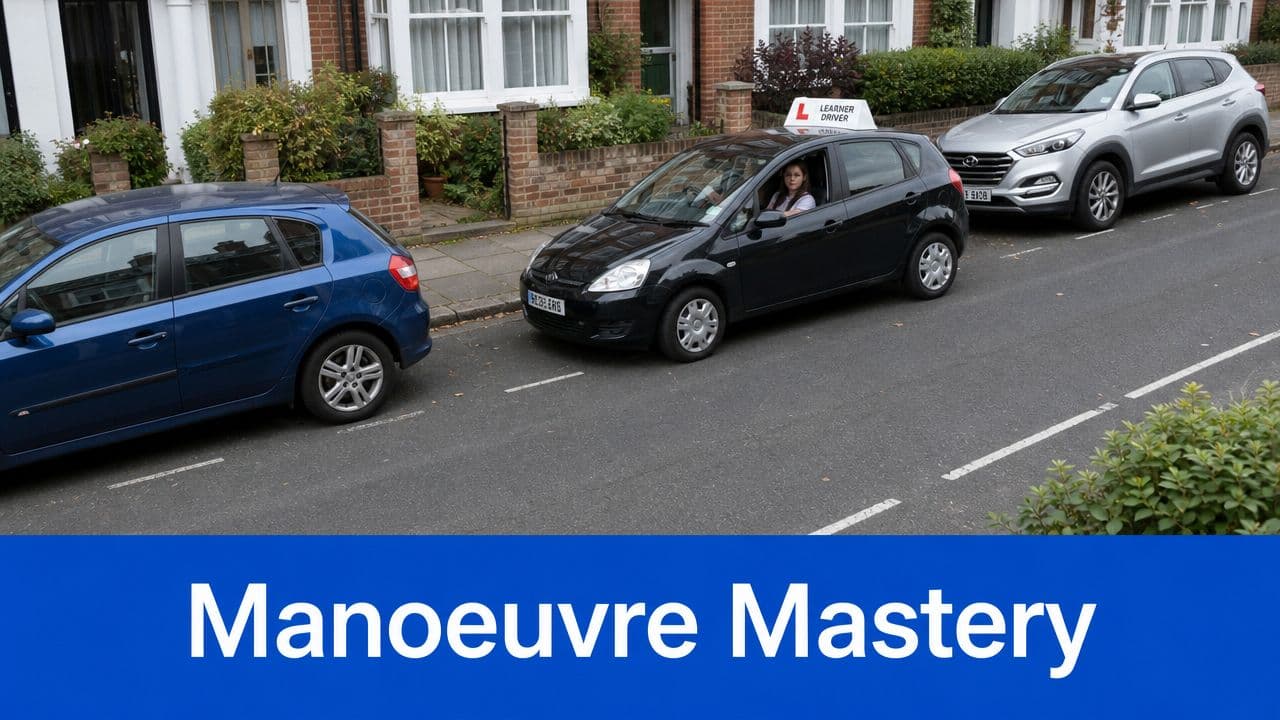
Parallel parking starts before reverse gear. Pull up beside the target vehicle at a sensible distance, stop evenly, and secure the car. Then check all around before backing.
As you reverse, turn smoothly and keep your speed walking-slow. Don't stare at one mirror. Move your eyes. Rear window, side mirror, front space, curb distance. If the car is angling in properly, keep going with patience. If it isn't, pause and correct early instead of trying to rescue it at the end.
A few habits matter more than fancy tricks:
- Set the start properly: If your car begins too far ahead or too far away, the rest gets messy.
- Back slowly enough to think: Fast reversing creates late corrections.
- Finish with the wheels straight: A parked car that's crooked tells the examiner your control broke down at the end.
For a more detailed visual breakdown, this guide to parallel parking for the driving test is useful to study before you practise in a real neighbourhood.
Three-point turns and roadside parking
A three-point turn is mostly about judgment and observation. Choose a quiet place when practising. Signal, pull over properly, check around, then turn with purpose. Before each movement, look again. The biggest issue isn't the steering. It's forgetting that every part of the sequence changes who could be around you.
Roadside parking tests whether you can secure a vehicle responsibly. That includes stopping close enough to the curb, controlling the car without bumping or drifting, and leaving it in a properly parked state. On a test, sloppy parking often comes from trying to finish too quickly. Take the extra second to straighten the car.
Ontario road advice for learners often focuses heavily on general driving, but targeted drills are more effective. The same section-by-section logic used in written-test prep also applies here. Learners do better when they isolate weaker tasks like parking or three-point turns instead of just “going for a drive” and hoping those skills improve on their own (targeted drills for weaker manoeuvres).
This short visual can help you rehearse the movement before you get in the car:
Emergency stops and calm recovery
An emergency stop is not a panic slam unless the examiner specifically creates a scenario that requires hard braking. Usually, they want to see that you react promptly, brake firmly under control, and keep the car straight. Hands stay on the wheel. Eyes stay up.
What matters just as much is what happens next. After stopping, don't move again on autopilot. Reset. Check mirrors, scan around, and only continue when it's safe.
When learners struggle with manoeuvres, the mistake usually happened in the setup, not the middle.
That's worth remembering on test day. If a manoeuvre starts awkwardly, don't compound it by rushing. Slow inputs and clear observation still give you a chance to recover well.
How to Practice for Your Driving Test Intelligently
A lot of first-time Ontario test failures start before the car even leaves the lot. The student practised plenty, but always on the same easy roads, at the same quiet time, with the same person coaching every move. Then test day feels unfamiliar, the routine falls apart, and small administrative mistakes pile on top of weak habits.
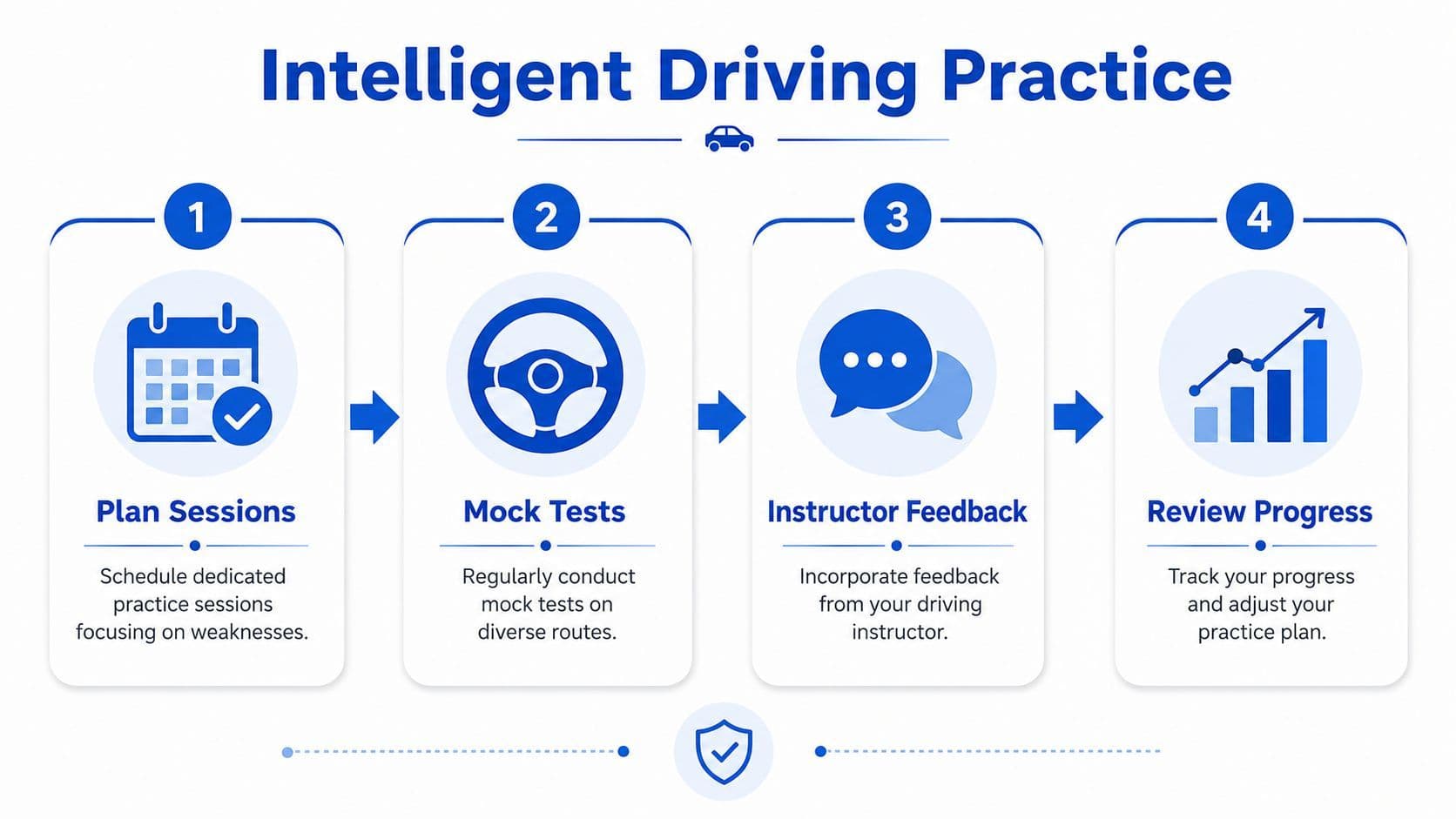
Good practice has a purpose. Each session should train one or two specific problems and one part of the test routine that people often ignore, such as checking in, setting up the vehicle quickly, or starting calmly after instructions. If your left turns are hesitant, practise judging safe gaps. If parking breaks down under pressure, work on setup and slow control. If you miss shoulder checks, build a route where every lane change and curb departure includes a clear mirror check, signal, and shoulder check in order.
A practice session that works usually looks like this:
- Warm-up drive: Start on familiar roads and get settled.
- Skill block: Spend most of the time on weak areas, not on the parts you already do well.
- Routine block: Rehearse the practical details. Adjust the seat, mirrors, and steering wheel. Confirm the car is in park. Release the parking brake properly. Start and move off without being prompted twice.
- Mini mock test: Have someone give directions in a neutral tone and stay quiet unless safety is an issue.
- Quick review: Write down the same-day mistakes while they are still clear.
That routine matters more than many learners expect.
I have seen students handle a three-point turn just fine in practice, then lose marks on test day because they looked rushed during the pre-drive setup or needed reminders to organize the car. The examiner notices whether you look ready to drive independently, not just whether you can perform one manoeuvre in isolation.
Use variety on purpose. Practise at the test centre area if you can, but do not stop there. Drive at different times of day. Use different parking lots. Swap in a second supervising driver for one mock test if possible. That exposes the habits that only work when everything feels familiar. For the written side, some learners also use tools like G1ready.ca practice tests to keep road signs and rules fresh while road practice stays focused on driving.
A simple four-week prep rhythm
You do not need a complicated calendar. You need repetition, pressure in small doses, and a plan that covers both driving skill and test-day logistics.
- Week one: Identify weak spots. Practise basic turns, stops, scanning, and lane position on simple routes.
- Week two: Focus on manoeuvres and setup. Parallel park, roadside stop, three-point turn, and full vehicle-prep routine before every drive.
- Week three: Add pressure. Busy intersections, lane changes in traffic, school zones, plaza exits, and directions given with minimal coaching.
- Week four: Run full mock tests. Use unfamiliar routes, bring the documents you would carry on test day, and follow the same check-in timing you plan to use for the actual appointment.
Keep one notebook page for recurring problems. If the same note shows up after several drives, that is the skill that needs more work. If the same logistical mistake keeps happening, such as forgetting your licence, rushing the parking brake, or starting without settling the mirrors, treat that like a test skill too.
Smart practice builds confidence because it removes surprises. If you want to pass, train the weak habits, train the routine, and make test day feel like one more ordinary drive with higher stakes.
Common Mistakes That Lead to an Automatic Fail
Some errors look minor from the driver's seat and serious from the examiner's seat. That difference matters. The examiner isn't judging intent. They're judging risk.
The errors that feel small but aren't
Rolling through a stop sign is a classic example. Many learners slow down enough to feel cautious, but if the wheels never fully stop, the examiner sees a failure to obey the sign. The same goes for incomplete observation at a turn. You may feel that the road was clear. The examiner sees a driver who moved without proving it was clear.
Unsafe lane changes are another big one. Learners often signal and check mirrors, then skip or fake the shoulder check because they're focused on steering into the new lane. That one habit tells the examiner you may miss a vehicle in the blind spot when driving alone.
Examiner intervention is especially serious. If the examiner has to warn you sharply, grab the wheel, or prevent a conflict, the issue isn't that you made a small mistake. It's that your decision created immediate risk.
Common G2 Test Failure Points and How to Avoid Them
Mistake Why It's a Failure How to Avoid It Rolling stop It shows you did not fully obey the sign and may not have checked properly for hazards Stop until the car is fully still, count a beat, then move Failing to yield It puts other drivers, cyclists, or pedestrians in conflict with your path Decide early who has the right-of-way and wait if there's any doubt Unsafe lane change It suggests poor observation and blind-spot awareness Use a fixed routine of mirror, signal, shoulder check, then move Speed too high for conditions It reduces reaction time and shows weak judgment Match your speed to the road, traffic, and visibility, not just the posted limit Poor observation at intersections It tells the examiner you're reacting late to risk Scan left, centre, right, and keep eyes moving as you approach Examiner intervention It means the situation became unsafe enough that the examiner had to step in Drive conservatively and abandon any move that doesn't feel clearly safe
Many learners also misunderstand failure as one dramatic event. Sometimes it's a pattern instead. Ontario's testing logic rewards balanced competence, not a few strong moments covering for a weak category. If your observation keeps slipping, or if your speed choices are inconsistent, those repeated issues build a picture of risk.
Another common problem has nothing to do with technique. It's mental recovery. A learner makes one rough turn, gets embarrassed, and then drives the next five minutes inside their own head. The examiner doesn't care that you had one untidy moment nearly as much as they care whether you returned to safe driving right away.
Use this habit after any mistake:
- Acknowledge it quickly: Don't argue with yourself.
- Reset your eyes: Get back to mirrors, road ahead, and spacing.
- Drive the next instruction well: That's all that matters now.
If you can do that, one shaky moment won't automatically sink the test.
Booking Your Test and Your Test-Day Checklist
A surprising number of failed test days have nothing to do with driving skill. The problem is operational. The wrong documents. A car with a defect. A booking made at a bad time of day for the learner's confidence and experience level.
Guidance on learner testing often under-explains these preventable issues, even though many failures happen before the vehicle moves because of paperwork problems or a car that doesn't meet requirements (test-day logistics and preventable non-driving failures).
Book with stress in mind
When you book, think beyond the first available slot. Choose a time when you're normally alert. If busy traffic overwhelms you, avoid the periods that make everything feel rushed. If an unfamiliar area raises your stress level, practise around the test centre in advance so the roads don't feel new on the day.
Use the official booking process carefully, and review this step-by-step guide for booking an Ontario G road test if you need help understanding the booking flow and what to confirm before test day.
A few booking habits help:
- Check your confirmation details: Wrong date or location causes needless panic.
- Build in practice close to the site: Local road familiarity settles nerves.
- Don't choose a slot you can barely reach on time: Rushing to the centre puts you in the wrong mindset before the test begins.
Your car and paperwork check
The examiner expects a roadworthy vehicle and proper documentation. Don't treat this as an afterthought. Check everything the day before, then check again on the morning of the test.
Bring what you need and inspect what you'll drive:
- Licence and identification: Make sure what you're bringing is valid and easy to access.
- Vehicle paperwork: Confirm the ownership and insurance are current and in the car if required.
- Basic vehicle condition: Signals, brake lights, horn, mirrors, windows, and seatbelts should all work properly.
- Dashboard warnings: If a warning light is on, deal with it before test day rather than hoping it won't matter.
- Interior readiness: Remove clutter, clean the windshield, and make sure the examiner can enter and sit comfortably.
A clean booking, correct documents, and a roadworthy car are part of passing the test. They are not separate from it.
Arrive early enough to park, breathe, and organise yourself without rushing. If you show up flustered, your first task of the day becomes calming down instead of driving well.
What Happens After Your Driving Test
You pull back into the test centre, park the car, and the driving part is over. A lot of first-time Ontario drivers relax too early at that point. Don't. The last few minutes still matter because this is when you need to listen clearly, understand your result, and avoid missing an instruction about your next step.
If you pass, the examiner will explain what happens next. Pay attention. Make sure you understand any temporary licence paperwork, what class you now hold, and what rules apply to that stage. Nervous students sometimes nod through this part and then leave unsure about what they are legally allowed to do. Clear that up before you walk away.
If you do not pass, treat the result like a diagnosis, not a personal judgment. Road test failures usually come from a small number of repeat issues. Poor observation on lane changes. Rolling or incomplete stops. Speed control. Weak parking setup. That is useful because specific mistakes can be corrected.
The right next move is focused practice. Go back to the scoresheet, identify the habits that cost you marks, and practise those exact situations until the correction feels normal. A vague hour of driving around town will not fix a lane-change observation problem. Repetition with a purpose will.
I tell students this all the time. The second attempt is often easier because the mystery is gone. You already know the route style, the examiner's pace, and the points where your nerves got in the way. Now the job is simple. Clean up the errors that caused the fail, and make sure the administrative side is handled properly again so you do not lose another test before it starts.
If you still need to strengthen the knowledge side while you rebuild your in-car skills, G1ready.ca offers Ontario-focused G1 practice tests, targeted quizzes, and study tools.


