
The legal limit is the number of working seatbelts in the car. If you're 19 or under, there's also a separate overnight rule, between midnight and 5 a.m., with one passenger aged 19 or under for the first six months of your G2, then three passengers aged 19 or under after that.
Friday night usually makes the rule feel harder than it sounds. Maybe you've just finished practice, your friend wants a ride home, and someone else is asking if they can tag along too. That's when Ontario's G2 passenger rules stop being a handbook line and turn into a real decision you have to make before you start the car.
The Real Answer on G2 Passenger Limits
A new G2 driver often wants one simple number, but Ontario doesn't give you one fixed passenger count for every trip. The answer depends on how many working seatbelts are in the car, what time it is, and, for drivers 19 or younger, whether the trip falls inside the overnight young-passenger rule. Ontario's official handbook and the provincial FAQ both point to those same moving parts, not a single blanket cap.
So if you're picking up two teammates after late practice, the first question is not “How many people can fit?” It's “How many seatbelts work, and is this one of the overnight trips where a separate young-passenger limit applies?” That difference matters because a car can be legal for one trip and not legal for another, even with the same driver and the same passengers. DriveTest's novice licensing FAQ lays out the seatbelt and overnight pieces clearly.
Practical rule: count the car first, then check the clock, then check the ages.
That is the mental model that saves people from bad guesses. Parents, teen drivers, and instructors all end up asking the same thing in different words, and the answer changes based on driver age, time of day, and the family or licensed-driver exceptions. A quick read of the Ontario rules shows why searchers keep getting confused, because the restriction is not one simple occupancy number for every situation.
For a broader learner-driver overview, see G2 licence basics.
The Seatbelt Rule That Applies to Every G2 Driver
The base rule is simple. A Class G2 driver in Ontario cannot carry more passengers than the number of operable seat belt assemblies in the vehicle. That rule applies to every G2 driver, not just teens, and it is the foundation for every other passenger question. The Ontario regulation makes that seatbelt cap explicit.
A five-seat car is not a five-passenger free-for-all
If the car has five working seatbelts, the legal total is five occupants including the driver. In plain language, that usually means the driver plus four passengers, as long as every seatbelt works and the trip doesn't trigger a separate overnight young-passenger restriction. The limit is tied to the car's usable restraint system, not to how comfortable the back seat feels.
A broken or removed seatbelt changes the count. If one rear belt doesn't work, the legal limit drops with it, because the rule follows the number of operable belts, not the number of seats you can physically squeeze people into. That's why a driver should never assume “the car looks like a five-seater” is good enough.
Why this is a safety rule, not just paperwork
Ontario treats this as a compliance issue and a safety issue at the same time. The province's rule says the driver must not exceed the seatbelt count, which means the driver is responsible for making sure everyone has a proper place and restraint. Passengers don't get to override that by saying they can sit on a lap, share a seat, or “just be quick.”
A two-seat sports car is the clearest example. If the car only has two operable seatbelt assemblies, then the legal total is two occupants, driver included. A larger SUV with more working belts can legally carry more people, but only up to the usable belt count.
The safest habit is to count the buckles before you count the friends.
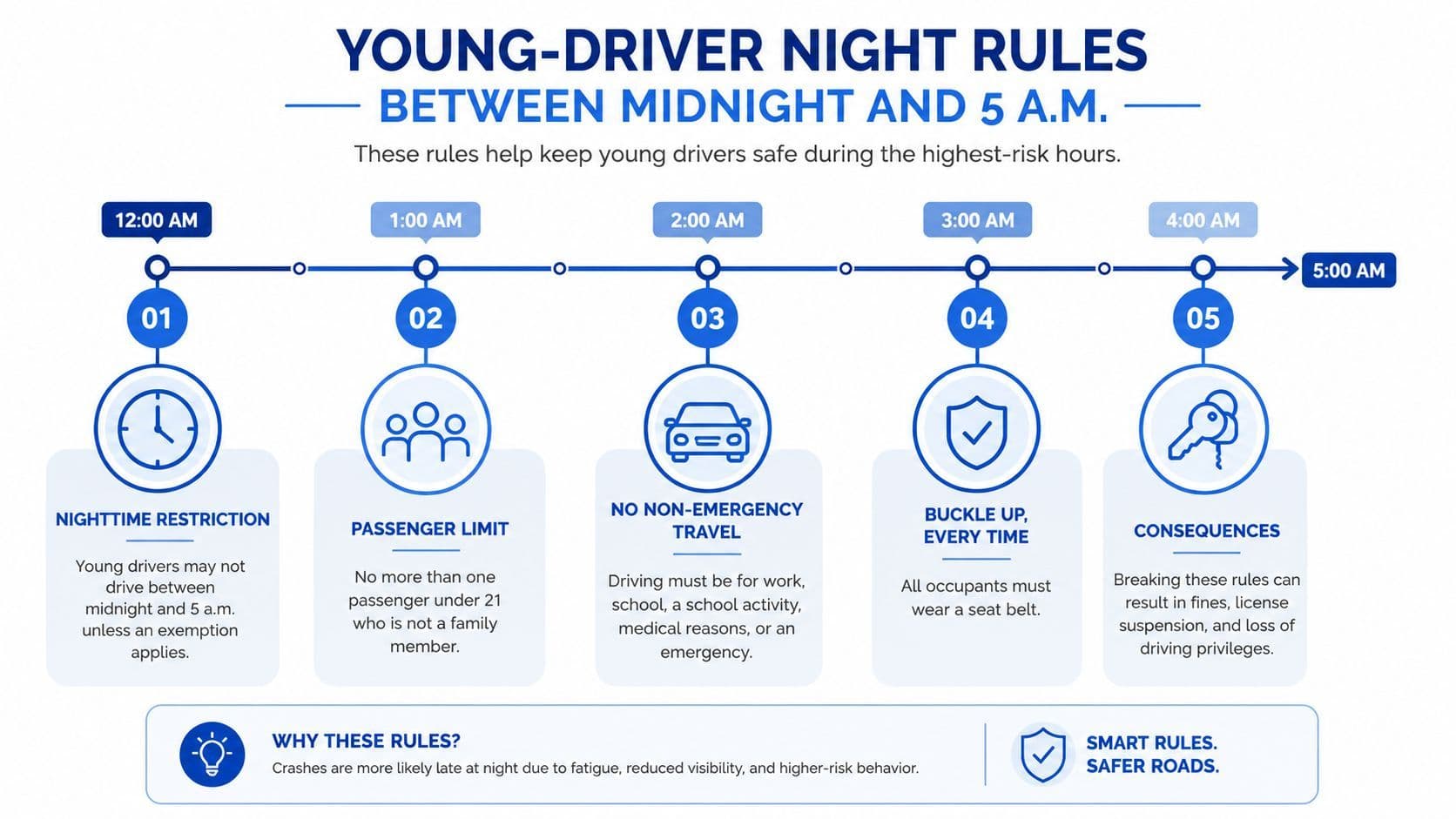
Young-Driver Night Rules Between Midnight and 5 a.m.
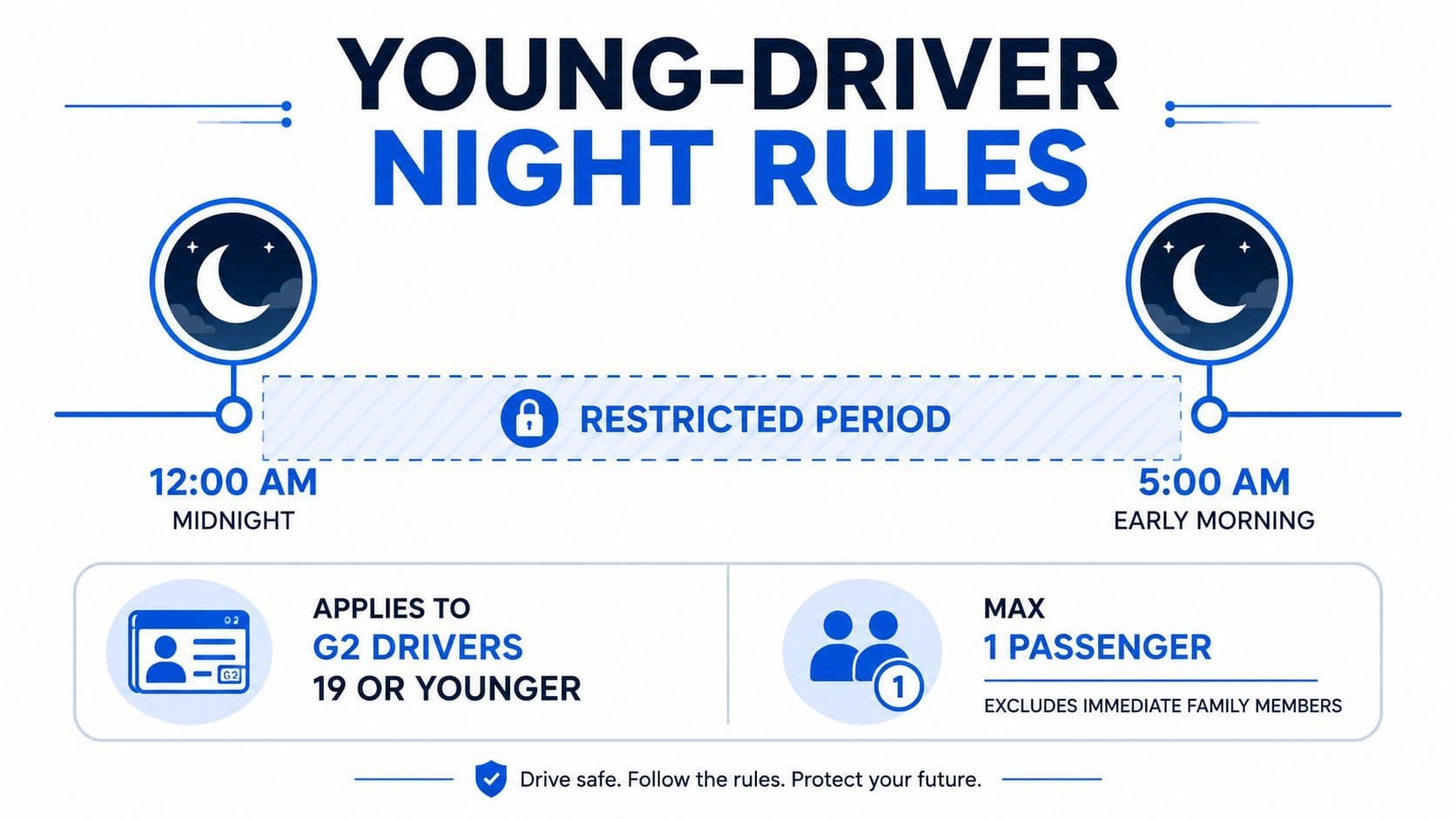
A late-night ride with a G2 licence has a second layer of rules. Ontario separates the regular passenger count from the overnight young-passenger limit, so you need to check both before you leave the driveway. If you are 19 or younger, the rule between midnight and 5 a.m. depends on how long you have held your G2 and how many riders are 19 or under.
During your first six months with a G2, you may carry one passenger aged 19 or under in that time window. After that first six months, the cap rises to three passengers aged 19 or under until you earn a full G licence or turn 20. The Ontario handbook explains the overnight age-based cap, and the Province's rules still leave the seatbelt count in place beside it. G1Ready's guide to Ontario's new driving rules is a useful study aid for those licensing conditions.
The night rule only counts young passengers
This is the part that causes confusion. The overnight cap does not count every person in the car. It only counts passengers who are 19 or under, so adult riders do not use up that specific overnight allowance. A late-night trip with one parent and two teen friends is handled differently from a trip with three teenage friends, even if the car is the same.
The rule also changes as your G2 experience grows. If you are still 19 or younger, the allowance moves from one young passenger to three young passengers after six months, but the overnight time window stays the same. Once you turn 20 or get a full G licence, that young-driver overnight limit no longer applies in the same way.
A real example makes it easier
Say you are four months into your G2, you are 18, and you are driving home at 1 a.m. with two friends who are both 17. That trip goes over the overnight young-passenger limit, because you are still inside the first six months and only one passenger aged 19 or under is allowed during that time. The same car, the same road, and the same passengers could fit the daytime seatbelt rule if every seatbelt is available and used, which is why the clock matters so much.
So the clean way to check it is simple. First, count the working seatbelts for the car's total occupancy. Then ask whether the trip falls between midnight and 5 a.m., and whether any riders are 19 or under. The Ontario handbook lays out that time window and age-based cap, and you can compare it with a quick refresher on G1Ready's G2 guide.
Exceptions That Change the Count
A late-night ride with three young friends can look simple on paper, then turn tricky once the exception rules come into play. Ontario treats some trips differently, especially when immediate family is in the car or when a fully licensed driver with at least four years of experience sits in the front passenger seat. Those exceptions can change how you count people during the overnight young-passenger window, so a parent drive, a sibling ride, or a supervised trip may fall under a different rule set.
Exception When It Applies What It Covers Immediate family When the passengers are immediate family members Family trips, including parents, siblings, and other qualifying immediate-family relationships Fully licensed front-seat driver with at least four years of experience When that driver is in the front passenger seat The overnight young-passenger restriction does not apply in the same way Other exempt situations When Ontario's rules recognise a separate exception Special situations that change compliance planning
A parent in the front seat changes the trip right away. The overnight cap is aimed at young passengers in a regular peer-group ride, not at every possible mix of riders. An older sibling can help only if they are fully licensed and have the required four years of experience while sitting in the front passenger seat. A G1 holder does not count for that exemption.
The cleanest way to sort out exceptions is to ask three questions before you leave the driveway.
- Is everyone immediate family? If yes, the family exception may apply.
- Is a fully licensed driver with four or more years of experience in the front seat? If yes, that can change the overnight count.
- Is this one of Ontario's recognised exempt situations? If yes, count carefully against the rule that applies.
If none of those apply, go back to the standard seatbelt rule, then check whether the overnight young-passenger cap applies because you are 19 or younger. That is why parents often handle late-night family trips themselves, and why a friend with only a learner's permit does not remove the restriction. DriveTest also summarizes how these exceptions fit into the licensing rules.
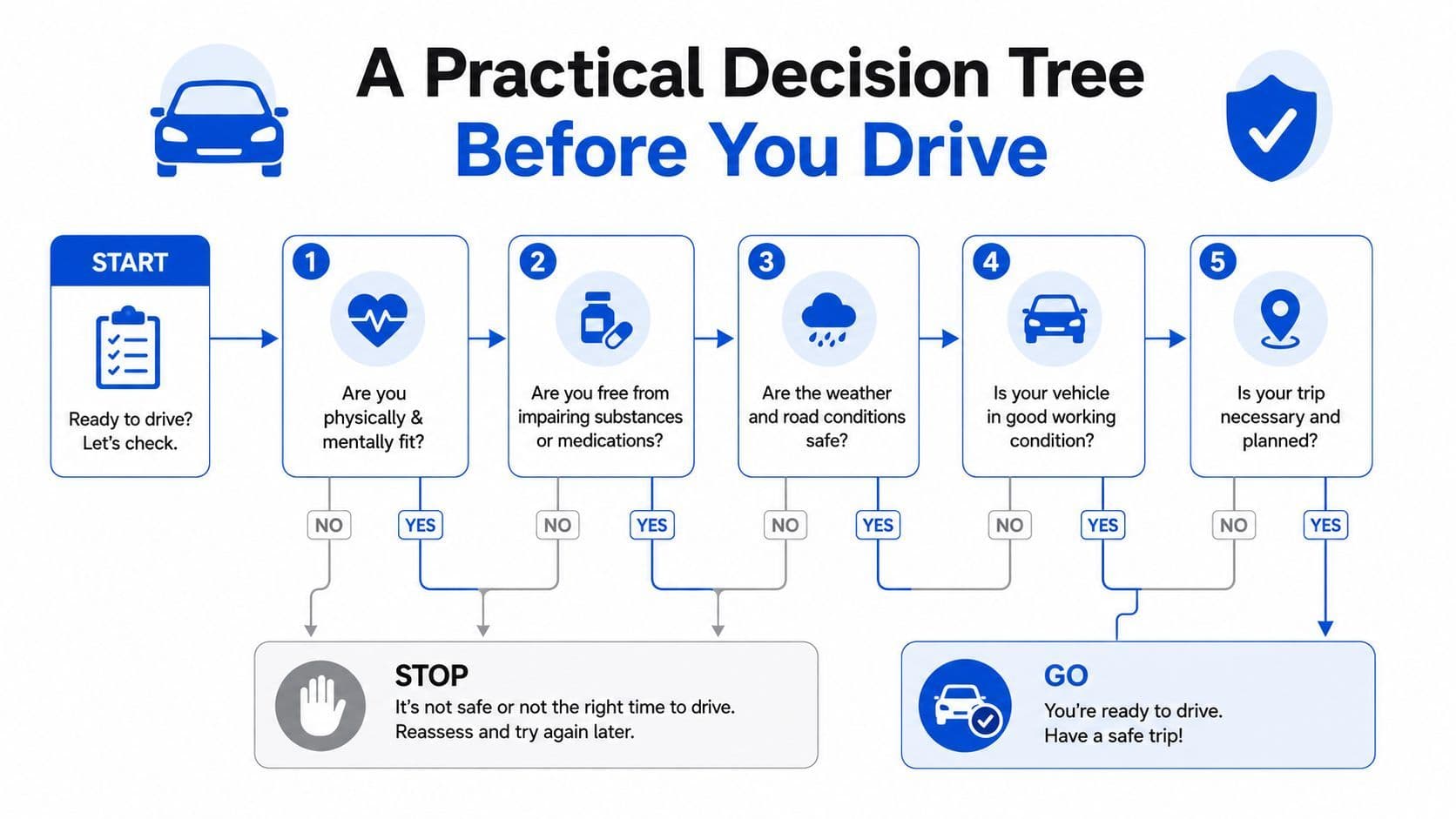
A Practical Decision Tree Before You Drive
Before you pull out of the driveway, run the trip through the same order every time. Start with the car, then the clock, then the passengers. That sequence keeps you from mixing up the seatbelt rule with the overnight young-driver rule, which is where most mistakes happen.
Step 1, count the working belts
First, count the operable seatbelts. If the car has five working belts, the total legal occupancy is five people including you. If the car has fewer working belts, your passenger count shrinks with it.
Step 2, check the time and your age
If you're 19 or younger, ask whether the trip is between midnight and 5 a.m. If it is, the overnight young-passenger rule may apply. If it isn't, you're back to the seatbelt-based occupancy rule, unless another exemption matters.
Step 3, test the exemption question
Are the passengers immediate family? Is there a fully licensed driver with at least four years of experience in the front seat? If either answer is yes, the count can change. If not, use the ordinary rule set.
A daytime family trip might be easy. A 6 p.m. drive to dinner with your parent and two siblings can be fine if the seatbelts work and everyone has a place. A 12:30 a.m. ride home with three friends is a different test entirely, because the overnight young-passenger limit may be the one that matters.
If you have to pause and do the math twice, that usually means you should not guess.
Penalties and How Tickets Affect a New Driver
A passenger-limit violation is more than an awkward roadside conversation. For a G2 driver, a ticket can bring a fine and demerit points, and the stakes are especially serious for novice drivers because Ontario treats licence status very differently from a fully licensed driver. The nearby enforcement question is simple, the driver is the one who gets charged, not the passengers.
Police usually notice the problem in ordinary ways. A late-night stop, a car full of visible teens, or a passenger setup that looks wrong for the time of night can all draw attention. Once a stop happens, the officer can check the number of people in the car, the time, the driver's licence class, and whether any exception applies.
A novice driver needs to think beyond the ticket itself. Demerit points can pile up faster than people expect on a new licence, and that can lead to a suspension or another re-test under Ontario's graduated-licensing system. The exact administrative outcome depends on the broader record, which is why even a single bad night can become a bigger problem than it looked at the curb. For a related overview of how points fit into novice driving, see Ontario demerit points guidance.
The insurance side matters too. Recent tickets can make a young driver look riskier to an insurer, especially when the offence happened in a night-driving situation. That's one reason many parents set stricter house rules than the law itself. They know the ticket is only the beginning of the cost.
Common Misconceptions Worth Clearing Up
The biggest mistake is thinking the rule only counts friends. It doesn't. The overnight young-passenger rule is about the age of the riders and the time of night, not whether they're classmates, neighbours, or teammates. If the passengers are under the age threshold and the trip falls inside the restricted hours, friendship doesn't change the count.
Another common mix-up is assuming the night rule applies during the day. It doesn't. During normal hours, the key limit is the number of working seatbelts in the vehicle. That's why the same carload can be legal after school and illegal after midnight, even with the same driver.
The third misconception is that turning 20 shuts off every G2 restriction instantly. It doesn't work that way in the way many people assume, because the rule set depends on both licence stage and age. People also often blur the difference between the seatbelt cap and the young-passenger cap, as if they're one rule with one number. They're separate, and that separation is exactly where confusion starts.
If you remember only one thing, make it this, count the car for occupancy, then check the clock for the young-driver rule. That keeps you from using a daytime answer for a late-night trip.
Official Resources and a Pre-Drive Checklist
If you want to verify the rule yourself, use the Ontario Driver's Handbook and the DriveTest novice licensing FAQ. Those are the safest places to check the wording before you rely on someone's summary in a group chat. A good study routine also helps when you're preparing for the G1 knowledge test, and G1ready.ca offers practice material that covers Ontario road rules, seatbelt law, and graduated-licensing conditions in a way that's easier to rehearse than a legal paragraph.
Keep this checklist in your car or on your phone:
- Count the working seatbelts before anyone gets in.
- Check the time if you're 19 or younger.
- Check the ages of the passengers if the trip is near midnight.
- Confirm any family or fully licensed driver exemption before you leave.
- Make sure every passenger is buckled before moving.
That checklist takes less time than a bad guess, and it gives you a repeatable habit instead of a memory test. Ontario's G2 passenger rules feel complicated at first, but once you separate the seatbelt rule from the overnight young-passenger rule, the decision gets much easier.
If you want more Ontario driving help, G1ready.ca has practice exams and licence prep tools that make these road-rules questions easier to remember before test day. Visit G1ready.ca to practise the rules that come up again and again, including passenger limits, seatbelt law, and graduated-licensing conditions.


