You're probably doing what most new drivers do before a test or a licence step. You open one tab with practice questions, another with a blog post, then a short video pops up claiming “Ontario changed everything” and suddenly you're not sure what's real anymore. That confusion is normal, especially when social media mixes provincial rules, rumours, and half-true summaries into one loud stream.
The problem is simple. Your G1 test is based on Ontario traffic laws, not viral claims about “nationwide” changes. In fact, viral videos about a July 1, 2025 nationwide handheld device ban and a 0.05% BAC limit were explicitly debunked by the Ontario Ministry of Transportation and Transport Canada, as reported by AFP Fact Check on false nationwide driving law claims. If you're studying for the Ontario system, it helps to first understand what a Class G licence means in Ontario, because that puts G1, G2, and full licensing rules into the right context.
Navigating Ontario's 2026 Driving Rule Changes
The biggest mistake new drivers make isn't always a road mistake. Sometimes it's a study mistake. They memorise a dramatic post, repeat it confidently, and then find out the actual Ontario rule says something else.
That matters for two reasons. First, you need the correct rule to stay legal when you're driving. Second, you need the correct rule to answer test questions properly. Ontario licensing is provincial, so if a claim doesn't match Ontario law, it doesn't help you on the G1 exam.
Why misinformation keeps spreading
A lot of online content blends together federal topics, provincial laws, and personal opinions. That's where new drivers get tripped up. Someone sees a short video, hears “Canada changed the drinking limit” or “all phone rules changed nationwide,” and assumes Ontario must already use that rule.
Practical rule: If a claim sounds broad, dramatic, or “nationwide,” slow down and check whether it actually applies to Ontario drivers.
The useful way to approach the new driving rules Ontario learners need to know is this: separate confirmed Ontario changes from recycled rumours. Real updates tend to be specific. They name who the rule affects, what action is required, and what the penalty or legal consequence is.
What this guide focuses on
The updates that matter most for new drivers are the ones tied directly to driving behaviour, collision response, roadside safety, and impaired driving consequences. Those are the areas where confusion can cost you marks on the test and cause real trouble on the road.
Here, the focus stays narrow and practical. You'll see the Ontario-specific changes that affect:
- Young and novice drivers dealing with alcohol and drug rules
- Everyday highway driving around stopped roadside vehicles
- Minor collision reporting after a crash
- Test preparation for current Ontario licensing expectations
Learn the law in the version Ontario actually uses. That's what keeps you safer, calmer, and more confident when the question wording gets tricky.
Expanded Zero Tolerance for Alcohol and Drugs
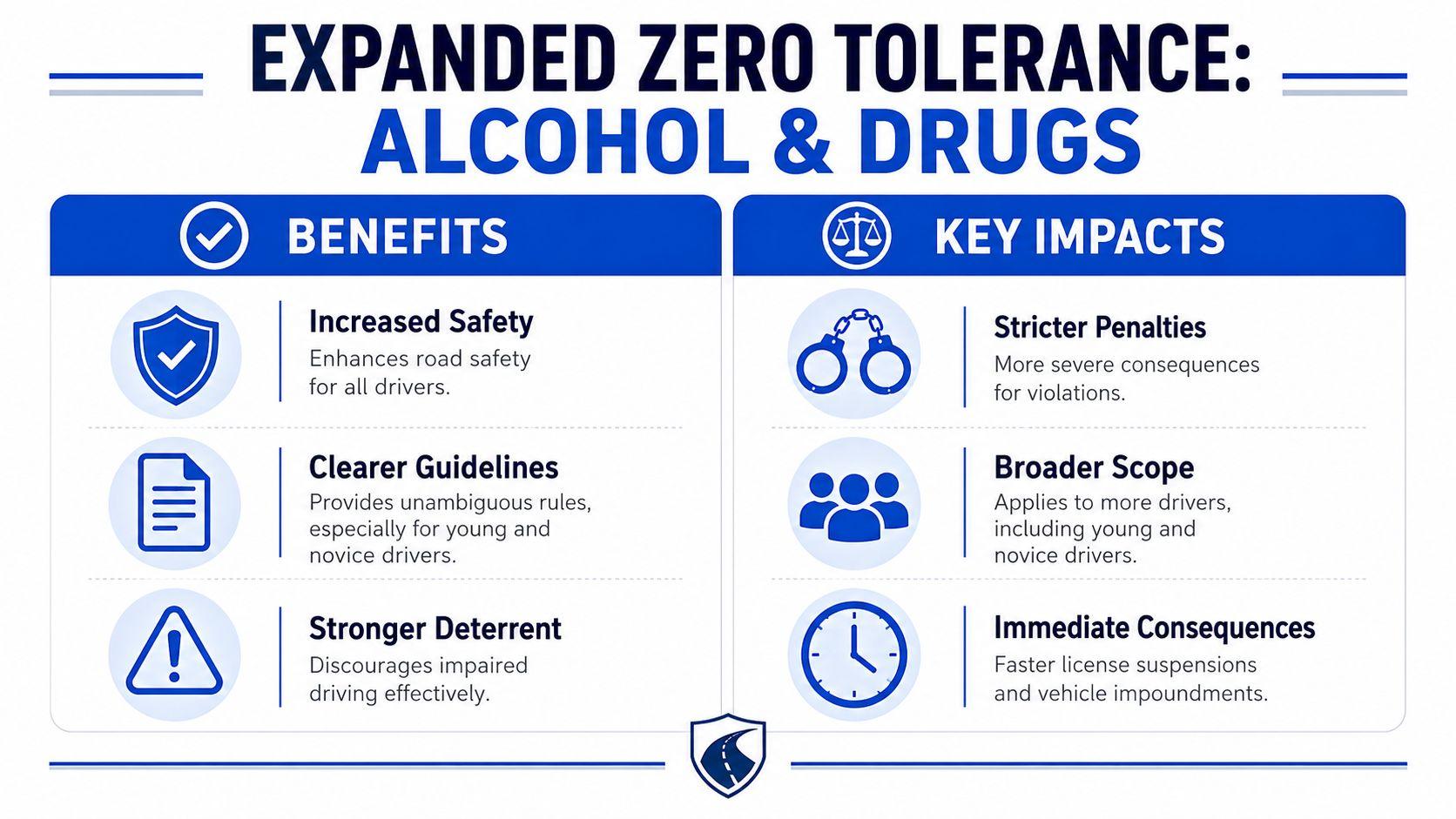
Ontario tightened its impaired driving rules for younger drivers. If you're under 21, this is one of the most important updates to understand because it removes any grey area.
Who the rule affects
Starting in 2026, Ontario expanded its zero-tolerance alcohol and drug policy to include all drivers under 21 years of age, not only novice and commercial drivers, according to this summary of Ontario driving rule changes for 2026. A related explanation notes that the rule means a BAC of 0.00 for drivers under 21, regardless of licence class, and that even fully licensed G drivers aged 19 to 20 are included under this zero-tolerance approach, as outlined by Canadian Smart Drivers on Ontario's 2026 zero-tolerance update.
For a new driver, the takeaway is simple. If you're under 21, the legal expectation is not “low alcohol.” It is none.
That point often gets blurred online. Some learners think zero tolerance only applies to G1 and G2 drivers. Under this newer framework, that's no longer the full picture for young drivers.
What changed in practice
The penalties also became stricter. In 2026, the administrative roadside suspension for a first impaired driving event increased from 3 days to 7 days, and the second offence increased from 7 days to 14 days. The first suspension also now triggers mandatory remedial education, as noted in this video summary of Ontario's impaired driving penalty changes.
Here's the easiest way to remember it:
Situation Earlier penalty 2026 penalty First administrative roadside suspension 3 days 7 days Second administrative roadside suspension 7 days 14 days Remedial education after first event No Yes
That's a meaningful shift. The province isn't waiting for repeated incidents before requiring education. The learning requirement starts right away.
If you're still in graduated licensing, it also helps to review the basics of Ontario G1 licence restrictions, because zero alcohol rules sit within a larger set of conditions that new drivers already have to follow.
A practical way to think about this rule
Don't treat this as a technicality. Treat it as a planning rule. If you're under 21 and driving, don't drink. Don't use cannabis or other impairing substances. Don't guess whether you're “probably fine.”
- Going out with friends: Decide before you leave whether you're the driver or the passenger.
- The next morning: If you're unsure whether anything remains in your system, don't gamble on it.
- Prescription or other substances: If something could affect your ability to drive, take that seriously and ask questions before getting behind the wheel.
The safest habit is the simplest one. If you're under 21 and driving, keep your system completely clear.
This is one of those rules that's easy to study and even easier to follow once you stop looking for exceptions.
What to Know About the New Move Over Law
Many learners already know they should slow down near emergency vehicles. Where people get confused is whether slowing down alone is enough when the stopped vehicle isn't a police car or ambulance.
A common roadside situation
You're on a multi-lane road. Ahead, a tow truck is stopped with flashing amber lights. A roadside-assistance vehicle is parked behind a disabled car. Traffic is still moving, and you have room to react.
Under Ontario's 2026 Move Over law, drivers on multi-lane roads must reduce speed and shift one lane away from stopped tow trucks and roadside-assistance vehicles displaying flashing amber lights. Failing to comply can result in 3 demerit points and fines up to $1,000 on a first conviction, as described by Rajput Driving School's summary of Ontario's 2026 Move Over law.
The important shift is that the law clearly reaches beyond traditional emergency vehicles. Tow operators and roadside workers are part of the protection now.
What drivers should do
The correct response is active, not passive. Don't just keep your lane and drift by a little slower. If the road has multiple lanes and it's safe to do so, move over one lane away from the stopped vehicle.
A good mental script is:
- Scan early: Look for flashing lights and parked service vehicles ahead.
- Check your lane options: See whether you can safely move one lane over.
- Reduce speed: Slow down while preparing to pass.
- Give space: Pass with as much room as the lane change allows.
- Resume normal driving only after clearing the scene.
Here's the incorrect response. A driver sees the amber lights, taps the brakes lightly, but stays in the nearest lane even though the next lane is open. Under the updated rule, that driver hasn't done enough.
Roadside workers are doing their jobs inches from moving traffic. Your lane choice matters as much as your speed.
Why this matters for new drivers
This rule is a good example of how exam questions can test judgement, not just memory. A G1 question may not ask you to recite legal wording. It may describe a scene and ask what a safe, lawful driver should do.
That's why scenario thinking helps. If you see flashing amber lights on a stopped tow truck on a multi-lane road, remember two actions together: slow down and move over. If you remember only one, you may miss the rule and miss the question.
New Threshold for Reporting Car Accidents
A minor collision is stressful even when nobody is hurt. Your heart rate jumps, people get out of their cars, and everyone starts asking, “Do we call the police?” Ontario changed the reporting threshold to make that decision clearer in smaller property-damage collisions.
The new reporting line
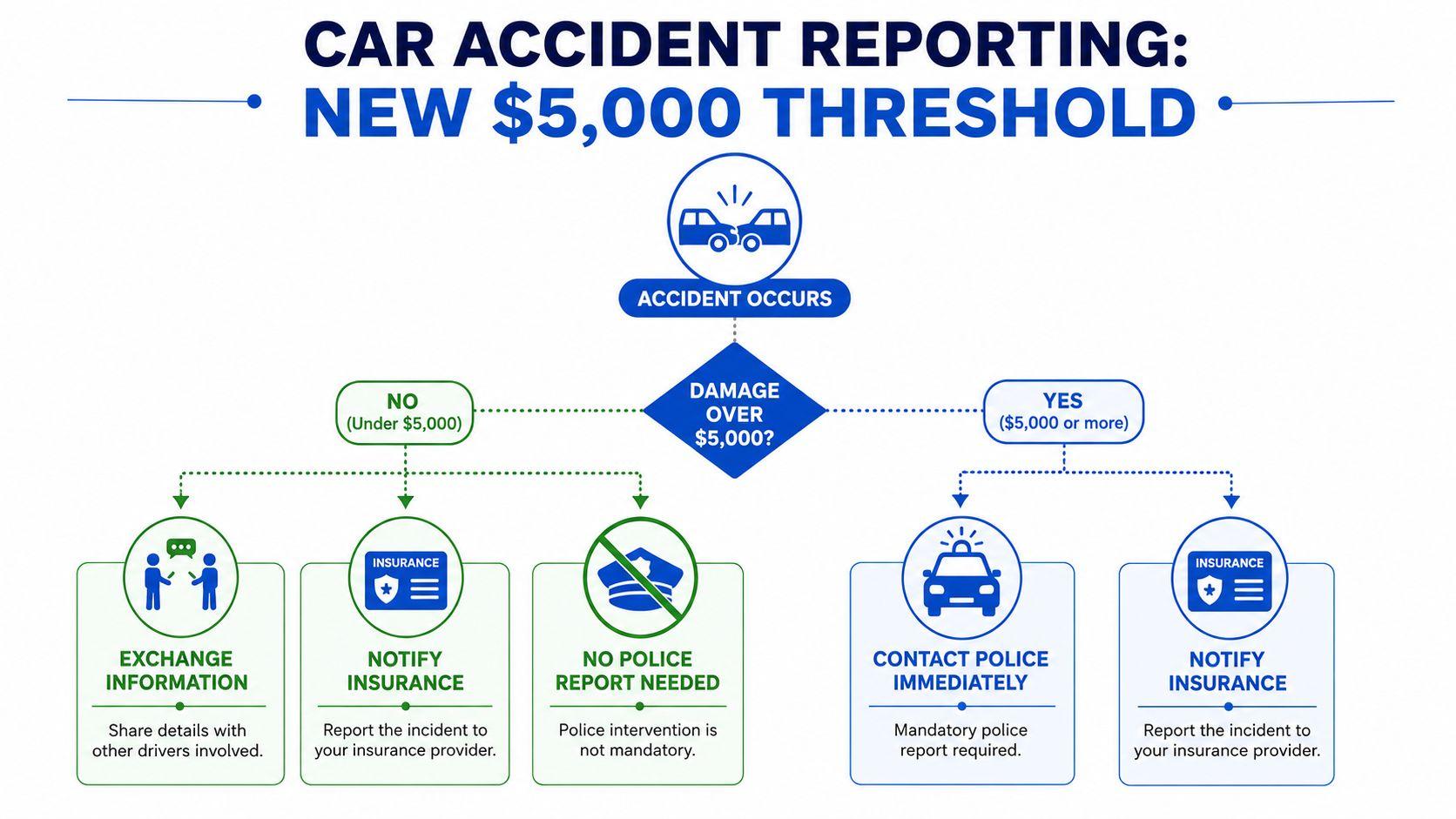
Effective January 1, 2025, Ontario raised the property damage threshold for mandatory police collision reporting from $2,000 to $5,000. Drivers in collisions below that threshold no longer need to wait for police, but they still must exchange information and report to an insurance collision reporting centre, according to iSure's explanation of Ontario's new collision reporting threshold.
That doesn't mean minor crashes no longer matter. It means the response changed for lower-damage property collisions. Your responsibilities did not disappear.
A simple post-collision checklist
If you're involved in a minor crash and the property damage appears to be under the reporting threshold, keep your focus on the essentials.
- Exchange details: Share identification, vehicle, and insurance information with the other driver.
- Document the scene: Take clear photos and note the location, time, and visible damage.
- Report properly: Follow through with an insurance collision reporting centre if required.
- Notify your insurer: Let your insurance company know about the incident.
If the damage appears to meet or exceed the threshold, police reporting becomes mandatory.
What new drivers often misunderstand
The phrase “no police report needed” can mislead people. Some hear that and think they can drive away after a quick apology. That's not how this works.
A lower threshold for mandatory police attendance in small property-damage cases is about efficiency. It is not permission to skip information exchange, ignore documentation, or avoid reporting channels. If you're a G1 driver, your supervising driver should guide the process, but you should still know what the legal steps are.
Remember this after a crash: Less police involvement in minor collisions does not mean less responsibility for the drivers involved.
A practical test question could present a low-speed parking lot collision and ask what comes next. The correct answer won't be “nothing.” It will involve exchanging information and following the reporting process that still applies.
How These Rules Affect Your G1 Test Preparation
This is the part most learners care about right away. Will these updates show up in study material and test expectations? If a rule changes in Ontario and it affects everyday driving decisions, you should assume it matters for your preparation.
What test takers often miss
Many people study in fragments. They read part of the handbook, watch a few short clips, and answer random practice questions from outdated pages. That creates a problem. They may know old rules, partial rules, or rules from outside Ontario.
The smarter approach is to focus on tested categories:
- Impaired driving rules
- Roadside safety obligations
- Collision reporting procedures
- Licence conditions and driver responsibilities
Those aren't obscure legal topics. They're exactly the kind of knowledge that fits the G1 format because they involve clear legal duties and practical judgement.
The newer new driving rules Ontario learners need to know also connect to wider testing changes. According to Visarete's overview of Ontario driving licence rule changes, the 2026 rollout of Ontario's Digital Driver's Licence and AI-driven G1/G2 testing software means test preparation must align with newer protocols. The same source says 12 new reciprocal licence exchange countries were added in 2026, which especially matters for newcomers who may already drive elsewhere but still need Ontario-specific knowledge.
Why newer study tools matter
If your study source hasn't been updated, you can end up preparing for the wrong version of the test. That's why it helps to use current material and a clear study routine, such as this guide on how to study for the G1 test.
One practical option is G1ready.ca, which offers registration-free practice exams, topic-based quizzes, a diagnostic test, a simulator-style format, and explanations after each question. For this topic, what matters most is that a prep platform should reflect current Ontario rules rather than recycling generic “Canada driving law” content.
A good study method usually looks like this:
Study task What to focus on Read core rules Learn who the rule applies to and what action is required Practise questions Look for wording traps and scenario-based questions Review mistakes Fix misunderstandings immediately while the rule is fresh Re-test later Check whether you can still apply the rule without guessing
After you've reviewed the written material, it helps to watch a short explainer and compare what you hear with the rules you've already learned.
What to memorise and what to understand
Don't memorise isolated facts only. Learn the logic behind them.
For example:
- If Ontario expands zero tolerance to all drivers under 21, the key understanding is that age matters here, not only licence stage.
- If the Move Over rule covers amber-lit tow and roadside-assistance vehicles, the key understanding is that worker protection now clearly includes those roadside scenes.
- If the collision reporting threshold changed, the key understanding is that mandatory police attendance and driver obligations are not the same thing.
Study for judgement, not just recall. The strongest G1 answers usually come from understanding what the rule is trying to prevent.
That mindset will help you on the test and later when a real situation happens faster than a textbook example.
Driving Safely and Legally in Ontario 2026
Ontario's recent updates have a common theme. The province is asking drivers to be clearer, more careful, and more responsible in situations where confusion used to cause trouble. For new drivers, that's good news because clear rules are easier to follow than vague ones.
Quick review checklist
Before your next study session or drive, make sure these points are solid in your mind:
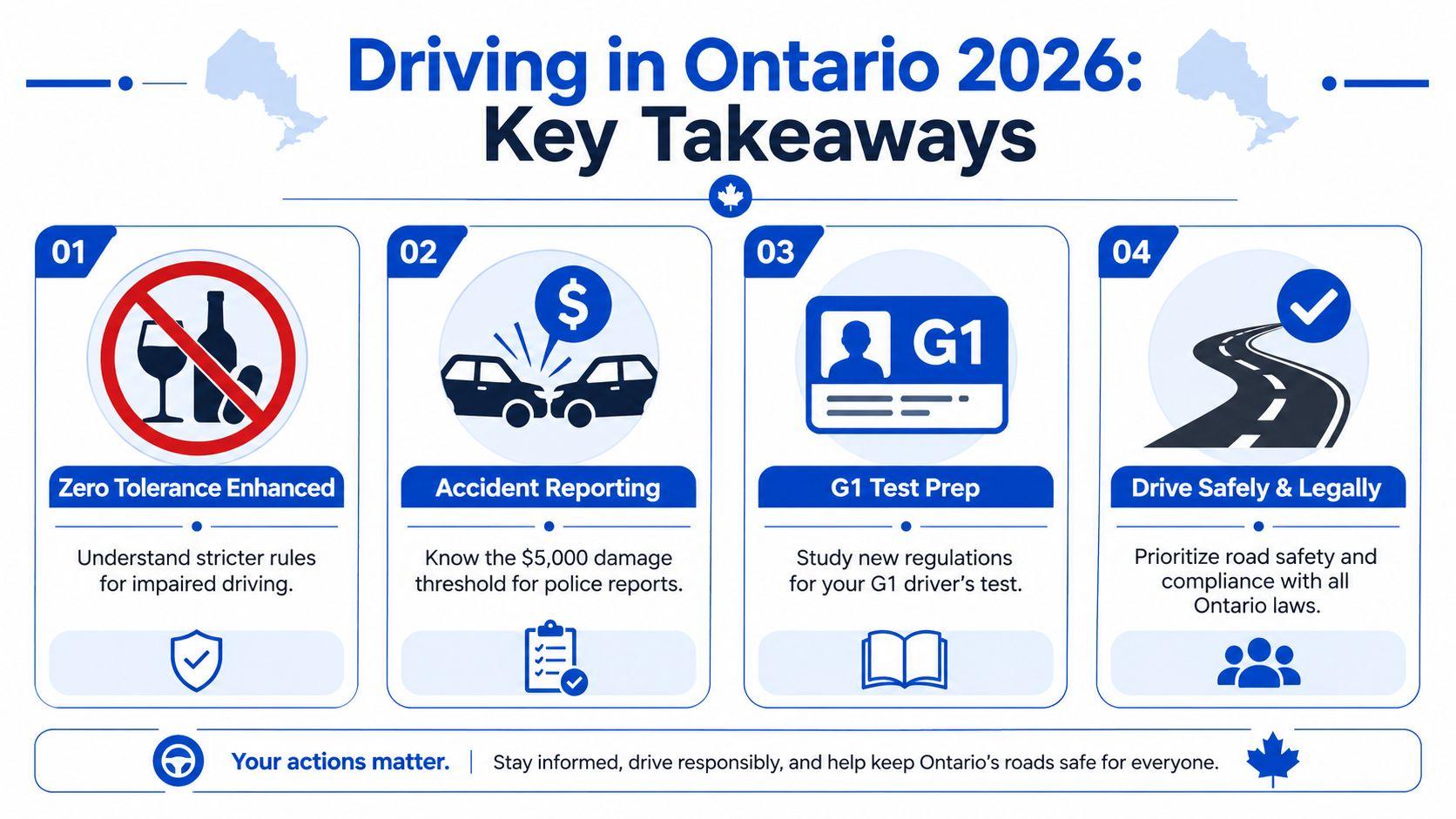
- Zero tolerance means zero: If you're under 21, don't treat alcohol or drugs as a judgement call. Treat them as completely incompatible with driving.
- Move over on multi-lane roads: When you approach stopped tow trucks or roadside-assistance vehicles with flashing amber lights, slowing down alone isn't enough.
- Know the collision threshold: A smaller crash may not require police at the scene, but drivers still have reporting and information-sharing duties.
- Study Ontario rules only: Viral claims and “national” summaries can send you in the wrong direction for both legal compliance and test prep.
The bigger lesson behind these updates
A good driver doesn't just control the vehicle well. A good driver knows what the law expects before a stressful moment happens. That includes what to do after a collision, how to pass a roadside worker safely, and how seriously Ontario treats impaired driving.
There's also one more impaired-driving consequence worth keeping in mind for the road ahead. Starting July 1, 2026, any driver convicted of criminal impaired driving in Ontario for an offence occurring on or after that date must install an ignition interlock device before legally operating a vehicle again, followed by a six-month zero-tolerance condition after the device is removed, according to this summary of Ontario's July 2026 impaired driving law changes.
That rule won't affect most learners directly on day one, but it shows the direction Ontario is taking. The province is becoming less forgiving about impaired driving and more explicit about safety obligations.
If you keep your studying Ontario-specific, practise with current material, and think through real driving scenarios, these updates become manageable. They stop feeling like random legal changes and start feeling like practical rules you can use.
If you're preparing for your knowledge test, G1ready.ca gives you a straightforward way to practise current Ontario rules with free mock tests, targeted quizzes, and explanations that help you correct mistakes as you go. Bookmark this page, keep your study sources current, and use each practice session to build the habits that make you both test-ready and road-ready.