The letter arrives, and the room goes quiet for a moment. If you're helping a parent, grandparent, or spouse with licence renewal after 80, the first reaction is often the same: worry that this is a hidden driving test, worry about getting caught off guard, and worry that one small mistake could end years of independence.
The good news is that the process is more straightforward than many people expect. What usually causes the most stress isn't the screening itself. It's not knowing what the screening looks like. That's where a practical Ontario drivers test over 80 sample helps. When you can see the clock task, understand the letter exercise, and know how the day flows, the whole experience feels more manageable.
Navigating Your Senior Driver's Licence Renewal
For many older drivers, the hardest part is the uncertainty before the appointment. The notice arrives from the Ministry of Transportation, and suddenly a routine renewal feels personal. People start asking whether they're about to face a written test, a surprise road test, or something much harder than expected.
In practice, most anxiety comes from not knowing the format. Once drivers understand that the key in-person screen is short, specific, and very different from a general knowledge exam, they usually settle down. The screening is aimed at basic cognitive and visual function related to safe driving. It isn't there to trick anyone.
Ontario has also made the process more convenient. Seniors are now guided more clearly through booking and attending the required appointment, and many families find the steps easier to manage when they review them ahead of time. If you want a broad overview of licence renewal steps, this Ontario licence renewal guide is a useful starting point.
A calm, prepared approach works best. Rushing, cramming, or treating this like a school exam usually doesn't help. What helps is knowing the tasks, bringing the right items, and practising the screening format once or twice in a relaxed setting.
The goal isn't to outsmart the process. It's to remove surprises.
An Ontario drivers test over 80 sample provides valuable insight. Official information tells seniors that a screening is required, but it often stops short of showing what the tasks look like. A practical walkthrough fills that gap and gives the driver something concrete to prepare for.
Understanding the Renewal Process for Drivers 80 and Over
A driver opens the renewal notice and immediately wonders what kind of test is coming. That reaction is common. The actual process is usually more manageable than families expect, especially once they understand that the screening is brief, structured, and tied to safe driving tasks rather than school-style memorization.
Ontario uses this renewal process to check whether an older driver still meets the basic vision and cognitive standards needed for the road. The goal is practical screening, not to put every senior through a full retest.
Why the process changed
Ontario said there were nearly 400,000 licensed drivers aged 80 and over in 2022, and this group is expected to keep growing. The province also announced that, starting February 3, 2025, drivers in this age group could complete their mandatory vision and cognitive screening and renew their licences in a single visit at select ServiceOntario centres, with wider rollout planned by the end of Spring 2025, according to the Ontario government announcement on the updated 80+ renewal process.
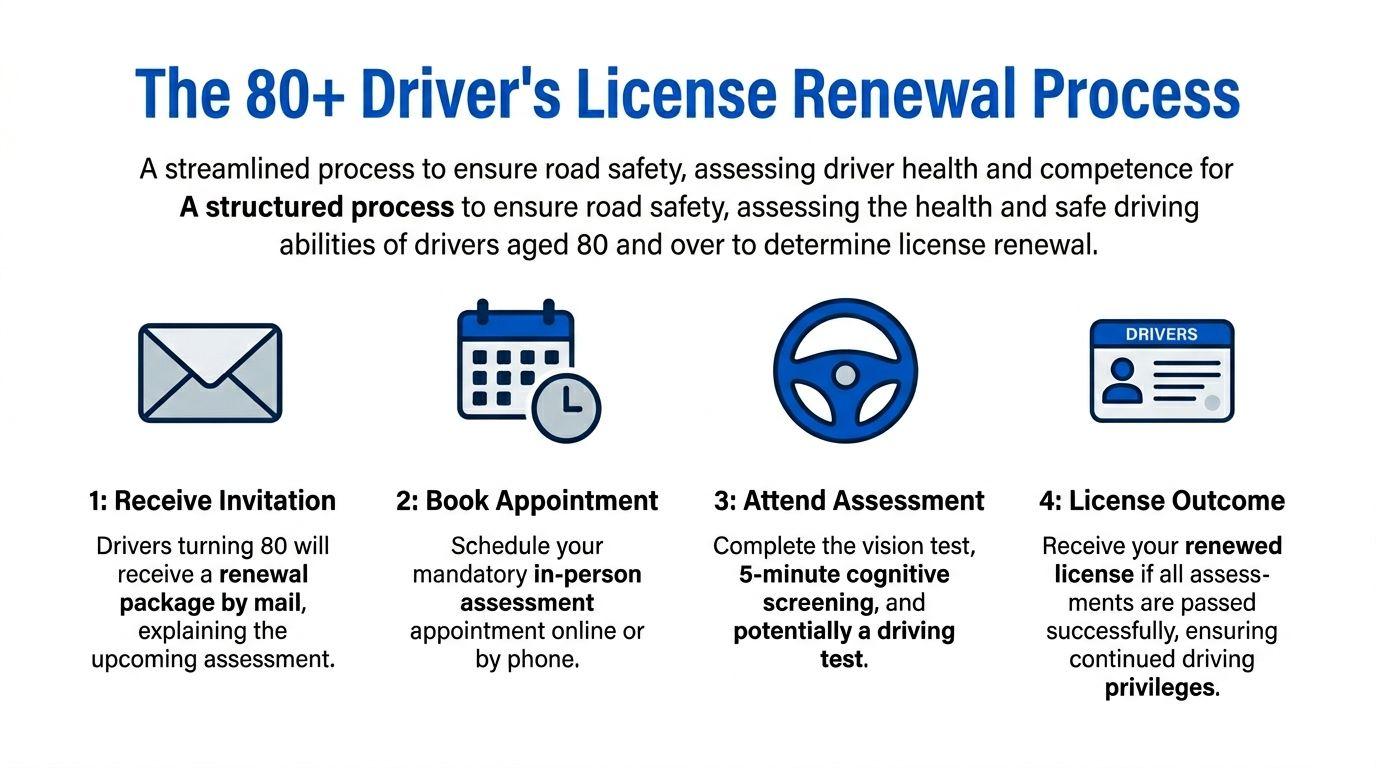
That update solved a real problem. Separate steps meant more scheduling, more travel, and more chances for confusion. A one-visit model is easier to handle.
The notice is mailed well before expiry, which gives families time to plan calmly. If location planning is part of the stress, reviewing Ontario DriveTest and testing centre locations ahead of time can help sort out distance, transportation, and timing before the appointment is booked.
What the appointment includes
The renewal appointment has a few standard parts, and it helps to know what each one is there to check.
- Group education: A short session reviews driving changes, road safety, and the effects aging can have on driving habits.
- Vision screening: The driver completes the required eyesight check.
- Cognitive screening: The short in-person exercise checks skills related to attention, visual processing, and spatial judgment.
Each part serves a different purpose. The education portion is a refresher. The vision check confirms the driver can meet the visual demands of driving. The cognitive piece is the part many people worry about most, but it is also the part that becomes less intimidating once the format is clear.
That is where sample practice helps most. Official material explains that a cognitive screen is part of renewal, but it usually does not show drivers what the short clock and letter tasks look like. A practical sample turns an abstract requirement into something familiar, which is often enough to lower anxiety and help a senior walk in feeling prepared.
How to Book Your Appointment and What to Expect on the Day
Booking is often the first place families get stuck. The driver has the notice in hand, but no one wants to make the wrong appointment or arrive missing something important.

Booking without confusion
The notice tells the driver to book online or by phone. The easiest approach is to sit down with the letter, a calendar, and the driver's current licence before doing anything else. That prevents small mistakes with dates or names.
Use this simple checklist:
- Have the notice ready. The information on the letter helps guide the booking.
- Choose a morning time if possible. Many seniors do better earlier in the day, when they're less tired.
- Plan transportation in advance. Even confident drivers should know how they'll get there and home.
- Check the location carefully. If you need help finding a testing area or nearby services, this Ontario test locations resource can help with planning.
If the driver gets nervous with online forms, phone booking is often the better choice. What matters most is not speed. It's accuracy and calm.
What the visit feels like in real life
The appointment is designed as a 90-minute session that includes a 45-minute group education class on traffic laws and aging, followed by vision and cognitive screening. If the driver passes, they can renew at a ServiceOntario centre. If not, a road test may be required, and some historical studies found a 41% road test failure rate for this group, according to the IIHS overview of older driver licensing and Ontario renewal details.
That sounds formal, but the actual flow is usually easier to handle when you know the order. Drivers typically arrive, check in, sit through the educational portion, complete the vision screening, and then do the short cognitive exercise. There isn't much value in overthinking it.
A quick visual explanation can help before the appointment:
A few trade-offs are worth knowing. The group session can feel long if someone expected only a quick office visit. On the other hand, it gives people time to settle their nerves before the screening starts. The cognitive piece is brief, which is helpful, but that also means instructions matter. Missing one part because of haste can create problems that have nothing to do with actual driving judgment.
Arrive early enough that the driver isn't flustered before the session even starts.
Sample Questions for the In-Person Screening
A lot of families ask the same practical question before the appointment: what does the screening look like on paper? That is the core value behind an Ontario drivers test over 80 sample. Official descriptions explain the screening in broad terms, but practice examples make it much easier to understand and prepare for calmly.
The cognitive screening has two parts completed in under 5 minutes. Part A asks the driver to draw a clock and set the hands to 10 minutes after 11. Part B asks the driver to scan printed text and cross out every letter H. As explained in the Comfort Life explanation of Ontario's 5-minute screening exercise, the goal is to check attention, planning, and visual processing, not memorized driving facts.
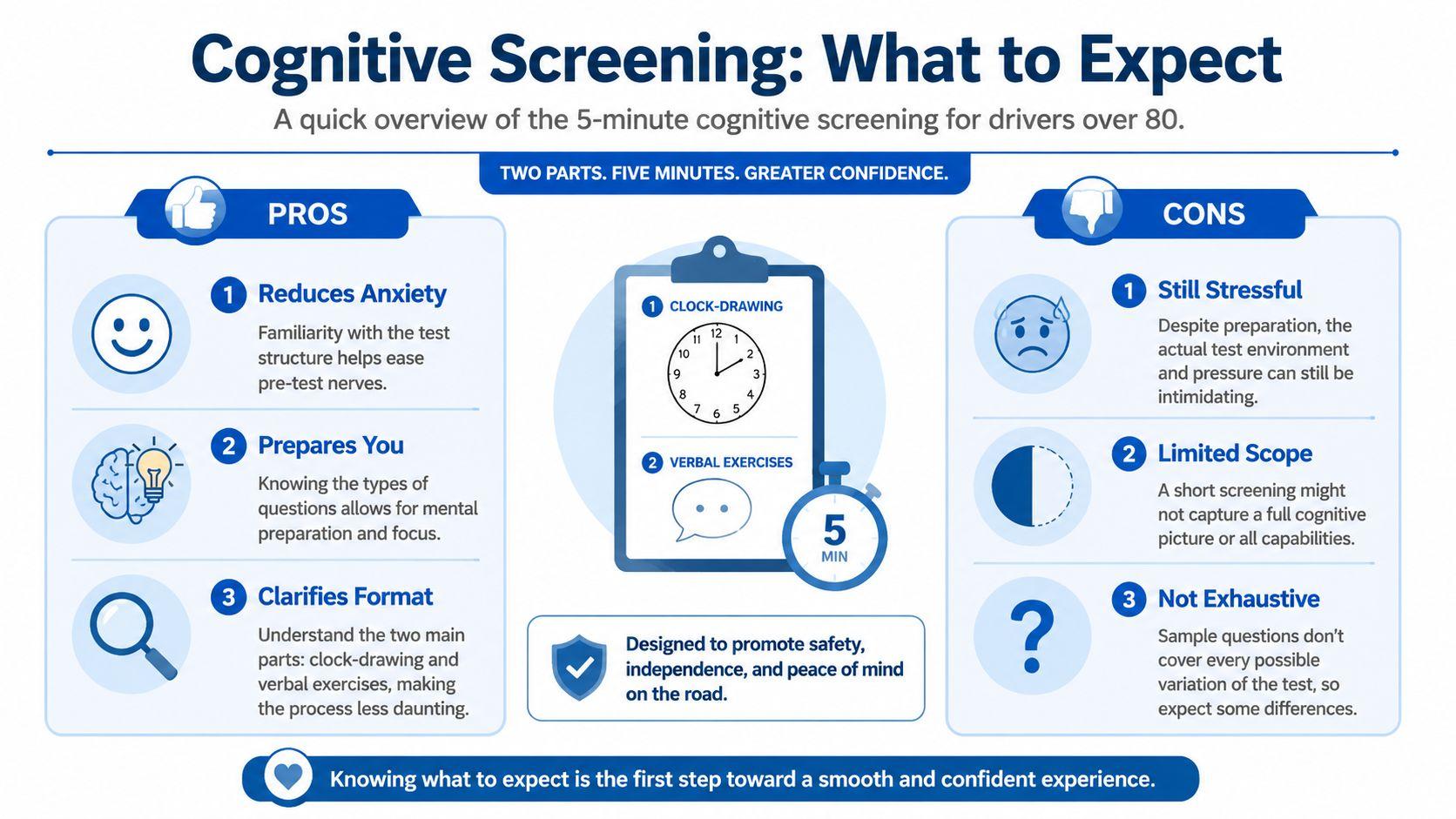
Part A practice for the clock drawing task
This is the part that catches people off guard because it sounds simpler than it is. A correct answer needs the right layout and the right time.
Draw a clock face, place the numbers so they look like a clock, and set the hands to show ten minutes after eleven.
Here is what a solid practice result looks like:
Part of the task What a solid answer does Circle Draws a clear round clock face Numbers Places numbers in the correct order and in roughly correct positions Hands Shows the minute hand at the 2 and the hour hand slightly past 11 Overall layout Looks organized and easy to read
The scoring approach used in Ontario screening material gives credit for getting the clock task right, including the requested time of ten minutes after eleven, according to the CARSP conference material describing the clock-drawing screening task. The practical takeaway is straightforward. Accuracy matters. Speed only helps if the answer is still clear and correct.
Common errors are predictable, which is good news because they can be practiced:
- Numbers crowded on one side: Usually caused by placing numbers too quickly without spacing them first
- Hands reversed: The short hand points to 2 and the long hand points to 11
- Hour hand fixed right on 11: At 11:10, it should sit a little past 11
- Too many corrections: Extra lines can make a correct answer hard to read
The best home practice is simple. Use blank paper, give the instruction once, and let the driver complete it without coaching. Then check whether the numbers are spaced well and whether the hands show 11:10 correctly. One or two calm practice rounds usually help more than repeated drilling.
Part B practice for the letter cancellation task
The second task is less familiar, but it is very manageable once someone sees an example. The instruction is usually to scan text and cross out every letter H.
Try a sample line like this:
Helen had a happy holiday at her house, where Harry hung his hat in the hallway.
The driver should move left to right, crossing out each H or h as instructed. The challenge is not difficulty. It is staying steady and not losing place.
A few habits make a clear difference:
- Hear the full instruction before starting
- Work left to right like normal reading
- Cross out letters clearly, not with rushed scribbles
- Keep going after a missed letter instead of freezing
I have found that this task often goes better when the driver uses a finger to track the line. It slows the pace slightly, but it also reduces skipped letters. That trade-off is usually worth it.
What usually helps
Good preparation for this screening is very specific. Reviewing road signs or trying to guess trivia questions does not match the task in front of the driver.
What tends to help:
- A practice clock on plain paper
- One sample line for the letter H task
- A quiet explanation of the instructions
- A focus on neatness and follow-through
What tends to create problems:
- Starting before the instruction is finished
- Rushing because the screening is short
- Practicing when tired or frustrated
- Treating the exercise like a judgment on intelligence
That last point matters. This screening is brief and structured. For many older drivers, the hardest part is nerves, not the task itself.
A neat, correctly understood answer is stronger than a fast answer with avoidable mistakes.
Practical Tips for a Successful Renewal Day
The best renewal appointments usually feel calm before they begin. An older driver arrives on time, has their licence ready, can hear the instructions clearly, and sits down without feeling rushed. That does more good than any last-minute cram session.
What helps most is reducing avoidable friction at home first. Keep the morning light. Eat breakfast, wear the usual glasses or hearing aids, and leave early enough that parking or traffic does not set the tone for the appointment. If the driver is also wondering about costs, it helps to review the Ontario driving licence renewal fees ahead of time so there are no surprises at the counter.
What to bring and what to sort out the night before
A short check the evening before saves a lot of stress in the car.
- Current licence: Put it somewhere easy to reach.
- Glasses: Bring the pair normally used for distance and reading if both matter.
- Hearing aids: Fresh batteries are worth checking.
- Appointment notice or booking details: Keep the paper copy or phone confirmation ready.
- Directions and parking plan: Know where you are going before the morning starts.
One practical point matters more than people expect. Do not schedule the appointment at a time of day when the driver is usually tired, slower, or easily flustered. A mid-morning slot is often easier than very early or late in the day.
How to handle the screening without making it harder
By renewal day, the goal is not to prove speed. The goal is to show clear understanding and steady follow-through on a short task.
For the sample-style clock and letter exercises, the best approach is simple. Listen to the full instruction. Pause for a second. Then start neatly. Drivers often hurt their own result by rushing, correcting themselves over and over, or worrying about what a mistake might mean.
A few habits are especially useful:
- Wait until the instruction is finished
- Ask to hear it again if any part was unclear
- Place numbers and clock hands carefully rather than quickly
- Keep your place on the page during the letter task
- Move on calmly if one small error happens
I usually tell families the same thing. Treat the screening like a short paper task, not like a verdict on the spot. That mindset lowers tension, and lower tension often leads to a more accurate result.
A calm, readable answer gives a better picture than a rushed one.
If a family member is coming along, their job is to keep the day steady, not to coach in the waiting room or create pressure in the car. Quiet support helps. So does giving the driver a few minutes to settle before walking in.
After the Session What Happens Next
Once the appointment ends, it is common to want immediate certainty. Sometimes the outcome is straightforward. Sometimes there is another step. Neither situation needs panic.
If everything goes smoothly
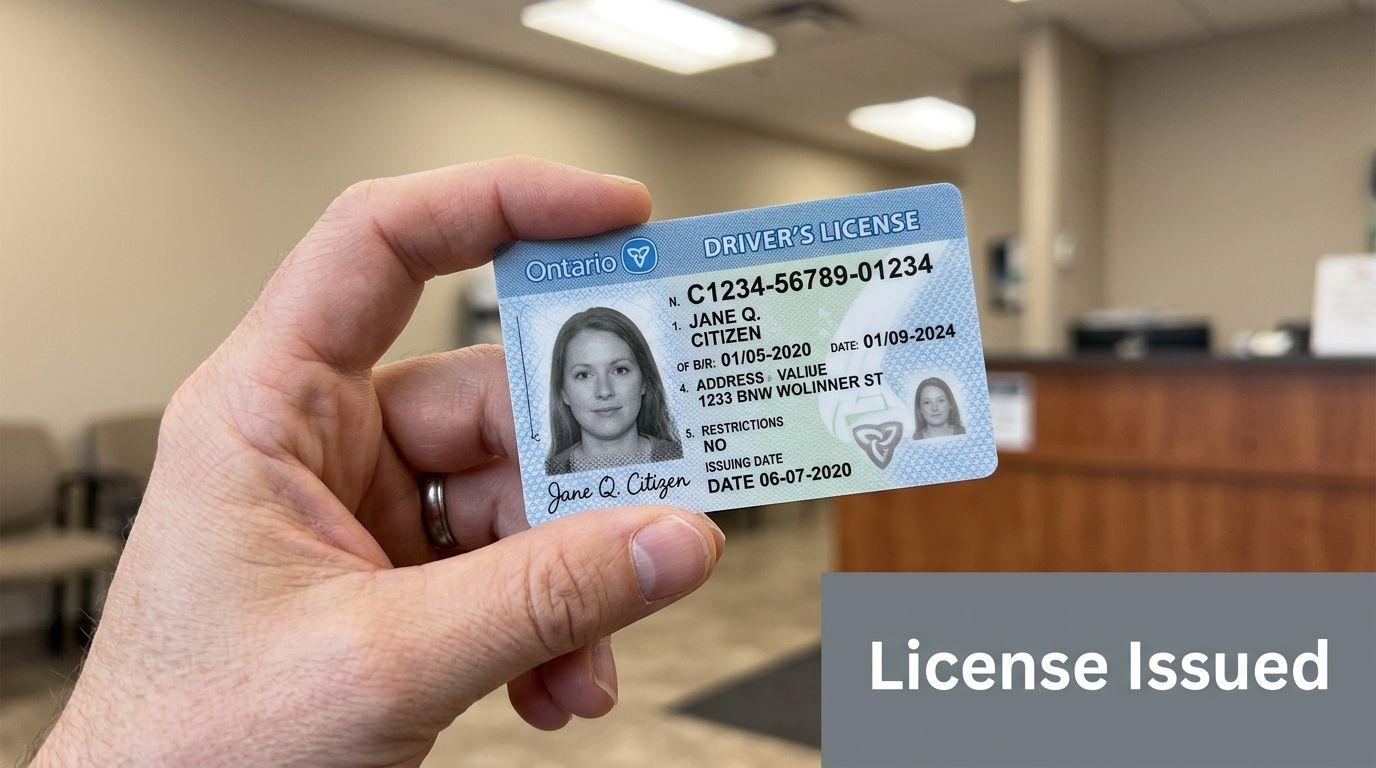
If the required parts are completed successfully, the renewal can move ahead through ServiceOntario. For many drivers, that's the end of the process. The main value of practice is that it removes uncertainty before the screening starts, especially because official pages often list the requirement without showing sample tasks.
That information gap is real. Ontario's public information tells seniors about the required screening, but it doesn't give practical walkthroughs of the clock-drawing or letter-cancellation tasks, as noted on the Ontario page for renewing a G driver's licence at age 80 and over. That's why a realistic Ontario drivers test over 80 sample can make such a difference.
If the ministry wants another step
A non-passing result on the screening doesn't automatically mean the end of driving. It means the ministry may want more information. Depending on the situation, that can mean a road test or a medical follow-up.
Families should treat that as a process step, not a personal judgment. A road test gives the driver a chance to show real-world ability. A medical review gives the ministry a better picture if a health issue may be affecting safe driving. If you're also reviewing costs and paperwork around renewal, this Ontario driver's licence renewal fees guide can help with planning.
What matters most after the appointment is staying organised. Keep paperwork together, read any follow-up instructions carefully, and act promptly if another appointment or document is required. Calm follow-through solves more problems than worry ever does.
If you want extra support for Ontario driving-related preparation, G1ready.ca offers clear, user-friendly practice resources built for Ontarians who want a more confident, less stressful path through test and renewal information.