
You've read through road signs, reviewed right-of-way rules, and perhaps taken a few online quizzes. Then a practice question asks about lane position, downshifting, or carrying cargo, and suddenly the Ontario motorcycle knowledge test feels very different from a standard driving quiz. That experience is common because the M1 exam tests motorcycle judgment as well as general road knowledge.
A smarter approach starts with the scoring structure. You need to prepare for three separately assessed areas, not chase one overall result. Use the official Ontario handbooks as your foundation, practise each section deliberately, and treat every wrong answer as evidence about what to review next.
Understanding the Ontario Motorcycle Knowledge Test Format
Before studying, understand the test you're preparing to write. Ontario's motorcycle licensing pathway begins with applicants who are at least 16 years old, completing a vision test and passing written knowledge tests covering traffic signs, motorcycles, and the rules of the road. Ontario identifies its official motorcycle handbook as a study source for the exam, and the current online edition is dated June 15, 2017, with updates continuing through 2026. The handbook is available through ServiceOntario and DriveTest centres for $14.95 plus tax according to Ontario's official motorcycle handbook information.
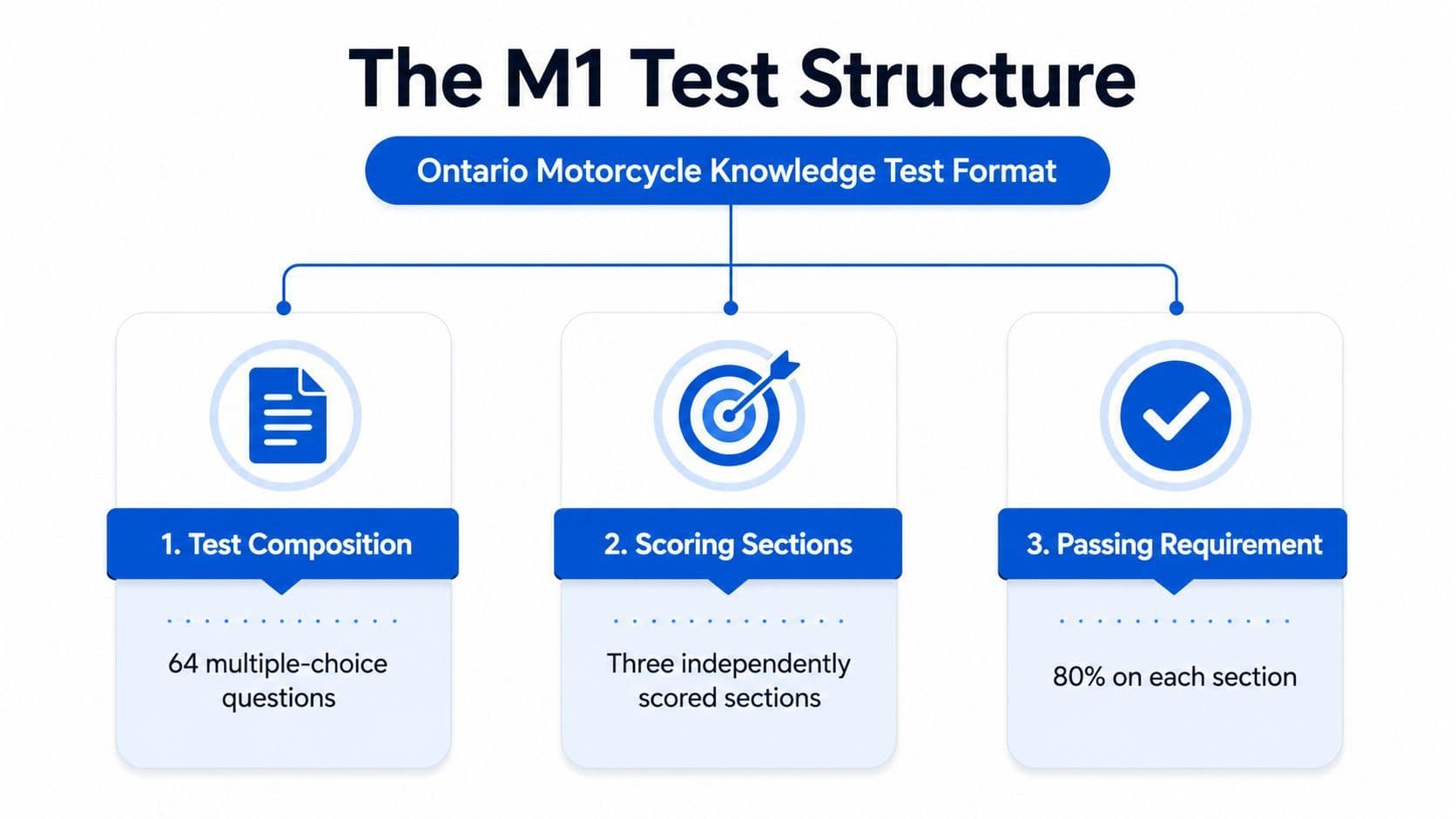
The current M1 knowledge test has 64 multiple-choice questions. It isn't one undifferentiated quiz. The questions are divided into:
Section Questions Road signs 20 Rules of the road 20 Motorcycle-specific issues 24
The structure is outlined in Ontario M1 practice-test guidance. You must score 80% or better in each section, not merely reach 80% across the complete test. A strong result in road signs can't compensate for falling below the threshold in motorcycle-specific questions.
Why the section rule changes your strategy
Suppose you know signs well but skim the motorcycle handbook. You may feel ready because familiar questions are going smoothly, yet the separate motorcycle section can still determine the result. The safest preparation method gives every section its own progress check.
Ontario also requires Level One learners to remain at that stage for a minimum of 60 days before attempting the road test, as described in this Ontario motorcycle test preparation guide. Passing the written test is therefore an entry point, not proof that you're ready to ride independently. The licensing materials distinguish the Level One road test, which assesses basic driving skills, from the Level Two road test, which assesses more advanced knowledge and skills developed through experience, according to Ontario's motorcycle licensing page.
Ontario doesn't publish an official first-attempt motorcycle knowledge-test pass rate. Treat online pass-rate claims as estimates, not verified provincial statistics, and judge readiness by your section scores instead. If one area remains weak, more random quizzes won't fix the gap until you study that area directly.
Building a Realistic Study Schedule
A useful schedule follows the exam's content rather than your personal preference. The motorcycle-specific section contains more questions than either of the other sections, so it deserves substantial attention. Road signs and rules still require dedicated review because each section has its own 80% pass requirement.
Start with the official Ontario motorcycle handbook and the Ontario Driver's Handbook. Read actively. After each topic, close the handbook and explain the rule in your own words. If you can't explain why a rule exists or how it applies on the road, you probably recognise the wording without understanding the idea.
A flexible four-stage plan
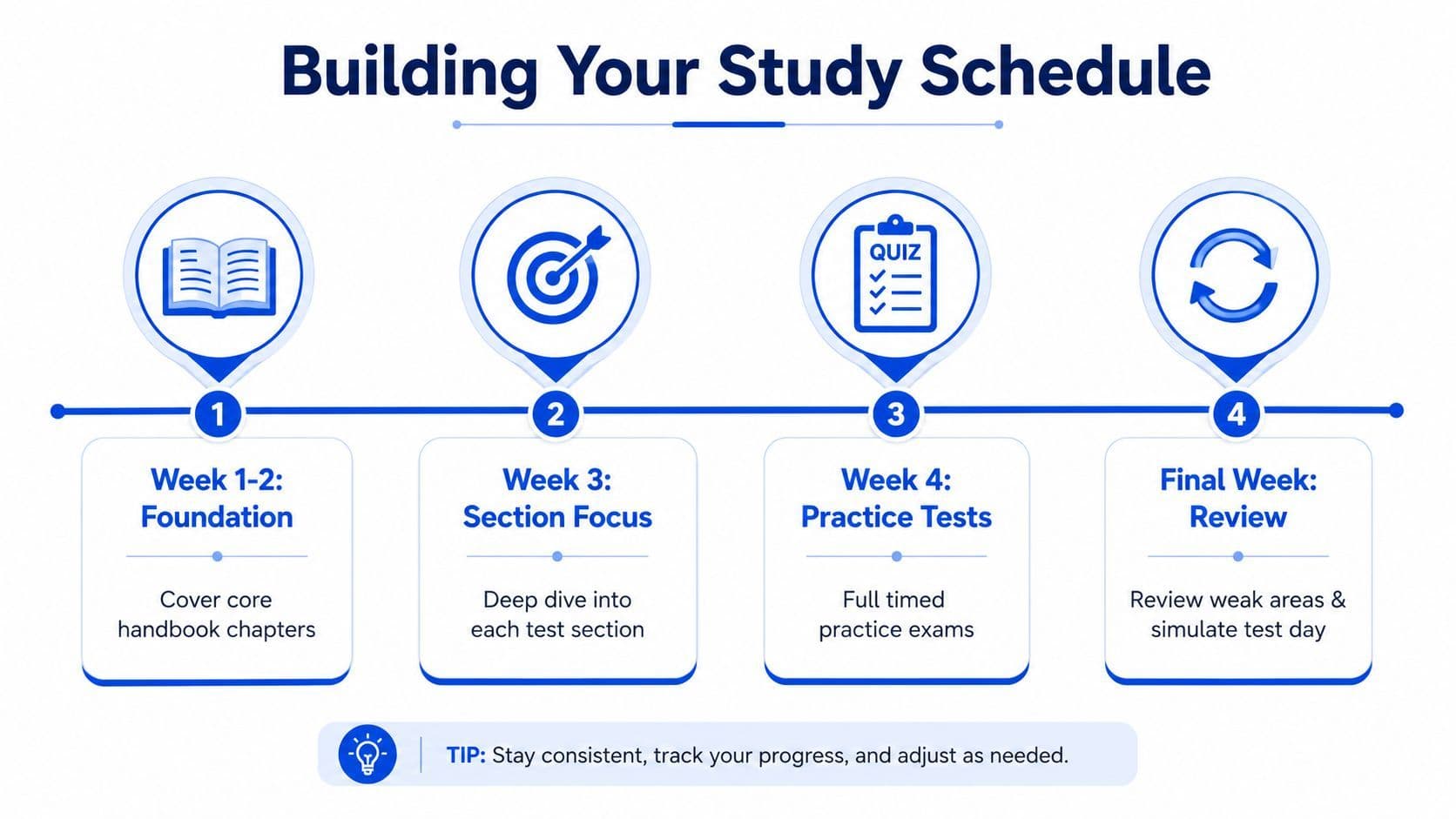
Foundation stage: Begin by reading the core handbook material. Mark topics that feel unfamiliar, especially motorcycle controls, lane positioning, equipment, and surface hazards. Keep road signs in the routine, but don't let their familiarity push motorcycle content aside.
Section-focus stage: Study one section at a time. Review signs as visual patterns, rules as situations, and motorcycle questions as decisions involving control and safety. Write down errors in a small correction log. Record the rule you missed, why your answer was wrong, and what clue would help you recognise the correct answer next time.
Practice stage: Move from reading to targeted quizzes once you understand the handbook material. A quiz should answer a question, not replace studying. After every result, return to the relevant handbook passage and confirm the rule.
Final review stage: Use mixed, full-format practice only after you've worked on individual weaknesses. Simulate the pressure of moving through all 64 questions, while checking whether you can meet the required score in every section. Avoid learning new material at the last moment. Review your correction log and the topics that repeatedly cause hesitation.
Your daily routine can be short and consistent. A focused session that includes reading, retrieval from memory, and error review is more useful than passive rereading. If you have less time before booking the test, combine the foundation and section-focus work, but don't remove the error-review step.
Practical rule: Don't book your test because your overall quiz score looks comfortable. Book when each section is consistently secure on realistic practice.
Mastering the Motorcycle-Specific Questions
Many learners prepare as if the motorcycle knowledge test were mainly a road-sign exercise. That assumption leaves a serious gap. The motorcycle-specific section includes 24 questions about control knowledge, lane position, steering, equipment, helmets, passengers and cargo, dangerous surfaces, downshifting, and maintenance, as reflected in Ontario's official MTO motorcycle handbook.
A question about a slippery surface, for example, may test more than vocabulary. You need to connect the hazard with speed, steering, braking, and stability. A question about lane position may require you to think about visibility, road conditions, and the actions of surrounding drivers rather than memorise one fixed position.
Study the decision behind each rule
Break motorcycle content into practical groups:
- Controls and steering: Know what the controls do and how smooth input supports balance.
- Lane position: Ask what improves visibility, creates space, and helps other road users see your intention.
- Equipment and helmets: Review the handbook's requirements and the safety purpose behind them.
- Passengers and cargo: Study how added weight or movement can affect control and stability.
- Surfaces and shifting: Understand why hazards such as loose material, wet pavement, or poor traction change your approach.
- Maintenance: Learn which basic checks support safe operation before riding.
A strong answer usually follows a safety principle. When two options seem plausible, look for the one that preserves control, increases awareness, or reduces exposure to a hazard. Don't rely on a memorised phrase if you can't apply it to a new situation.
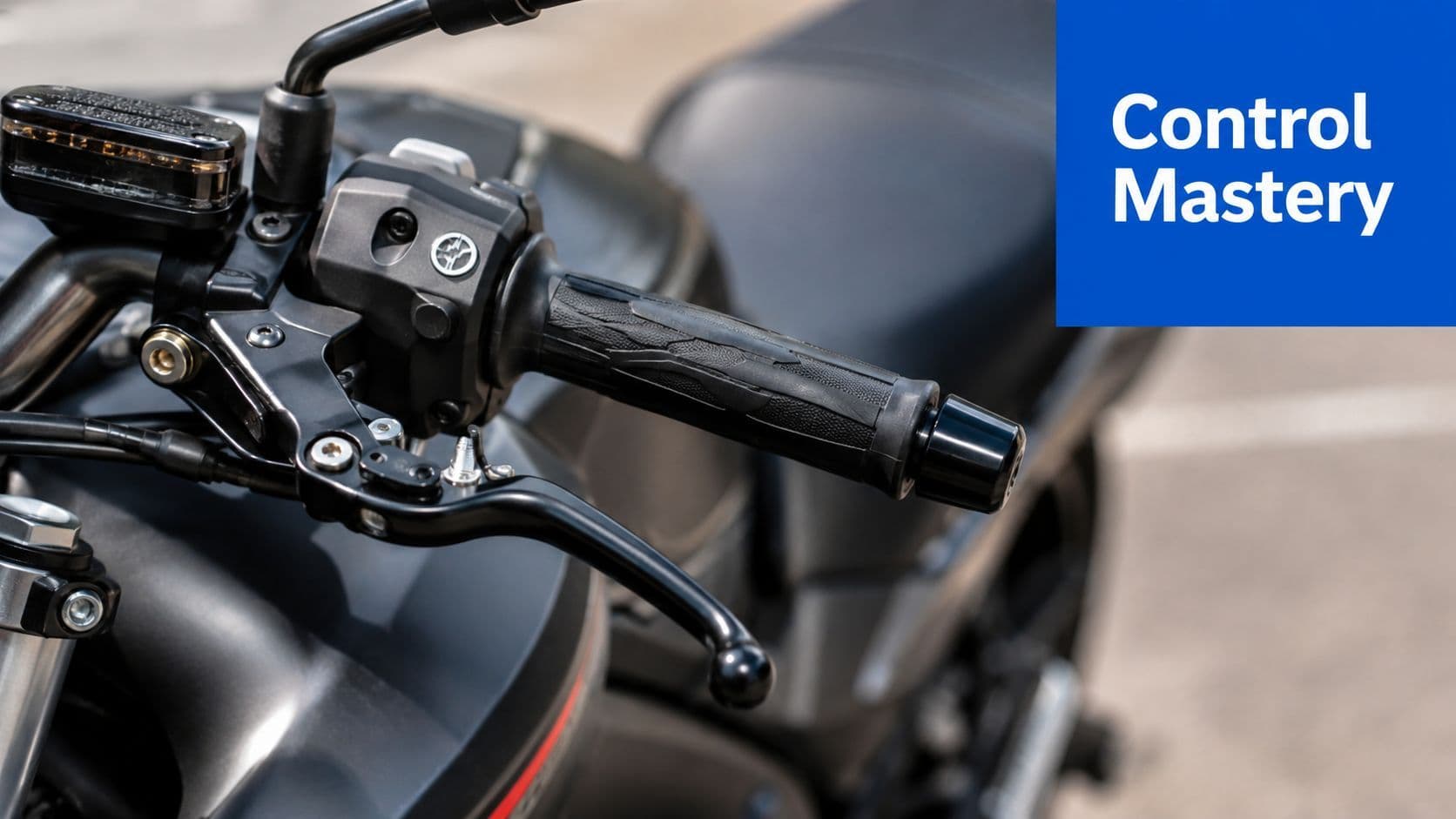
The following visual can help connect written material with the physical controls you'll use while riding:
Read the motorcycle handbook with the road test in mind, too. Ontario presents the written test as the first step before road testing and safe riding practice. The best preparation therefore combines factual recall with the judgment you'll need when a question describes a changing road environment.
Using Online Practice Tools Effectively
Online quizzes are useful only when they reveal what you don't know. Clicking through random questions, remembering familiar answers, and ignoring explanations can create false confidence. Use practice as a feedback system with a clear sequence.
Begin with a diagnostic test. Your first result isn't a verdict on your ability. It shows whether your immediate priority is signs, road rules, or motorcycle-specific material. Write down every missed question, including guesses that happened to be correct.
Next, switch to targeted practice. Choose one topic, such as signs, right-of-way, lane positioning, or motorcycle equipment, and complete enough questions to identify a pattern. After each error, read the explanation, locate the relevant handbook topic, and explain the correct answer without looking at the screen.
Turn results into decisions
A useful practice platform should help you answer three questions:
- Which section is weakest?
- Which topics inside that section cause repeated errors?
- Have I corrected the misunderstanding, or am I only recognising the answer?
Immediate feedback matters because it keeps the mistake connected to the question. Explanations, hints, progress history, and performance statistics can help you focus limited study time on specific weaknesses instead of repeating material you already know.
Mobile access can also make practice easier to sustain. Use short sessions while waiting or during a scheduled break, but reserve uninterrupted time for full simulations. G1ready.ca provides Ontario motorcycle practice resources, including a motorcycle learners-permit practice test designed around the M1 subject areas. Treat it as one preparation option alongside the official handbooks, not as a substitute for them.
When you begin full simulations, reproduce the structure as closely as possible. Review section-by-section results, not just the final score. A missed question matters most when it points to a subject you've been avoiding.
Avoiding Common Test-Day Mistakes
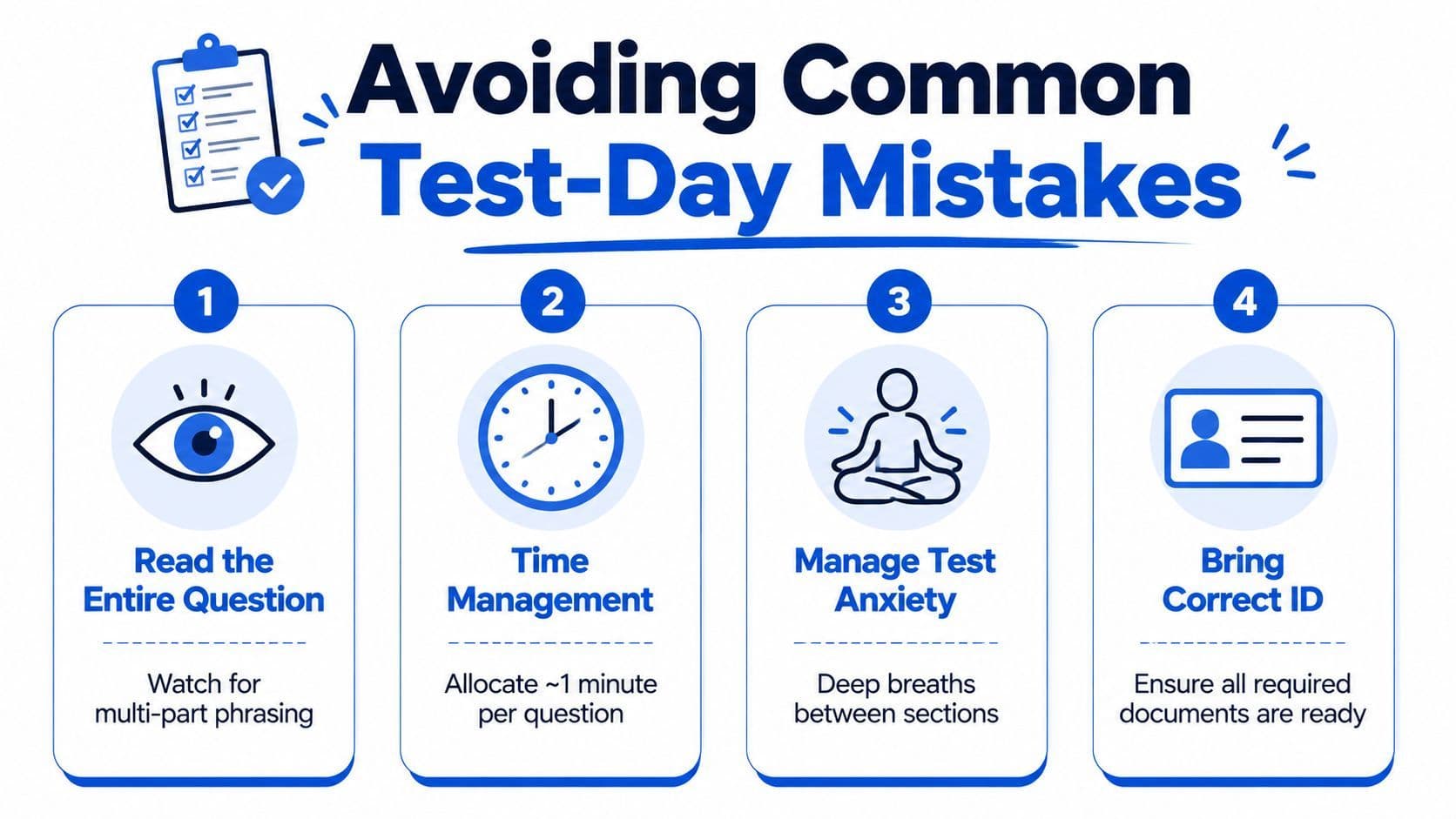
A candidate can understand the material and still lose marks by reading too quickly. One rider sees a question asking which action is safest, notices a familiar keyword, and chooses the first answer that sounds reasonable. Another rushes through signs, then reaches motorcycle-specific questions with less attention than the content deserves.
Slow down enough to identify the task. Words such as “best,” “first,” “except,” or “most important” can change the answer. Read every option before selecting one, even when the first option appears correct.
Keep the session controlled
At the DriveTest centre, confirm the identification and documents you need before leaving home. Arriving unprepared creates pressure before the first question appears. Check the current requirements with the licensing centre rather than relying on a friend's experience.
The computer interface should feel manageable if you've practised on a similar device. Read the full prompt, select the answer deliberately, and use any available review function according to the centre's instructions. If one question unsettles you, make the best supported choice, move on if permitted, and return to it later.
Anxiety makes familiar information feel unfamiliar. Pause, breathe normally, and return to the wording rather than trying to recall a quiz screen.
If you realise one section is going badly, don't let that panic contaminate the rest of the test. Reset your attention before the next question and apply the same process: identify the subject, remove clearly incorrect options, and choose the answer supported by the handbook.
Ontario's structure makes first-attempt preparation valuable because failing one section means the complete knowledge test isn't passed. If you don't pass, ask the centre about the retake process and any current waiting or fee requirements. Don't assume that a retake replaces the need to review the weak section.
Remember the larger timeline. Level One learners must hold that stage for a minimum of 60 days before attempting the road test. Passing the knowledge test is progress, but it doesn't remove the need for supervised learning, control practice, and careful preparation for the next licensing step.
Your Complete Preparation Checklist
Use this checklist to turn preparation into visible actions:
- Get the current materials: Obtain the Ontario Motorcycle Handbook and Driver's Handbook, using Ontario's official handbook information as your reference.
- Map the sections: Create separate study areas for road signs, rules of the road, and motorcycle-specific issues.
- Complete a diagnostic: Take an initial mixed quiz without looking up answers, then record weaknesses and uncertain guesses.
- Study motorcycle judgment: Review controls, lane position, steering, equipment, helmets, passengers and cargo, dangerous surfaces, downshifting, and maintenance.
- Keep an error log: Write the rule behind each mistake and explain the correct answer in your own words.
- Practise by topic: Work on one weak area at a time before returning to mixed questions.
- Simulate the format: Complete full practice tests using the 64-question structure and check every section separately.
- Confirm readiness: Aim to meet the 80% threshold in each section repeatedly in realistic practice, rather than relying on one favourable result.
- Prepare for the centre: Confirm identification requirements, understand the test-day route, and avoid arriving rushed.
- Plan beyond the written test: Remember the vision requirement, the Level One holding period, and the distinction between basic and advanced road-test skills.
The most reliable preparation combines official reading with deliberate practice. The handbook gives you the source material, section-based quizzes expose gaps, and your correction log shows whether those gaps are closing. For another Ontario-focused planning resource, review this motorcycle test for a licence guide.
G1ready.ca offers registration-free Ontario motorcycle practice resources with mixed tests, targeted quizzes, immediate explanations, hints, and progress tracking for mobile or desktop study. Visit G1ready.ca to practise the three M1 sections, review mistakes, and build confidence before your motorcycle knowledge test.


